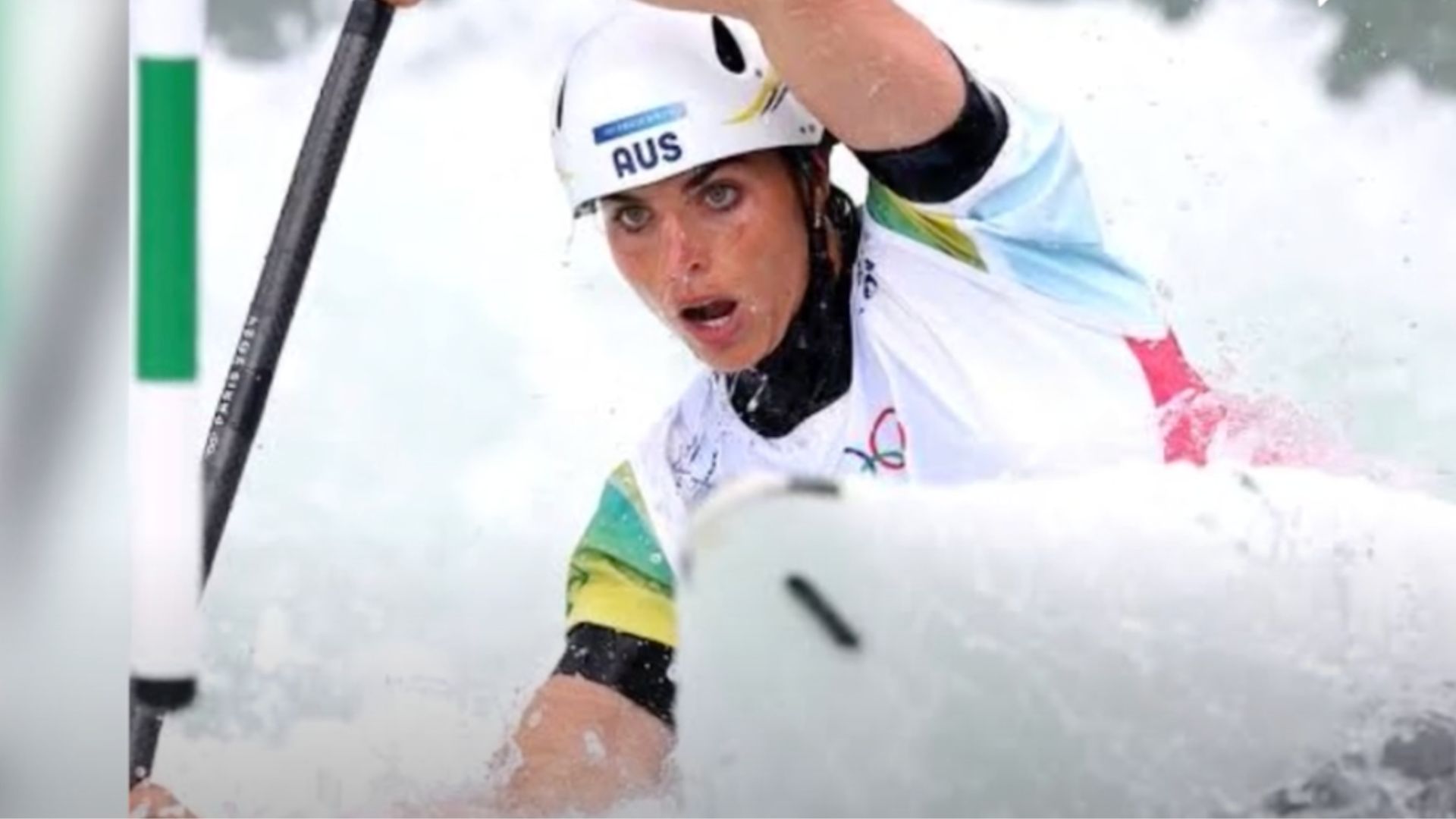
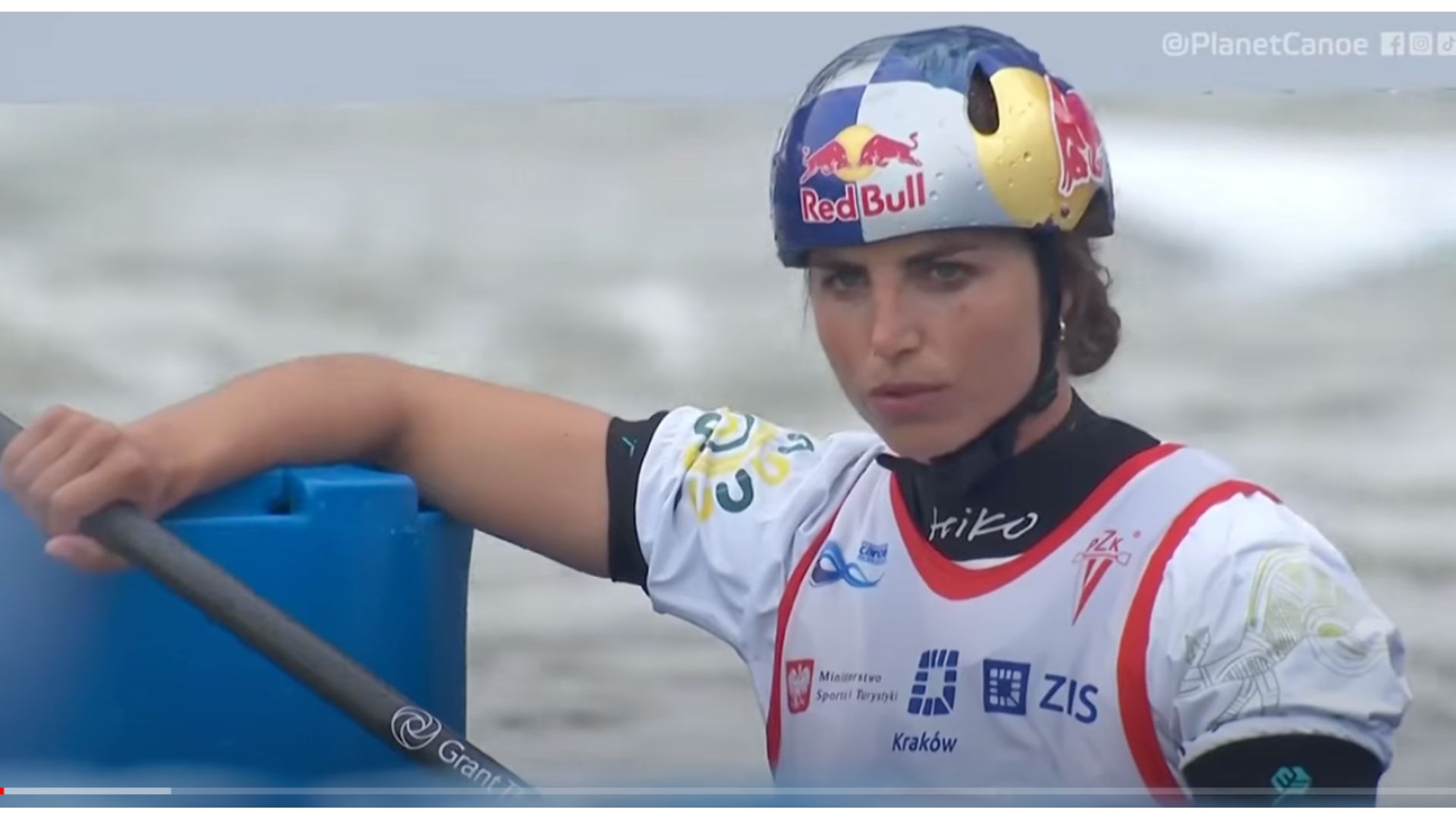
Australia’s Jessica Fox, the 2020 Tokyo Olympics’ canoe slalom champion, finally won the medal she always wanted in her fourth Summer Games.
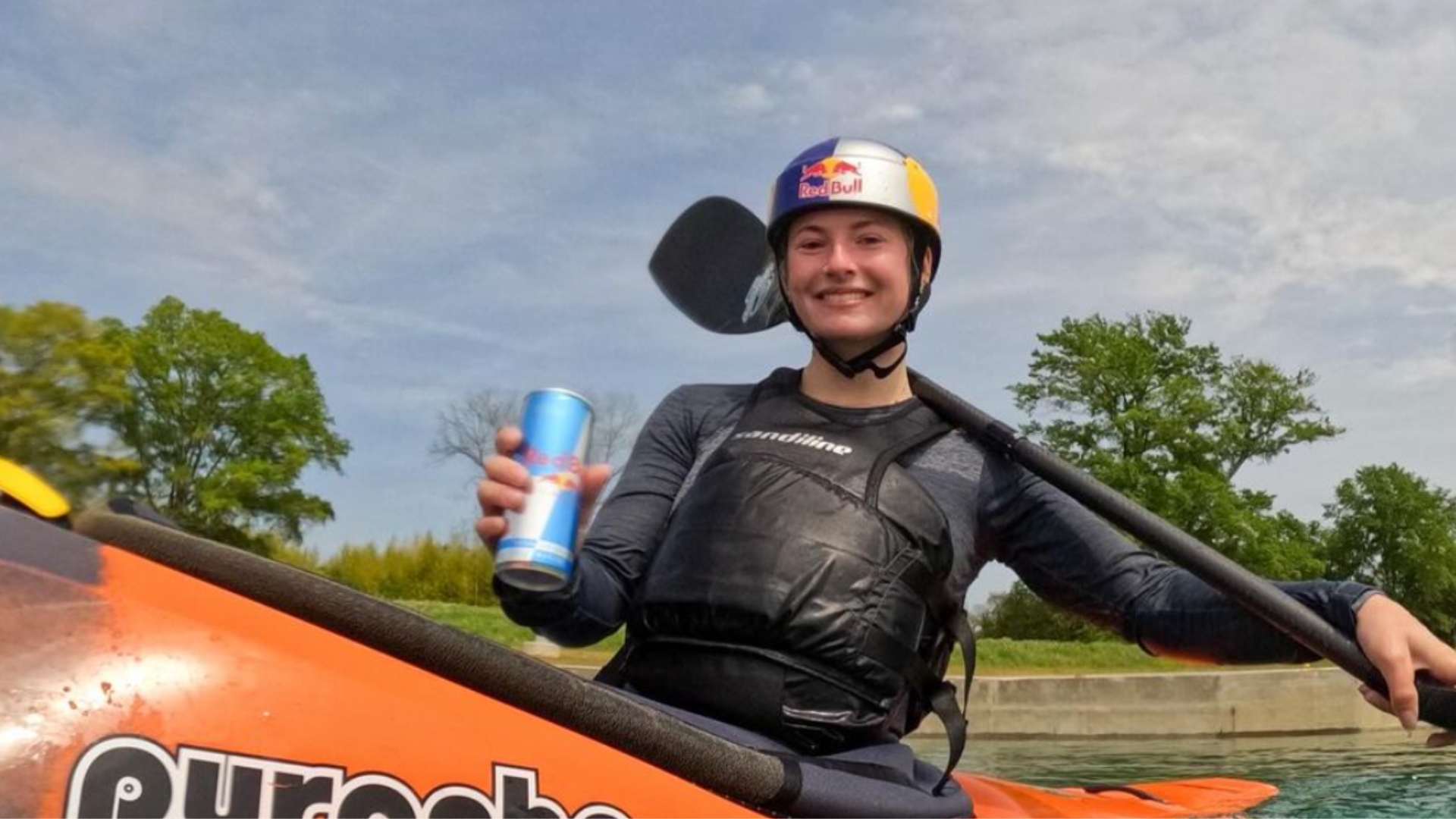
Fox, 30, stormed to Olympic gold in the women’s kayak slalom in a time of 96.08 seconds at the Vaires-sur-Marne Nautical Stadium on Sunday (July 28).
Jessica Fox – Australia 🇦🇺 Olympic Gold medal in the K1.
Her 2nd Olympic gold and finally the one in the K1
A winning time of 96.08 pic.twitter.com/9OGkNnKzS6
Poland’s Klaudia Zwolinska picked up the silver medal, and Briton Kimberley Woods took the bronze.
French-born Fox, the eight-time canoe slalom world champion, was one of the two Australian flag bearers at the Olympics opening ceremony in Paris on Friday (July 26).
She came first in Saturday’s kayak slalom heat but struggled in the semi-final, ending up as the eighth of 12 finalists, but recovered form to win gold.
Fox’s Olympic medals
Fox won the gold medal in canoe slalom (C1) at the 2020 Tokyo Olympics, where the sport made its debut.
However, the kayak slalom gold eluded her in her three previous Games.
She won silver in the kayak slalom at the 2012 London Games and bronze in the 2016 Rio and 2020 Tokyo Games.
Family of Olympian canoeists
Fox, who will be defending her Olympic canoe slalom title, comes from a family of Olympian canoeists.
Her younger sister, Noemi Fox, 27, is making her Olympic debut in Paris, competing in the women’s kayak cross event.
Their mother, Myriam Fox-Jerusalmi, who coaches Jessica, won bronze for France in kayak slalom at the 1996 Atlanta Summer Games. Their father, Richard Fox, paddled for Britain in the kayak slalom event at the 1992 Barcelona Games.
Australia’s Jessica Fox is widely seen as the greatest individual slalom canoe paddler of all time. The 30-year-old eight-time world champion has four Olympic medals under her belt.
The Paris Olympics mark a return to roots for her.
She was born in Marseille, France, but moved to Australia with her family at the age of four.
Selected to be the Australian flag-bearer at the Paris Olympics’ opening ceremony, she said it was “probably the greatest moment of my career” . She shared the honour with the Australian field hockey player and five-time Olympian Eddie Ockenden.
Fox, whose mother is French, said, “Obviously that French connection is very strong and it’s such a wonderful, special, unique moment to be able to bring my two cultures together: the French, the Australian,” according to Australia’s ABC News.
She comes from a family of Olympian paddlers.
Her younger sister, Noemi Fox, 27, is making her Olympic debut in Paris, competing in the women’s kayak cross event.
Their mother, Myriam Jerusalmi, won bronze for France at the 1996 Atlanta Summer Games and coaches Jessica. Their father, Richard, paddled for Britain at the 1992 Barcelona Games.
The Paris Olympics will be Jessica Fox’s fourth Summer Games.
She made her debut at the 2012 London Olympics, where she won a silver in the K1 event. Four years later, she won a bronze in the same event at the Rio de Janeiro Games. She won not only a bronze in K1 at Tokyo but struck gold as well. Fox like several others had been been urging women be allowed to compete in canoe slalom, and when it was introduced in the Tokyo Olympics, she won gold in that C1 event.
Outside the Olympics, Fox has won 22 medals at the ICF Canoe Slalom World Championships, including 14 golds, five silvers and three bronzes. Her eight gold medals in individual events make her the most successful paddler, male or female, in World Championship history.
The foursome behind an Aussie ‘four-peat’ in the Olympic pool: Emma McKeon, Mollie O’Callaghan, Meg Harris and Shayna Jack
Fresh from a ‘three-peat”, the Australian foursome pulled off a fourth feat. The Australians won their fourth consecutive Olympic gold in the 4×100 metres women’s freestyle in Paris, leading almost from start to finish.
The quartet of Mollie O’Callaghan, Shayna Jack, Emma McKeon and Meg Harris set an Olympic record with a time of 3 minutes, 28.92 seconds, breaking the record the Australians set in Tokyo three years ago.
The Americans won silver and the Chinese bronze.
Australia’s O’Callaghan was slow off the blocks and well behind China’s Yang Junxuan in the opening 50 metres, but then she surged ahead, and the Australians led all the way. Jack and McKeon extended the lead before Meg Harris anchored the team home with a sizzling 51.94 second split.
Behind the success
What explains the Australian success?
Well, nothing succeeds like success.
The Australian foursome also hold the world record in the 4×100 metres freestyle. They set a time of 3:27.96 last year, which remains unbroken.
They have become used to setting records.
O’Callaghan, McKeon and Harris also set the previous Olympic record in Tokyo three years ago, which they broke this year.
🥇GOLD🥇
An Olympic record, and a 6th gold for Emma McKeon. Australia win the 4 x 100m Relay: pic.twitter.com/aet0sOqpzJ
It was an especially big win for the 30-year-old McKeon, swimming her final Olympics, as it gave her a sixth Olympic gold and a 12th Olympic medal overall.
That ties McKeon with Americans Katie Ledecky, Jenny Thompson, Natalie Coughlin and Dara Torres for the most career Olympic medals by a women’s swimmer.
McKeon, who won her first Olympic gold in Rio de Janeiro in 2016, returned home with seven medals from Tokyo three years ago, including four gold.
She is now Australia’s most decorated Olympian of all time, surpassing former swimmer Ian Thorpe with her sixth gold medal.
Mollie O’Callaghan
Meanwhile, Mollie O’Callaghan, 20, picked up another gold in Paris, winning the 200 metres freestyle, defeating compatriot Ariarne Titmus, who won the title in Tokyo. With the two golds she won in Paris, O’Callaghan now has four Olympic gold medals. She also helped the Australians win the 4×100 metres medley and the 4×100 metres freestyle in Tokyo.
Meg Harris
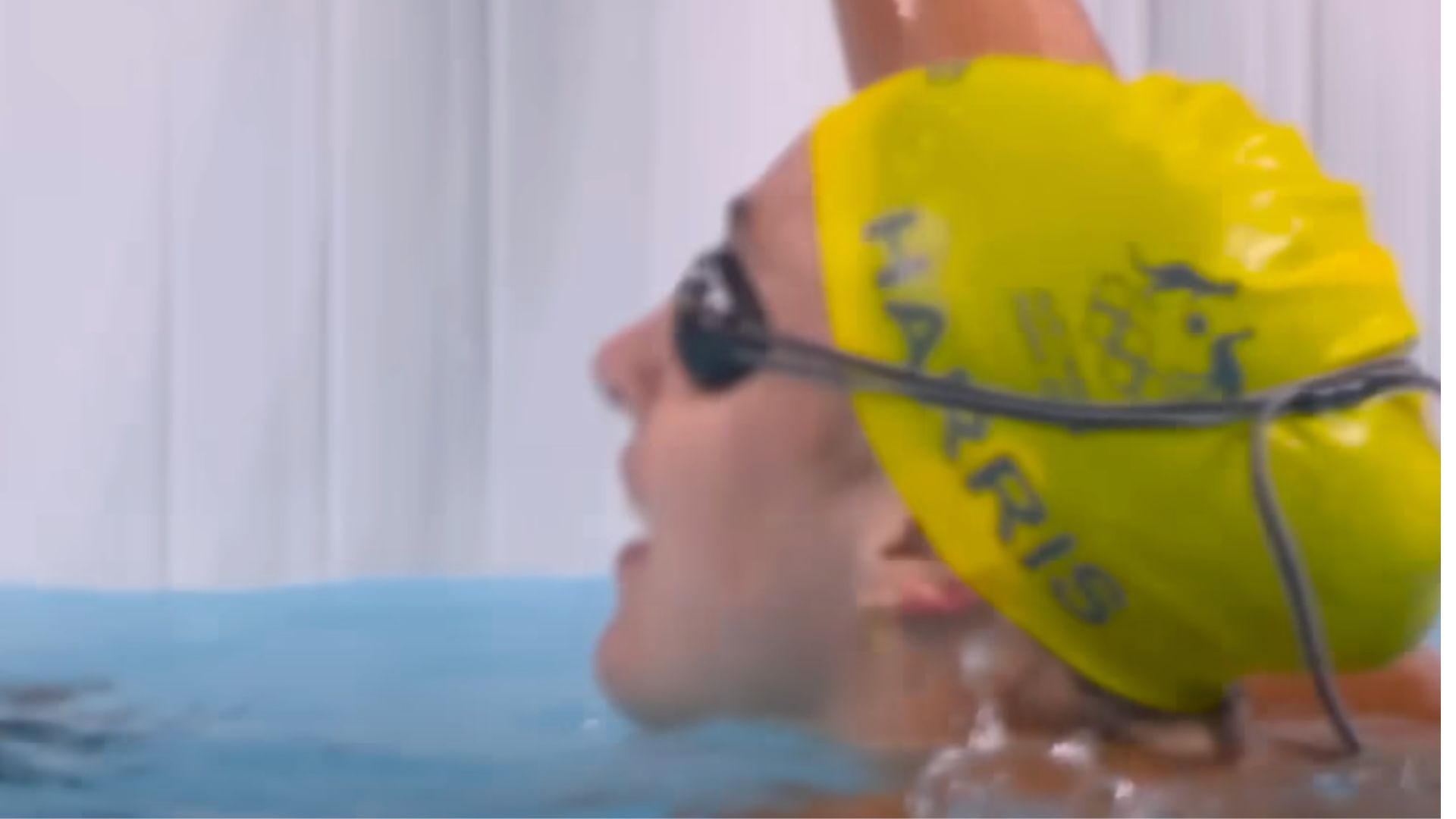
Meg Harris, 22, competing in her second Summer Games, now has two Olympic golds, both won in the 4×100 metres freestyle relay, first in Tokyo and now in Paris.
Harris has reached the pinnacle of success despite hearing loss in both ears.
She can normally lip-read others and also taught herself to hear the starter’s gun.
Her hearing loss could be due to nerve damage, probably as a result of illness at a young age, but it is moderate, and she can cope, she says.
Shayna Jack
The Paris gold is especially sweet for Shayna Jack, 25, who made her Olympic debut three years after returning from a doping ban.
From 2019 to 2021, she served a 24-month suspension after testing positive for a banned substance. She didn’t take it intentionally, she said.
She cherished her Olympic moment. “For me it’s definitely about getting up there and doing my country proud,” Jack said after winning the gold in Paris. “It’s a really special moment to stand on the podium with the other three girls.”
There are highs and lows.
Emma McKeon broke down in tears after missing podium in her last individual Olympic race, the 100 metres butterfly, on July 28.
“It’s just emotional,” she said, an athlete planning to retire from the sport.
“I definitely hoped that would’ve been better, but I know I’ve got a lot to be proud of,” said McKeon, who finished sixth.
Torri Huske and Gretchen Walsh, who were part of the US team which finished second in the 4×100 metres freestyle, won gold and silver respectively.
“It’s always going to be emotional finishing something that’s brought me so much joy. So many great relationships and so many great life lessons,” said McKeon.
American Katie Ledecky sets new Olympic medal record for women swimmers in race won by Australians
After winning the women’s 4×100 metres freestyle relay in Paris, Australia struck gold in the women’s 4×200 metres freestyle relay too, powered by two of the world’s fastest women over the distance: Mollie Callaghan and Ariarne Titmus. They finished the race in an Olympic record time of seven minutes 38.08 seconds at La Defense Arena.
The event was still big news in America as American Katie Ledecky became the most decorated female Olympic swimmer of all time, helping the United States claim silver in the race.
Ledecky swam a powerful third leg to haul teammates Claire Weinstein, Paige Madden, and Erin Gemmell from third to second place, 2.78 seconds behind the Ausralians.
China took bronze and Canada was fourth.
Ledecky now has 13 Olympic medals — eight golds, four silvers and a bronze — one more than compatriots Jenny Thompson, Dara Torres and Natalie Coughlin and Australia’s Emma McKeon.
“I feel like a bit of redemption for us.” – Ariarne Titmus
Australians Mollie O’Callaghan, Lani Pallister, Brianna Throssell and Ariarne Titmus, however, dominated the race from start to finish.
This was O’Callaghan’s third and Titmus’ second Paris Olympics gold. O’Callaghan won the 200-metre freestyle and was part of the quartet that won the 4×100-metre while Titmus triumphed in the 400 metres freestyle.
Australia led from the start, with O’Callaghan powering down the pool before handing over to Pallister. Pallister recovered from Covid earlier in the week and consolidated the lead for Throssell to keep Ledecky safely at bay.
Titmus anchored the Australians to victory.
“It was really fun. I feel like a bit of redemption for us. Tokyo was definitely not the result we wanted and I personally wasn’t happy with how I performed in the relay in Tokyo,” said Titmus.
Australia finished third in Tokyo, where China came first and the United States second.
“I feel like I have a role to play in this team and do the best job I possibly can. And I think I did that tonight. I’m proud that they had faith in me… to put me last and get the job done,” added Titmus.
Evy Leibfarth: First American woman to qualify for three canoe/kayak events for the olympics
Renowned American canoeist Evy Leibfarth recently made history by becoming the first American woman to qualify for three canoe/kayak events in the 2024 Paris Olympics. This is just one more accomplishment for the 20-year-old athlete, who is competing for the United States in the Olympics for the second time.
Last Tokyo Olympics, Evy was the only American to qualify and the youngest woman to compete in both the first canoe slalom and kayak competitions.
Growing up, Evy Leibfarth was surrounded by a family that was passionate about kayaking. Her international career began to flourish at the age of twelve. She admitted: “I started racing internationally when I was 12. Since then, my love for the sport has only grown.”
Get to know Evy Leibfarth
Evy also declared that her passion for the game has caused her to see beyond medals, wins, and achievements. In the Tokyo Olympics, she successfully finished 12th in kayak and 18th in canoe. Beyond her accomplishments, she has an objective for her sport when she competes in the Paris Olympics.
“It’s a catalyst for me to want to get a medal, not just for myself, but for the sport in the US. A lot of people don’t know about kayaking. Every four years we have the Olympics. That’s the stage to show people and be able to have kids watch it and be like, ‘Oh my God, I want to go to the Olympics someday.’ I really want to be able to do that for my sport,” Evy said.
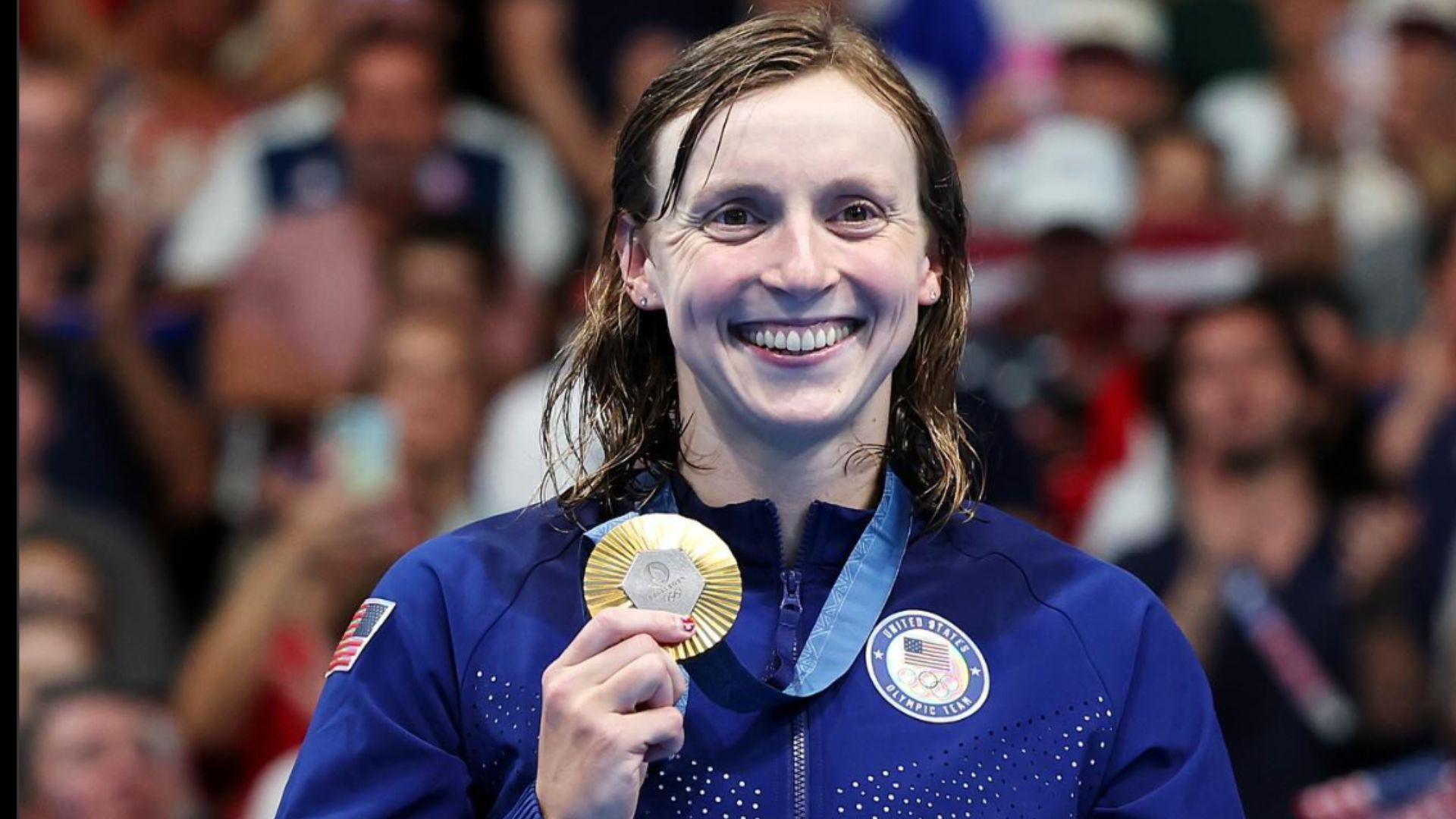
American Katie Ledecky won her eighth Olympic gold medal, and her first in Paris, when she coasted to victory in the 1,500-metre freestyle on Wednesday (July 31). She set a new record, winning the race in 15:30.2.
This was her second medal in Paris. She picked up a bronze in the 400-metre freestyle, a race won by the Australian Ariarne Titmus, on July 27.
Biggest gold haul
With her eighth gold and 12 Olympic medals in all, Ledecky is now the most decorated female Olympian swimmer. She shares the honour with fellow American Jenny Thompson, who also won eight golds and four other medals during her reign from the 1992 Barcelona Games to the 2000 Sydney Olympics.
Americans Dara Torres and Natalie Coughlin, and Australian Emma McKeon, are the only other women swimmers with 12 Olympic medals each.
No other swimmer was even in the frame when Katie Ledecky finished 😳
Absolute DOMINANCE as she breaks the women’s 1500m freestyle Olympic record 🔥 pic.twitter.com/YcoQS2AlzB
Ledecky, 27, won the 1,500 metres, surging ahead of the competition like a force of nature, building a commanding lead as she went.
Leading by three seconds a quarter of the way through, she increased the lead to nearly eight seconds at the 1,200-metre mark and finished more than 10 seconds ahead of Anastasiia Kirpichnikova of France, who won silver. Germany’s Isabel Gose took the bronze.
Her signature race
Ledecky was expected to win the 1,500 metres with good reason. It is her signature race. She won in the Tokyo Olympics, where women were allowed to compete in the 1,500 metres for the first time, and is a five-time world champion in the event (2013, 2015, 2017, 2022, 2023).
Ledecky will go for gold again in the 800-metre freestyle, which she won in all three previous Olympics –Tokyo, London (2012) and Rio de Janeiro (2016).
If she wins, she will become the first woman to win nine gold medals in swimming. The former Soviet gymnast Larisa Latynina, who competed in the late 1950s and early 1960s, is the only woman who won nine gold Olympic medals.