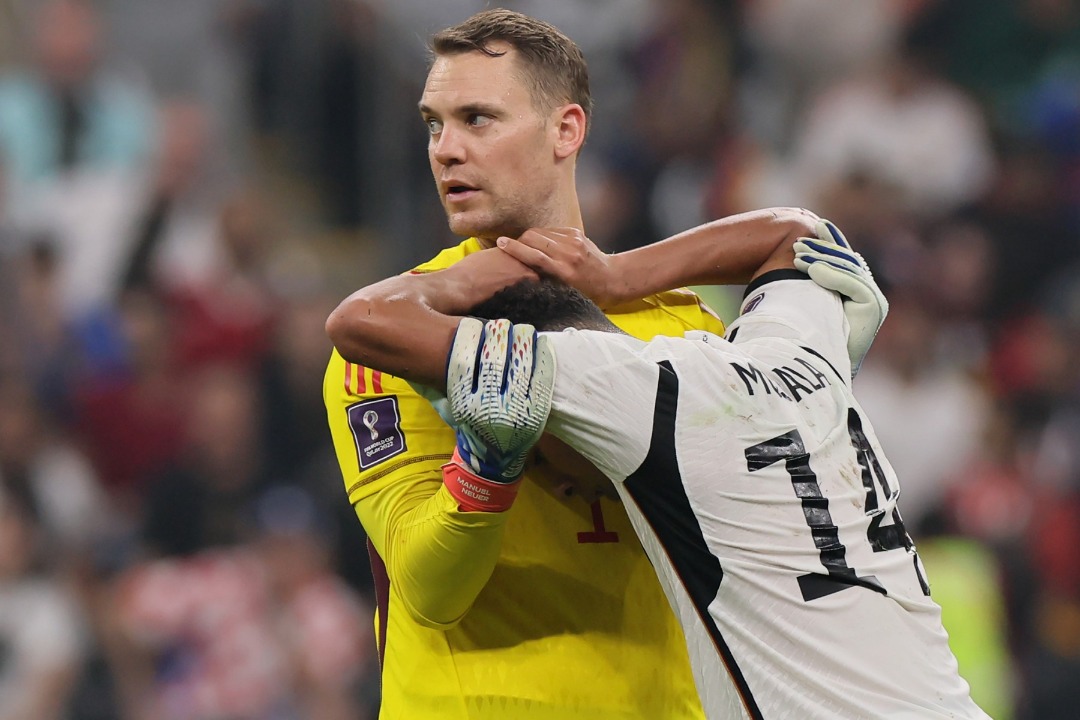
Few ever believe that four-time champion Germany is on their way home after shocking exits from the first round. No excuses.The bottom line is that throughout this tournament, Germany displayed none of their familiar solidity in defence and was complacent whenever they went ahead.
Germany’s air of global invincibility has long since gone and these past couple of weeks were perhaps the final confirmation of that fact.They fly out of Qatar as a fallen giant of world football.
Germany, once regarded as nailed-on certainties to go deep into major tournaments and even in Qatar, despite a chaotic 4-2 win against Costa Rica. Japan’s 2-1 win over Spain proved terminal to their hopes.
PAINFUL EXIT
Painful for die-hard global fans since this is the second World Cup in succession that Germany has failed to get out of their group, suffering the same fate in Russia in 2018.
Watching over television, the sight of Germany’s players gazing at a bank of empty red seats was the grim conclusion to a very sorry campaign.
Germany head coach Hansi Flick looked devastated at the final whistle. But he admitted later that “we didn’t play at the right way and deserve to be booted out”.
Now there is no more Germany’s air of football invincibility and they must buck up from square one to redeem themselves.
* Suresh Nair is an award-winning sports journalist who is also a qualified international coach and international referee instructor.
JAPAN’S smartest strategy not to start with their European-based players against Germany significantly contributed to the sensational 2-1 win over four-time champions Germany, says Jita Singh.
The award-winning Singapore coach was surprised that Takumi Minamino (Monaco), Takuma Asano (Bochum), Kaoru Mitoma (Brighton), Takehiro Tomiyasu (Arsenal) and Ritsu Daon ( Freiburg) were missing from the starting line-up.
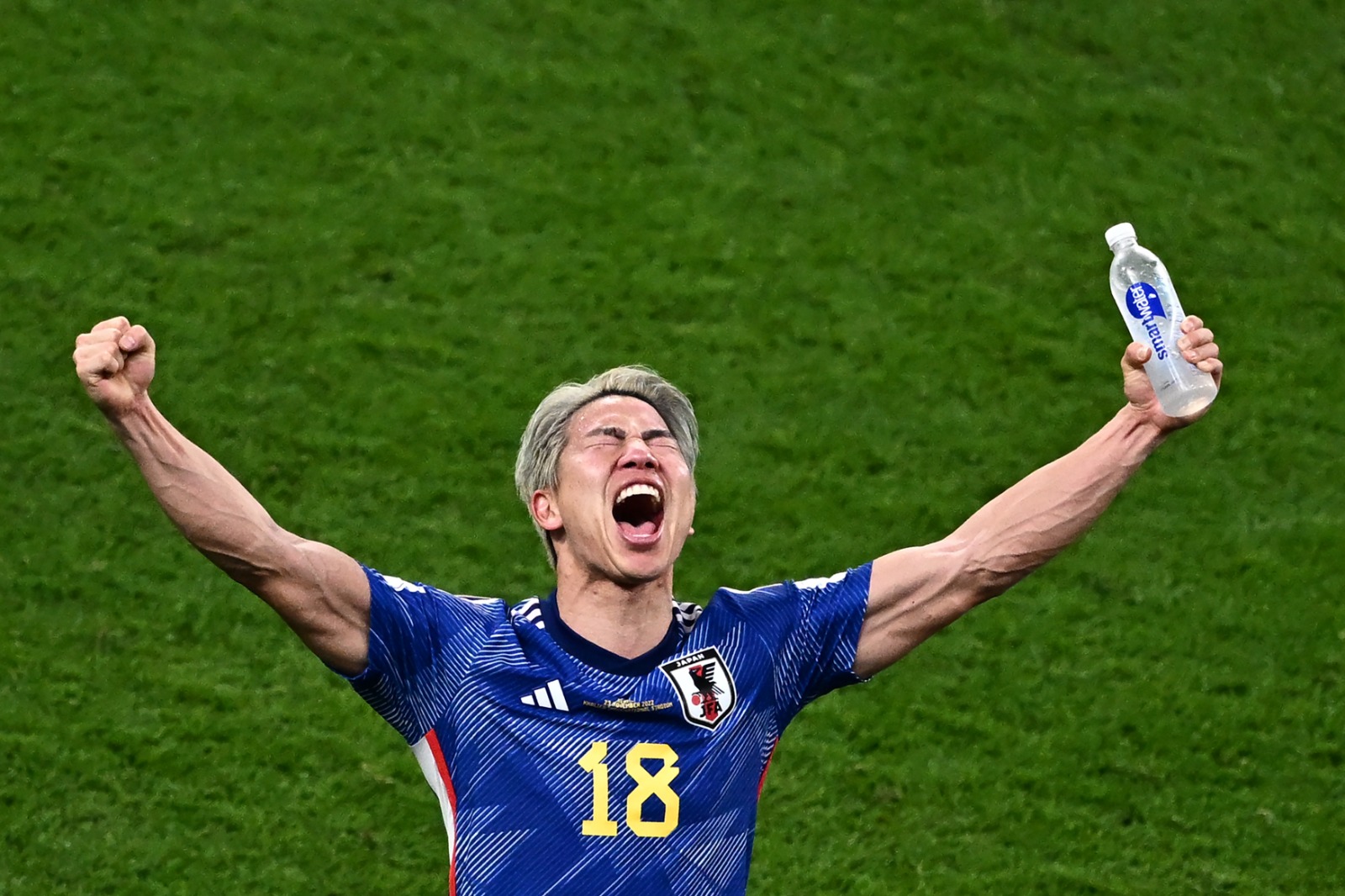
“They only came in the second half when Japan was at 1-1. This could be the coach’s sharp strategy,” said Jita, who watched the match with his family at the Khalifa Stadium. “The game changed and Japan matched the highly-fancied Germans. In fact, Daon scored the equaliser and Asano clinched the winner.”
TEAMWORK TRIUMPH
To add to the ironical storyline, both Doan and Asano play in the German Bundesliga (Germany’s professional league).
Japan manager Hajime Moriyasu praised:“The players came together as one team, we prepared well and we stuck in there, and that’s what led to the win.”
Now Germany’s World Cup future is once again on the line, with games to come in Group ‘E’ against Spain and Costa Rica. And they may be booted out!
“We made it too easy for Japan. I don’t know if an easier goal has ever been scored at a World Cup,” Germany coach Hansi Flick told Germany’s ARD TV network. “This must not happen to us.”
EMBARRASSING PRICE
The blunt truth is Germany never took their overwhelming dominance after they dominated the first half, says former Home United coach Robert Albert, now coaching in Indonesia’s Persib Bandung. “They paid the most embarrassing price,” he added.
The German team, rather cheekily, even covered their mouths for the team photo before the match in a powerful protest against Fifa’s decision to ban rainbow-themed armbands.
Flick’s side took the lead through a first-half penalty from Ilkay Gundogan and should have been out of sight after creating a host of chances.
But the gutsy Japan comeback was simply out of this world in the clearest signal that Asia is waking up (after Saudi Arabia’s startling 2-1 win over Argentina earlier in the week).
* Suresh Nair is an award-winning sports journalist who is also a qualified international coach and international referee instructor
ASIAN teams bowed out before reaching the quarterfinals of the World Cup.
But hats out to Japan, South Korea, and Australia for putting up one of the best-ever shows ever in the history of the tournament with sizzling upsets that shocked the world.
Japan was perhaps the most unfortunate in the ‘Round of 16’ as they held Croatia to a 1-1 draw after extra time but lost out 3-1 on mandatory penalty kicks.
Australia was edged out by Argentina 2-1 while Brazil overwhelmed South Korea 4-1.
SHOCK WINS
Japan boss Hajime Moriyasu masterminded shock victories over Germany and Spain to top their group and they pushed the finalists from four years ago to penalties. But, having captured the adoration of those watching with likable fans who chant and bang their drums all game, it was another tournament that ended in heartbreak.
In 2018, they led 2-0 in the last 16 against Belgium and lost to a 94th-minute winner from Nacer Chadli. This time, they suffered agony in the shootout.
“We could not break through the round of 16 and could not see a new landscape,” Moriyasu told the media.
“We won against Germany and Spain who have been champions. The players showed a new era of Japanese football and they should use this feeling of being upset to try to win next time.”
BEST TIE
Now the England-France quarterfinal tie looks especially mouth-watering: France is ranked fourth in the world, one place above England. Didier Deschamps’ side has gone one better than they did at the last major tournament – the delayed 2020 European Championship – where they lost to Switzerland on penalties in the last 16.
A special plus-point is France having Kylian Mbappe in their attack, who leads the race for the ‘Golden Boot’ with five goals so far, two more than any other player.
Interestingly, England and France have not met in the knockout rounds of a men’s major tournament before. They have played each other 31 times, with England winning 17 to France’s nine victories. The last time they met was in a friendly in June 2017, when France was 3-2 winners.
RISING TEAM
The rising team appears to be Brazil, and as a nation, they do not lack confidence when it comes to football fortunes. For this World Cup, those form levels are sky-high, and it is clear to see why, especially after the latest rousing 4-1 win over South Korea.
Brazil is probably most Singaporeans’ favorite, too. They have progressed from each of their last seven round-of-16 matches at the World Cup, only failing to win in normal time once during this run, progressing via penalties against Chile in 2014. They were last eliminated at this stage in 1990 against Argentina.
Look at their track record: Thirteen clean sheets in 17 qualifying games this time around with an average of 2.5 goals scored per game, all against the backdrop of severe loss of life in the country resulting from a global pandemic.
Now there is unity and belief. There is harmony to the samba beat. Let’s hope they carry Brazil to the final.
* Suresh Nair is an award-winning sports journalist who is also a qualified international coach and international referee instructor.
GETTING the early boot should not discourage host Qatar.
Even before their third preliminary match, they’re out, in a rare first in the tournament’s 92-year history.
But the premature exit should not be called a “failure and disappointment” from the World Cup, says Qatar manager Felix Sanchez.
The Middle Eastern side battled valiantly before Senegal condemned them to a second straight defeat – and subsequently became the first country knocked out of the competition after the Netherlands drew 1-1 against Ecuador.
Qatar made history by becoming the first country from this desert-region to host the World Cup. And now have the unwanted record of becoming just the second home team to exit the competition at the group stage, after South Africa in 2010.
‘SMALL COUNTRY’
Spaniard coach Sanchez said: “Qatar is a small country, not a very large population. The local league is not a very competitive one. It’s our first time at the World Cup. If we can take part again, that would be great. It’s always useful to get more international experience.”
He reiterated that “our “goal was to be competitive…we have been working for so many months to be able to give a good performance”. Clinically, he added: “But sometimes the match does not play out as you expect. It also depends on the opponents’ performance. I must admit that we didn’t play at our top level.”
Poor Qatar: Ever since the host-choice was made in 2010, it also sparked instant criticism – over the logistics of holding a sporting event in a country where summer-time temperatures regularly top 100 degrees; over allegations of bribery and corruption among FIFA officials who voted for Qatar; and over concerns about human rights abuses that have persisted in the years since.
HOLD HEAD HIGH
Rather amazingly, off the field, Qatar is the smallest nation to ever host the World Cup, a complex international sporting event that draws huge numbers of visitors and requires the infrastructure to accommodate them.
They controversially edged out USA, mind you, and you can imagine the significance to this extraordinary selection.
Nasser Al Khater, chief executive of FIFA World Cup Qatar 2022, has insisted his nation can hold its head in hosting the games.
“Qatar 2022 is finally here and we’ve so far celebrated with a mesmerising opening ceremony, passion in the stands and exciting football on the pitch,” he said.
“Our nation is gripped by football fever and the party will last all the way to the final on December 18.”
* Suresh Nair is an award-winning sports journalist who is also a qualified international coach and international referee instructor.
SOMETIMES you wonder why reigning world champions crash out of the group stages.
Hey, Germany isn’t the first reigning champion to be booted out. It isn’t even the second. It’s the third in a row, and the fourth in the 21st century – the fourth of the last five.
The trend is no longer purely coincidental. It’s not an accident. But why, then, you ask, is it so difficult to defend a World Cup crown?
I posed the question to Singapore’s award-winning coach Jita Singh, now in Qatar for the World Cup,and in his views, is it “almost impossible”.
He said: “Perhaps the answer, in short, is that four years is a long time. The reigning World Cup champs often get treated like their equivalents in other professional sports competitions. They get held to the same standard as the English Premier League champions, or the NBA champions, or the Super Bowl champs.
“And they probably shouldn’t be, for the simple reason that four-year intervals are longer than one-year intervals. At the club level, we don’t care who won the 2014-15 Premier League title when considering the 2018-19 season.”
Jita feels that “international soccer is a different kettle of fish”. He explained: “Turnover is inevitable. And it turns kings of four years ago into markedly different teams when they attempt to defend their thrones. So much goes into winning a World Cup.”
LUCK FACTOR
In my view, as a qualified international coach and referee instructor, every title is a product of countless successes that build on and complement one another. I believe glory requires an astute manager, who brings a functional tactical system, which players must fit into. And luck is invariably necessary along the way.
Hopefully, France, thereigning world champions, may make a rare difference. They have won just once in their last six fixtures, but still head to Qatar as one of the favourites. France Manager Didier Deschamps will be forced to make a couple of changes to his team with regular starters N’Golo Kante and Paul Pogba missing out due to injury.
I believe France, boasting an embarrassment of riches in midfield, and Deschamps will have plenty of players to call upon, including the 22-year-old Aurelien Tchouameni, who has impressed at Real Madrid.
France will expect to progress from Group D, where they have been drawn with Tunisia, Denmark, and Australia. It is almost a copy of their group in the World Cup 2018, where they were drawn with Denmark, Australia and Peru and topped the group with seven points.
DIFFERENT TEAM
Yes, the tried-and-trusted system becomes unworkable. It sometimes requires tweaks. And, as you see, the so-called defending champ is a completely different team – new players, new tactics, and either a manager drilling a Plan B or a new boss altogether.
That’s not to say teams can’t evolve, and either sustain excellence or even improve. But when we consider them as versions of the team that triumphed four years earlier, rather than a separate entity, they are fighting nearly unwinnable battles.
Plus, it must be remembered that World Cup champions aren’t necessarily the planet’s best teams, and often aren’t head and shoulders above the rest. Luck fluctuates. It’s a reason a good portion of the 21st century trend is randomness, despite what has just been explained.
Jita said: “The amount of drive and hunger and willingness to suffer to win the World Cup is unthinkable. For any team that won the World Cup, they go through so much stress, through so much work and tension and exhaustion and all those things, that to repeat that is almost impossible.”
As one of the tournament’s favourites, France will expect to make at least the semi-finals, if not the final. Let’s keep our fingers unusually crossed for France!
* Suresh Nair is an award-winning sports journalist who is also a qualified international coach and international referee instructor
NOTHING surprising seeing big-name coaches being shown the door if their teams don’t perform on the big stage.
Perhaps you may say it’s part and parcel of the game, or even an occupational hazard.
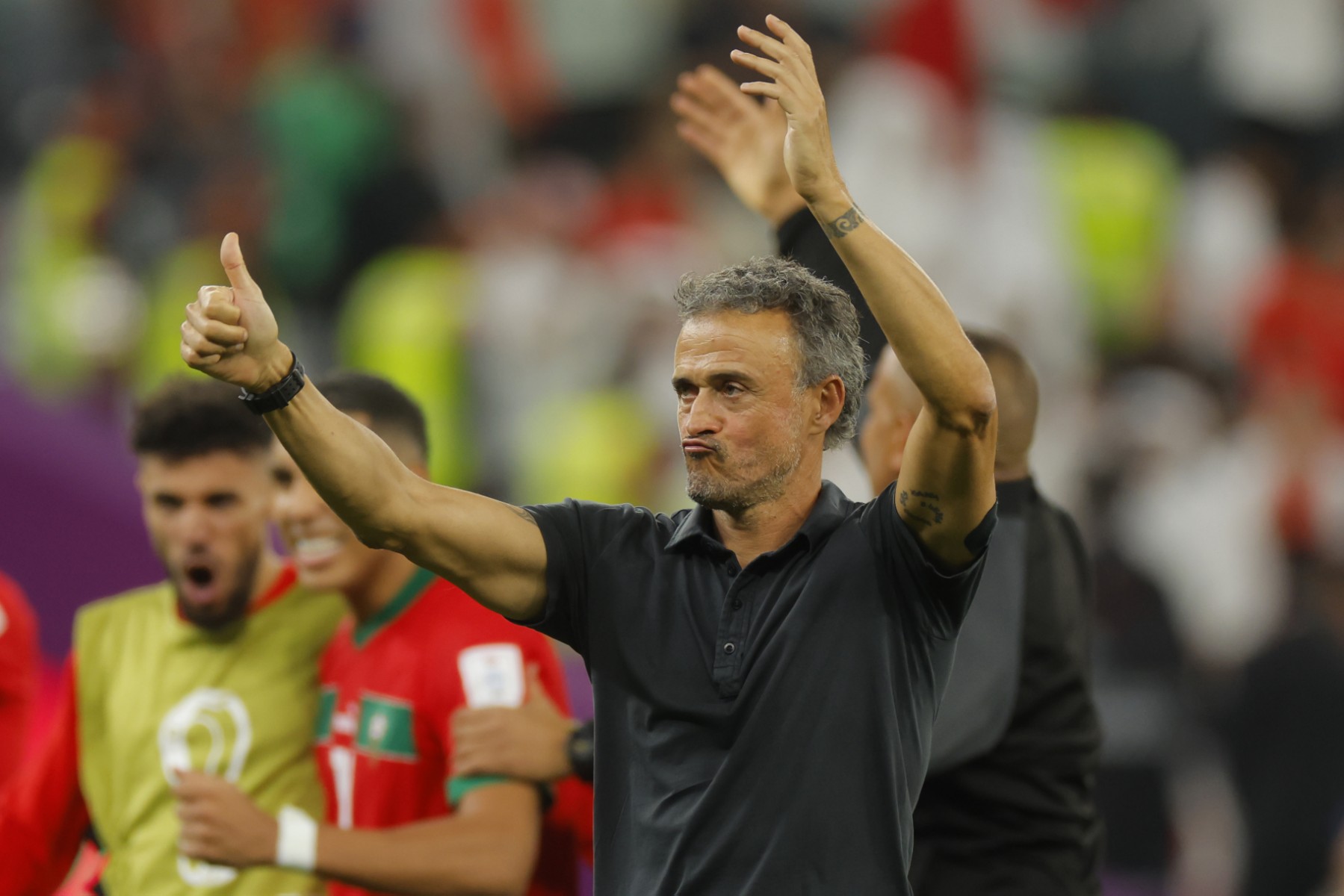
But hats off to Spain national coach Luis Enrique who announced his departure from international football days after Spain lost to Morocco on penalties in the round of 16 clash of the World Cup in Qatar. Maybe the same for Brazilian coach Tite after the shocker penalty-kicks loss to Croatia.
More inspiring, he took the blame for the team’s non-performance as at the start of the tournament they looked among the odds-on favourites after the awe-inspiring 7-0 white-wash of Costa Rica.
Even in my view, I thought this was Spain’s year as their strikers were simply awesome in their goalmouth finishings.
PARTING WAYS
In a statement by the Spanish football federation (RFEF), it was confirmed that the 52-year-old head coach would part ways with the national team just days after his side were knocked out of the competition in Qatar.
The decision came after both parties agreed to not extend his current contract which expires at the end of the year.
“The RFEF would like to thank Luis Enrique and his entire coaching staff at the helm of the absolute national team in recent years,” read a statement on the Spanish FA website, which stated that a report had been sent to the president, suggesting a change in manager would be ideal for a “new project” to begin.
It continued: “The coach earns the love and admiration of his collaborators in the national team and of the entire Federation, which will always be his home.”
FOURTH MANAGER
Spain’s Under-21 manager Luis de la Fuente is expected to replace him.
Enrique, who was first appointed Spain’s coach in 2018, had a contract until the end of the year. He is the fourth manager to get the boot.
De la Fuente joined the RFEF in 2013 as the Under-15 manager, having worked with players, such as Marco Asensio, goalkeeper Unai Simon, Eric Garcia, Pau Torres, Pedri, Carlos Soler and Dani Olmo when they were youngsters.
REVAMP SPAIN
Spain media said Enrique was initially hired in 2018 to revamp a national team that was struggling to move on from the golden generation of World champions from the 2010 World Cup.
Many would suggest that the former Barcelona coach did just that after introducing a host of youngsters like Pedri, Gavi and Ansu Fati. It is reported that Enrique would be keen to get back into club management now that his stint with the national side has come to an end.
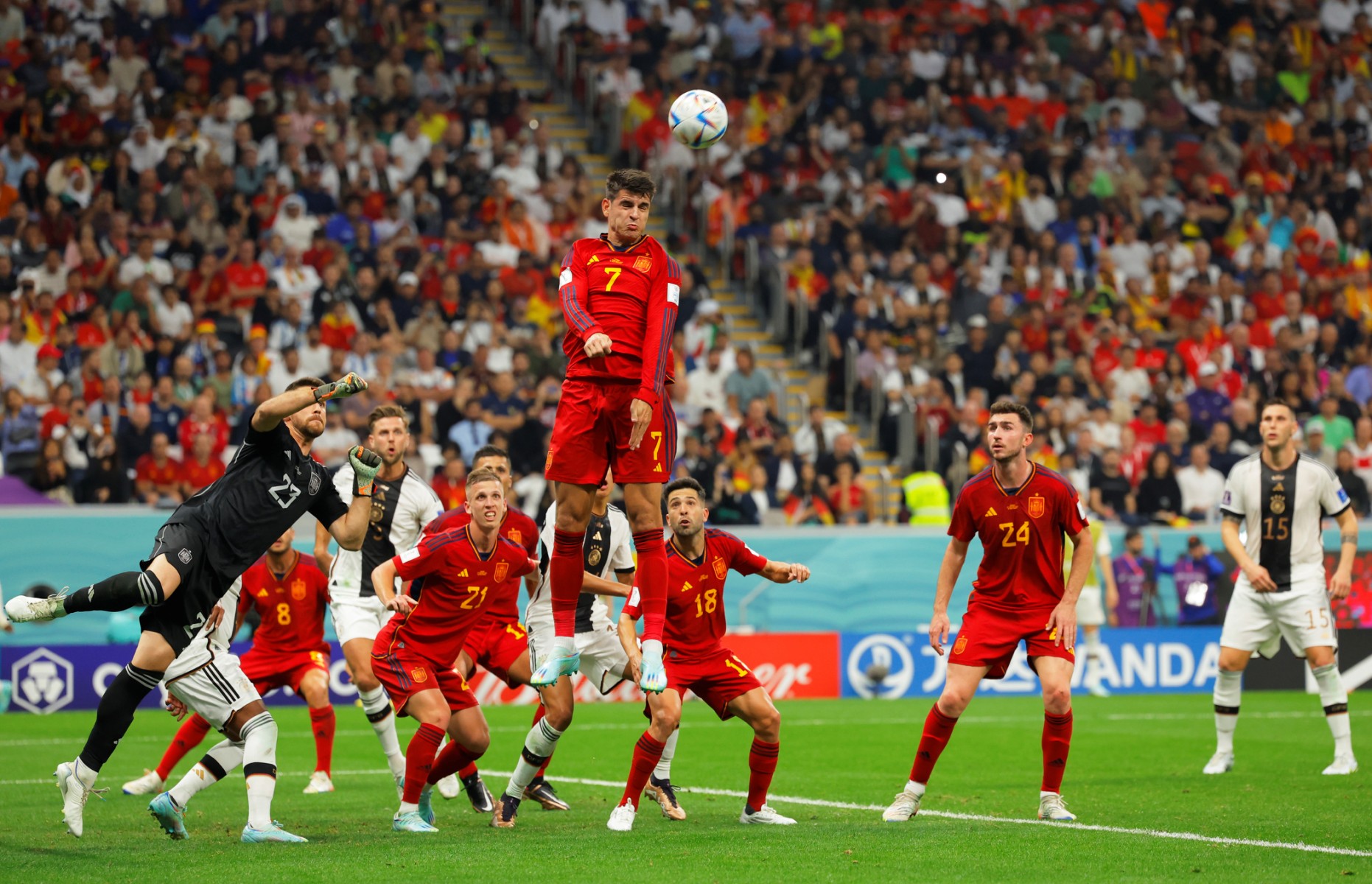
Spain began their World Cup campaign in superb fashion after blanking Costa Rica 7-0. The initial euphoria soon turned sour. La Roja drew 1-1 to Germany, lost 2-1 to Japan before losing out in penalties to Morocco.
But whatever you may summarise, the big coaches know they have to throw in the towel if they don’t deliver the goods.
The price of big-time football, perhaps?
* Suresh Nair is an award-winning sports journalist who is also a qualified international coach and international referee instructor.