BEIJING: A 29-year-old woman, identified only by the surname He, has been taken into custody on suspicion of spreading defamatory comments about Chinese athletes and coaches on social media. The said arrest followed after the thrilling table tennis women’s singles final at the Paris Olympics.
Defamatory comments against Chinese athletes/coaches
The Daxing district police reported that the suspect “maliciously fabricated information and blatantly defamed others,” causing a negative ripple effect in society. The investigation into the case is ongoing, although the exact nature of the defamatory comments has not been revealed to the public.
The match in question, which took place on August 3, saw defending champion Chen Meng triumph over her teammate Sun Yingsha in a nail-biting 4-2 victory. This match was a repeat of their previous encounter at the Tokyo Olympics three years prior. The game was marked by audible cheers for Sun and boos for Chen whenever she scored, as captured in the event’s broadcast.
The crowd’s behavior sparked a wave of criticism on social media. One Weibo user expressed concern, stating, “If this kind of fan culture is allowed to permeate sports, it can ultimately undermine even the most talented athletes, like Sun Yingsha.”
In response to the online backlash, Weibo, China’s equivalent of Twitter, took action by deleting over 12,000 posts and banning more than 300 accounts for what it termed “illegal” comments.
Amidst this controversy, there was a moment of pure joy and national pride for China as swimmer Pan Zhanle shattered his own 100 meters freestyle world record. However, this triumph was slightly overshadowed by reports that two Chinese swimmers had tested positive for a banned steroid in 2022, once again bringing the issue of doping into the spotlight.
Importance of fair play
As the Olympic spirit continues to inspire and unite people around the globe, the incident serves as a reminder of the importance of fair play, both on and off the field.
The authorities’ swift action in addressing the defamatory comments underscores the commitment to maintaining the integrity of the sporting community and ensuring that athletes are respected and protected from unwarranted attacks.
Chinese Olympic champion Zhang Yufei has appealed to people to “look at the Chinese swimming team through an unbiased lens in response to the unfair treatment and criticism that Chinese swimmers are facing”, reports China’s Global Times.
Zhang, who was one of 23 Chinese athletes who tested positive for a banned substance before the Tokyo Olympics, said on Saturday (July 27) that she and her teammates had been wrongly accused of doping and insisted that China would never allow any athlete to use performance-enhancing drugs, reports the New York Times.
China claims the athletes inadvertently ate contaminated hotel food, a claim reiterated by Zhang.
“I don’t think any athlete, Chinese or non-Chinese, would want to destroy the work they built up every day over the years on doping,” Zhang said in Paris on Saturday (July 27) in the first public comments by a member of the Chinese swimming team at the centre of the doping scandal, reported the Times.
Zhang wins two medals
Zhang, who won gold in the 200-metre butterfly at the 2020 Tokyo Olympics, claimed two medals in Paris on Saturday. She picked up bronze in the 100-metre butterfly—an event in which she won silver in Tokyo—and helped China finish third in the 4×100-metre women’s freestyle relay.
Zhang, Yang Junxuan, Cheng Yujie and Wu Qingfeng clocked a time of 3 minutes 30.30 seconds in the 4×100-metre, setting a new Asian record.
Australia, nevertheless, won the women’s relay, keeping the crown they won in Tokyo, the team made up of Emma McKeon, Mollie O’Callaghan, Meg Harris and Shayna Jack.
The United States came second, with Simone Manuel, Gretchen Walsh, Torri Huske and Kate Douglass making up the team.
Chinese men finish fourth
The Chinese women fared better than the men who, after a strong start, finished fourth in the 4×100-metre freestyle relay. The United States won gold, with Jack Alexy, Chris Guiliano, Hunter Armstrong and Caeleb Dressel on the team. Australia took silver and Italy bronze.
Pan Zhanle gave China a head start, chalking up 46.92 seconds in his leadoff split in the men’s relay, breaking the Olympic record for the men’s 100-metre freestyle. But the United States rallied and won the race in 3:09.28, retaining the crown they had won in the 2016 Rio de Janeiro Games and defended in Tokyo.
“My performance was not good enough. If I had created a greater advantage, we could have reached the podium,” said Pan, the world record holder in the 100-metre freestyle.
China’s Zhang Yufei said on Sunday that she was satisfied with her bronze medal in the women’s 100m butterfly at the Paris Olympics, her second podium finish in the event. #Paris2024pic.twitter.com/IDZAFQ2UYM
Zhang, meanwhile, faced the Americans Torri Husk and Grethen Walsh also in the 200-metre butterfly. Huske won the race, and Walsh finished second, pushing Zhang to third place.
Seen weeping after the award ceremony, Zhang said, “Perhaps I’ve pushed myself too hard.” She added, “I did feel a lot of pressure, but I also believe in my own abilities and look forward to competing against strong opponents next time.”
Her hometown fans consoled her. The hashtag “#YufeiDon’tCry” surged to the top of Weibo’s trending list. “Don’t cry, Yufei! We’re so proud of you. You’re really, really good,” one Weibo user commented.
China concern over large number of drug tests
China is worked up over the intensive drug testing of Chinese athletes following doping allegations.
Zhang told the Xinhua News Agency that in the two months before the Paris Olympics, every athlete on the Chinese swimming team was tested 20 to 30 times, averaging three to four tests per person per week.
Some suspect the tests are affecting the athletes.
“Something must have gone awry with the athletes’ pre-competition training. Personally, I believe that seven doping tests in one day might have disrupted our Chinese swimming team,” highly decorated Olympic diver Gao Min wrote on Weibo.
Zhang appeals for understanding
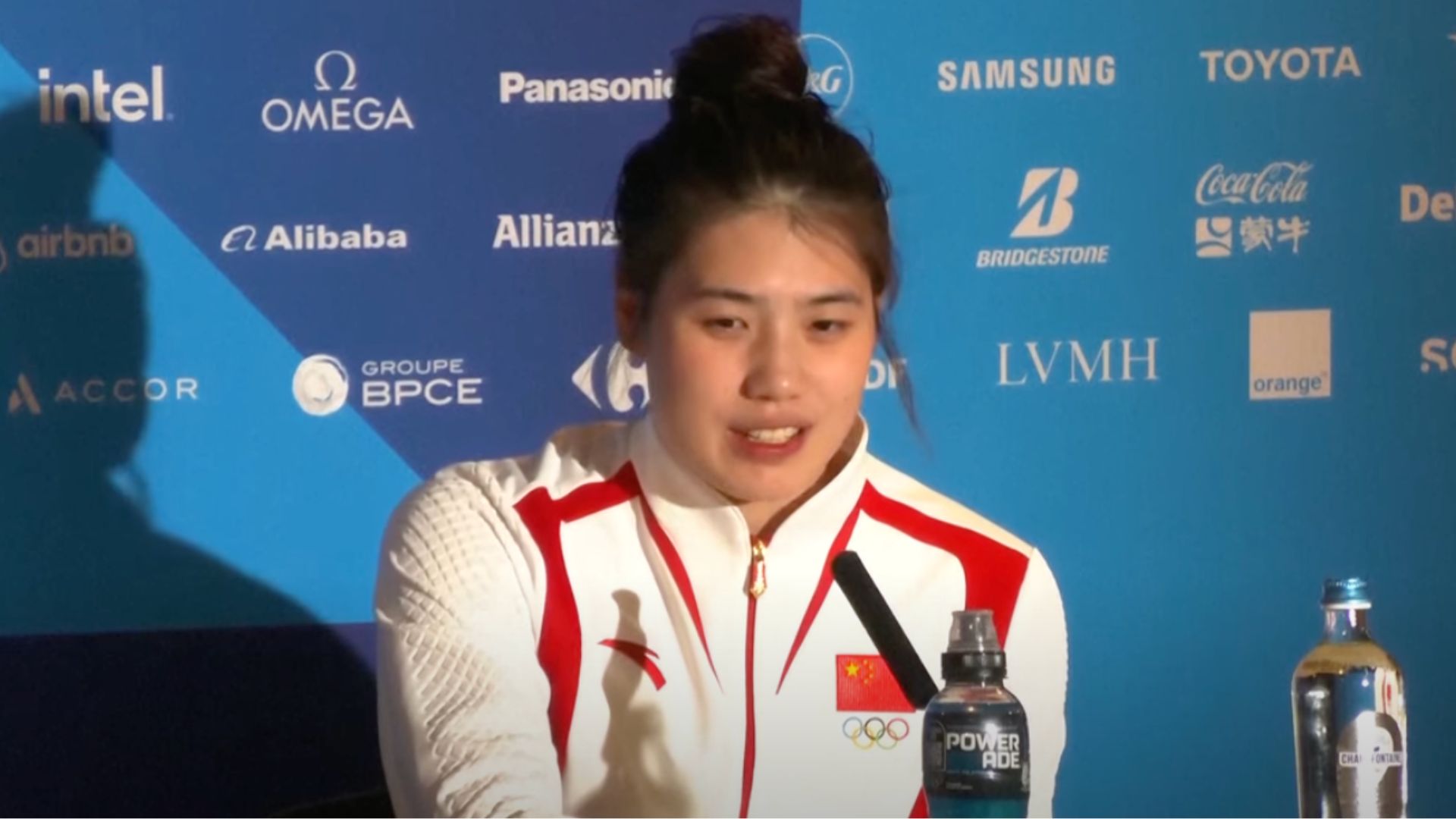
Zhang appealed for understanding in an Olympic poolside interview after advancing to the semi-finals of the 100-metre butterfly.
“Before last year, and before the scandal broke out, I got along really well with competitors from other countries. Now at this Olympics, I’m really worried that my good friends will look at me differently, that they would be unwilling to compete with me or watch me compete,” she said.
“I’m even more worried that the French public would think that Chinese athletes do not deserve to compete at this stage, so I feel very misunderstood.”
‘Butterfly queen’ Zhang Yufei asks: Why question Chinese swimmers and not those from the West?
China’s most decorated Olympic swimmer Zhang Yufei with three Paris Olympics medals already in her bag didn’t mince words when an Australian reporter questioned the legitimacy of her male compatriot Pan Zhanle’s new world record. Pan’s success was the result of the hard work, she said. Why are questions raised about the Chinese and not those from Western countries, she asked.
Zhang was among the 23 Chinese swimmers allowed to compete in the Tokyo Games three years ago despite testing positive for a banned substance, the New York Times and German broadcaster ARD reported in April. The Chinese said they tested positive because they inadvertently ate contaminated hotel food. Since then they have undergone intensive drug tests to be eligible for the Games.
Medals for Zhang Yufei
Zhang, called the “butterfly queen’ in China, won bronze in the 200-metre butterfly in Paris on Thursday (August 1) despite suffering from fever and dysmenorrhea (painful periods or menstrual cramps), reported China’s Global Times. She had also won bronze in the 100-metre butterfly and the 4×100m-metre women’s freestyle relay, where China finished third behind Australia and the United States.
The 26-year-old said she was impressed with herself for being able to take part in the 200-metre butterfly despite her physical condition.
“I think this is probably one of the most difficult races I’ve had at these Olympics. I’m much better now, but when I was swimming my hands were a little bit numb because right now I am on my period and I was also in pain during the race,” she told the Xinhua News Agency.
Zhang is now the most decorated Olympic swimmer from China with seven medals from Tokyo and Paris. “I hope to use my performance to gain recognition for Chinese athletes, showing that we are not just a flash in the pan but can be as enduring as foreign athletes,” she said.
The Chinese swimming team has won one gold, two silvers and four bronzes in Paris – the gold won by Pan Zhanle, who broke the men’s 100-metre freestyle world record, on Wednesday (July 31).
Pan, 19, won the 100-metre men’s freestyle in 46.60 seconds, shaving 0.40 seconds off the mark he set at the world championships in Doha, Qatar, in February.
Some found Pan’s achievements “unbelievable”, said an Australian reporter at a press conference.
Zhang on Pan
Zhang replied that Pan’s success was the result of hard work and should not be viewed with scepticism.
“Pan had consistently swum under 47 seconds prior to achieving his new world record, indicating a stable and continuous improvement rather than a sudden leap in performance. Pan’s achievements were legitimate and attained under stringent anti-doping protocols,” said Zhang.
“Why are Chinese athletes questioned when they achieve fast times, yet no one doubted Michael Phelps when he won seven or eight gold medals? Similarly, Katie Ledecky has dominated long-distance swimming from 2012 to 2024, winning gold in every event, yet no one questioned her performances?” she added.
Chinese swimmers have undergone frequent doping tests, especially during the week leading up to the Paris Olympics, the Global Times reported.
Zhang told the Xinhua News Agency earlier that in the two months leading up to the Paris Olympics, every Chinese swimmer was tested 20 to 30 times, averaging three to four tests per person per week.
After winning the 100-metre freestyle on Wednesday, Pan said:”Last year, I underwent 29 tests, and not once did I test positive. This year, from May to July, I had 21 tests, and again, not a single positive result.”
Pan was not one of the swimmers named in the New York Times investigation.
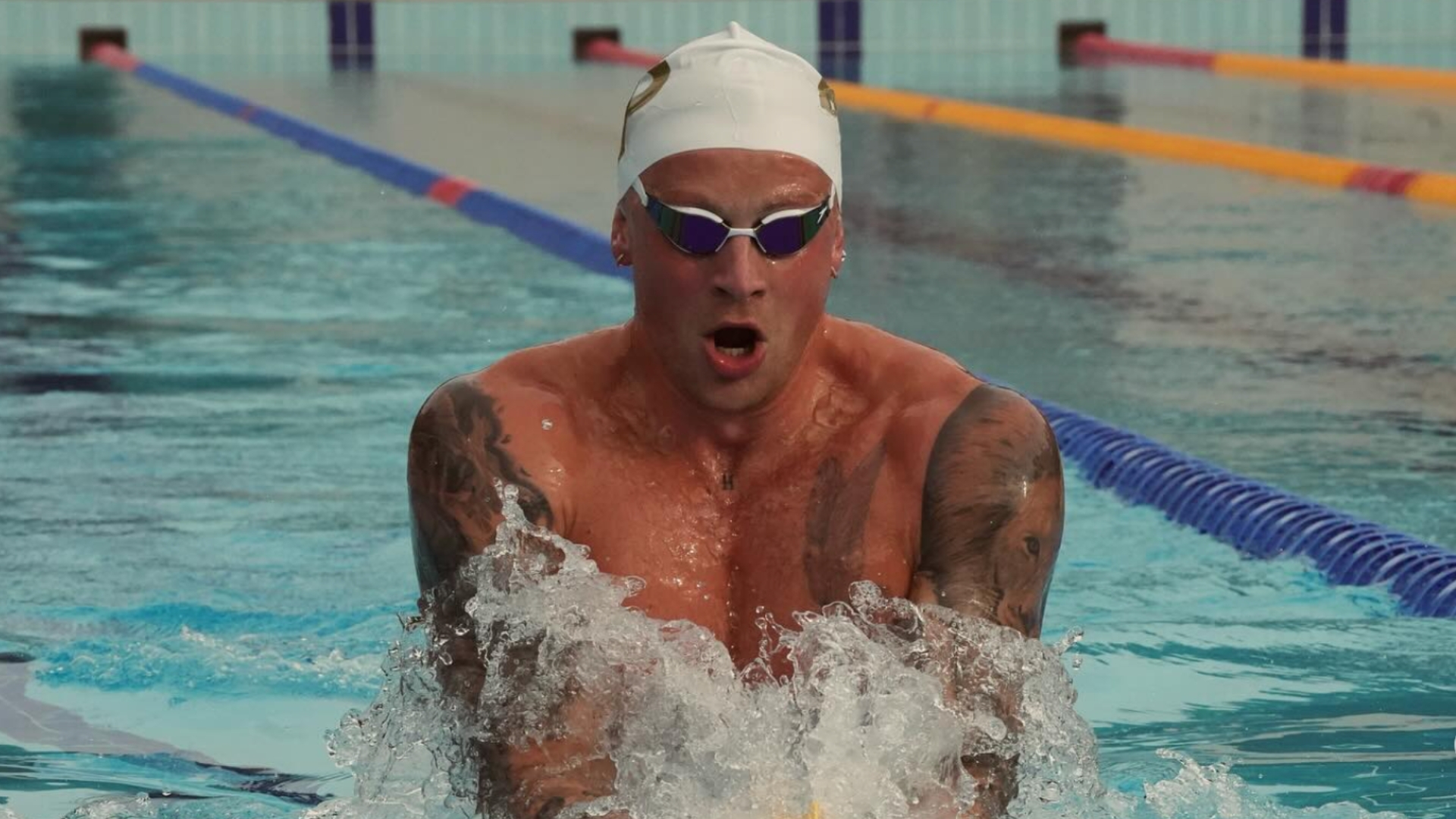
Adam Peaty, a three-time Olympic gold medallist from Great Britain, called on the World Anti-Doping Agency (Wada) to do their jobs right and stated that Chinese athletes who are deemed to be cheating should be removed from the sport.
In the men’s 4×100-metre medley relay, China won gold in 3 minutes, 24 seconds, surpassing the US by 0.55 seconds and the bronze-winning French team by 0.92 seconds. Peaty, whose British team placed fourth overall with a performance record of 3:29, hinted that there might have been more going on in the race.
The athlete said: “In sport, one of my favourite quotes I’ve seen lately is ‘There’s no point in winning if you don’t win it fair’… I think you know that truth in your heart… Even if you touch and you know you’re cheating, you’re not winning, right?”
“So, for me, if you’ve been on that and you have been contaminated twice, I think as an honourable person, it means you should be out of the sport. We know sport is not that simple,” Peaty added.
Discontent with the system
Peaty claimed he kept quiet about the issue during the Games in order to maintain his composure, but that he finally felt it was appropriate to voice his displeasure with the system.
He declared: “We’ll see how they do in four years’ time, but I think the people that need to do the job will wake up and do the job… We’ve got to have faith in the system, but we don’t… It’s just got to be stricter. What I’ve said from the start is that it is a fraud. If you’re cheating, it is fraud.”
Qin Haiyang and Sun Jiajun, two of the four swimmers from China’s relay team, were among the 23 swimmers who tested positive for a prohibited heart medicine prior to the 2020 Tokyo Games, but Wada let them compete in Paris. Wada supported its ruling, but subsequently, two swimmers who tested positive for a prohibited steroid in 2022 have been accused of doping again, as reported by The New York Times.
While he believes the two situations are unjust, Peaty clarified that he does not mean to generalize about all Chinese athletes. He said: “I don’t want to paint a whole nation or a whole group with one brush, I think it’s very unfair… But there have been two cases of it and I think it’s very disappointing, and I’ve tried to keep out of the conversation until now for the betterment of the team… I think we’re going to use that to our advantage the next four years, whether I’m there or not.”
A number of Chinese swimmers, like Qin and 10-time Olympic medallist Zhang Yufei, have defended themselves, saying that their opponents are threatened and that they are innocent of any doping charges. Athlete Qin remarked: “Some tricks aim to disrupt our preparation rhythm and destroy our psychological defense… But we are not afraid.”
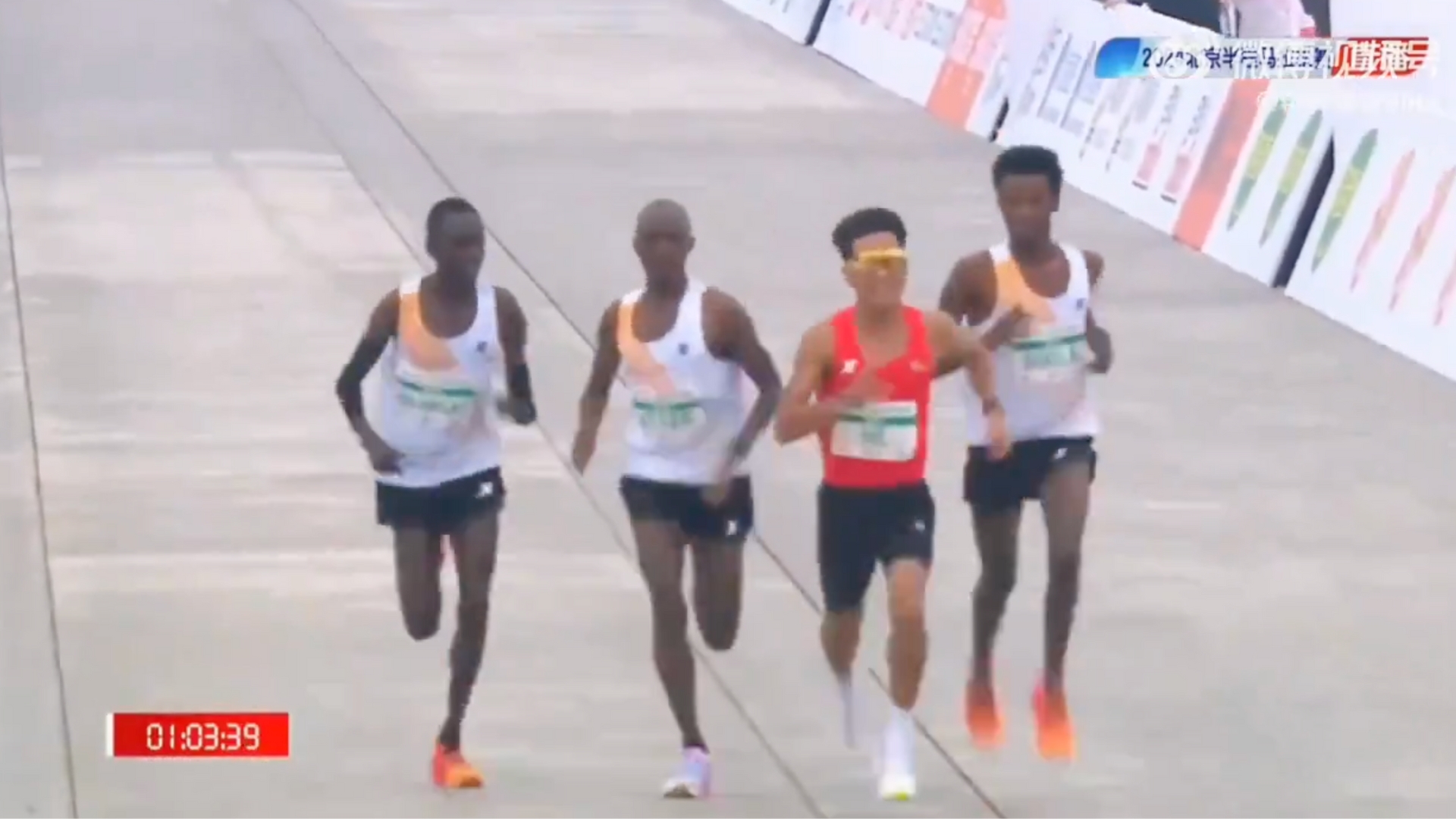
Organisers of the Beijing half marathon are investigating allegations that three African athletes deliberately allowed China’s star runner He Jie to win Sunday’s race.
The event generated questions and suspicions due to unruly comments speculating from the players and spectators. The track and field competition became controversial after Chinese athlete He Jie was declared victorious despite accusations from other competitors. After the 13.1-mile race, conversations erupted on Chinese social media, which led to an official inquiry.
Rumors were circulating that one of the other competitors acknowledged allowing He Jie to win out of camaraderie. The moment Kenyan competitors Robert Keter and Willy Mnangat, Ethiopian Dejene Hailu, and local runner He Jie reached the finish line was captured on camera during the race, adding more fire to the existing controversy about the race’s true story.
Marathon cheats
The last kilometers of the Beijing half-marathon transpired with much mystery. The two Kenyan runners and one Ethiopian, and 25-year-old Chinese athlete He Jie—who had won the marathon gold at the 2023 Asian Games—were among leading. These four competitors were said to have kept a tight pace the whole race, appearing to coordinate from the start.
Spectators saw a turning point as the race was coming to a close. He Jie fell behind his colleagues from East Africa. Perceiving the change in circumstances, the Ethiopian and Kenyan runners, as well as their Chinese rival, seemed to slow down, giving him a tiny advantage. With a tiny one-second margin of victory, this quiet yet powerful gesture helped him cross the finish line.
Sports commentators were aware of the runners’ coordinated effort and noted that the four of them worked well together throughout the race. The Beijing Half Marathon aftermath has drawn a great deal of attention and reproach, with state-run news agency China Daily denouncing the event as a “mockery” of sports integrity.
He Jie’s goals to compete in the Olympics in Paris are unaffected by the scandal, but the fiasco has damaged China’s reputation for sportsmanship.
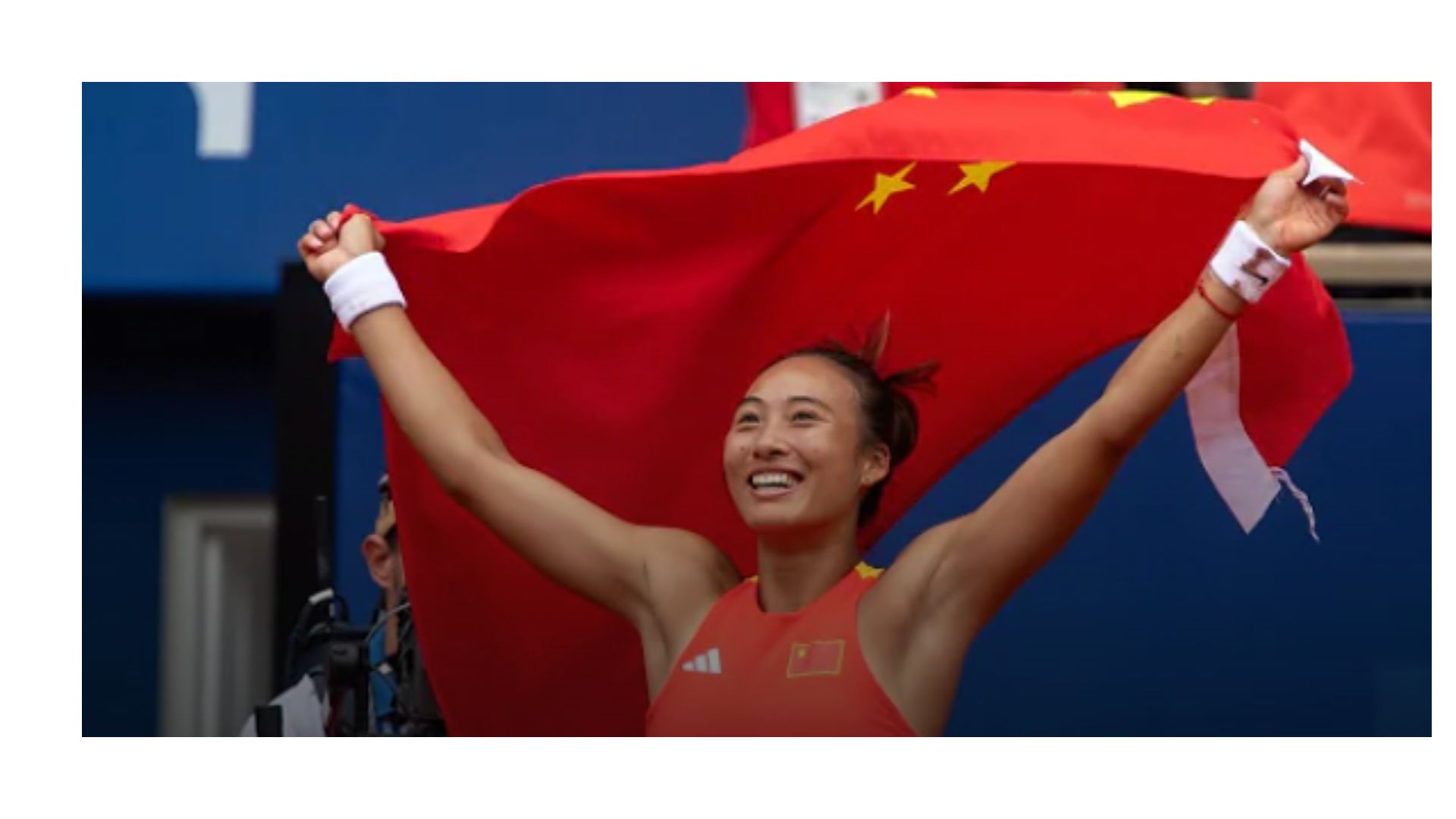
Olympic debutante 21-year-old Zheng Qinwen, became the first Chinese player to win an Olympic tennis singles gold medal when she defeated Croatia’s Donna Vekic 6-2, 6-3 in a thrilling final in Paris on Saturday (August 3).
She won’t be the last Chinese Olympic tennis champion, asserted China’s Xinhua News Agency in a burst of patriotic pride.
Praising the young tennis player, Xinhua said: “At 21, the gold could perhaps be the first of many medals for her at the Olympics, or it could be her last. However, one thing is for sure: the gold, and the inspiration that it will provide to young girls and boys back in her homeland, won’t be the last for China.”
Zheng’s victory completed a memorable week for China after Wang Xinyu and Zhang Zhizhen claimed the silver medal in the mixed doubles in tennis on Friday.
Though a new face in the Summer Games, Zheng had already proved her mettle. She was a finalist in the 2024 Australian Open, where she lost to the defending Aryna Sabalenka.
In the Paris Olympic final, she seemed the stronger contender. Zheng is the world No 7, her opponent Donna Vekic, 28, is No. 21.
Zheng also caused the biggest upset in the tournament beating the favourite and world No 1 Iga Swiatek In the semi-finals.
Moreover, she had the crowd behind her. A large Chinese contingent inside Roland Garros’s Court Philippe Chatrier cheered her on.
Vekic also had a good run. She advanced to the semi-finals at Wimbledon before competing in the Paris Olympics, where she defeated the US Open champion Coco Gauff.
Zheng, however, got the better of Vekic, defeating her in straight sets with the same powerful serves and groundstrokes she used to eliminate Iga Swiatek in the semi-finals.
Serving for the match at 5-3, Zheng reached match points as Vekic drove a backhand wide. Zheng finished the match with a well-placed forehand winner before falling to her back with joy.
Poland’s Swiatek finished with the bronze medal after beating Slovakia’s Anna Karolina Schmiedlova 6-2, 6-1 on Friday. She snapped a selfie with Zheng and Vekic during the medal ceremony.
“To win a medal for Croatia was a lifelong dream,” the 28-year-old said. “I wanted gold but still so happy and so proud. She was better than me today and deserved it.”
China’s only other Olympic gold medal in tennis came in 2004 when Li Ting and Sun Tian-Tian won the women’s doubles in Athens.
Zheng’s aspirations
Zheng said she wanted to be a role model. “I always want to become one of the Asians that can inspire young kids and make them love tennis more, because tennis is such a great sport, especially for girls. You need to fight. You need to have strength. You need to be fast,” said Zheng, who signed several autographs for members of the crowd after the match. “After this gold medal, I feel, finally, I can play tennis more relaxed.”
She still has to match her idol, though. Zheng looks up to Li Na, the only Chinese player to win Grand Slam singles titles — at the 2011 French Open and 2014 Australian Open .
“I have always been jealous of history-makers like Li Na,” Zheng said. “No matter what, she’s always the first, because she’s the first Asian player to win a Grand Slam. And I now become the first Asian player to win Olympic gold. I made history, as well. However, I still have a long way to go, because winning a Grand Slam is always my dream.”
She also spoke about her parents, who introduced her to tennis when she was seven years old. Her mother left her her job when she was 12 to make sure she ate and slept properly. Her father always pushed her hard, making her practise even on the Chinese New Year, when “everybody rests. But me? There’s no day of rest.”
“My success is not only my success. A lot of that is coming from my parents,” Zheng said. “They teach me how to be disciplined. They teach me how to stay focused on your dream. They always believed in me.”
“This Olympic journey has not been easy,” she said. “But there is a strength holding me. I never give up.”
Zheng said, “I felt like I represented all of Chinese tennis, knowing the Chinese people were cheering for me. Winning the gold made all the hard work and struggles worthwhile,” reported Xinhua.