Emma Raducanu of Britain declined treatment for an insect bite before the start of the Australian Open this weekend out of concern that she would accidentally consume a contaminated product.
Prior to her match against the 26th-seeded Russian Ekaterina Alexandrova in the first round of the competition, the former US Open Champion admitted that she was getting cautious due to recent high-profile doping instances.
Raducanu said: “I got really badly bitten by I don’t know what, like ants, mosquitoes, something. I’m allergic, I guess… They flared up and swelled up really a lot. Someone was giving me this antiseptic spray, natural, to try to ease the bites. I didn’t want to take it. I didn’t want to spray it.”
She added: “I was just left there with my swollen ankle and hand. I was like: ‘I’m just going to tough it out because I don’t want to risk it.’ It’s obviously a concern on our mind.”
High-profile doping scandals
Last year, men’s world number one Jannik Sinner shocked the tennis community when he tested positive for the illegal drug clostebol. He was exempted from a ban after an independent tribunal hearing found he had not been at fault or negligent. The tribunal accepted his explanation that he had been inadvertently contaminated with the drug during a massage by his physiotherapist.
The women’s five-time Grand Slam winner Iga Swiatek also tested positive for a prohibited substance called trimetazidine, which was an ingredient for her sleeping drug melatonin. She was also exempted from a lengthy ban when the tribunal accepted this reasoning.
Raducanu stated that every player needs to be careful. She said: “We’re all in the same boat. I think it’s just how we manage as best as we can the controllable… If something out of our control happens, then it’s going to be a bit of a struggle to try and prove.”
Iga Swiatek says the people evaluating her doping case have been treating her “like a liar”. She can’t get that out of her mind ahead of the Australian Open.
In August 2024, the current world No. 2 tested positive for a banned drug called trimetazidine, and it resulted in a one-month suspension that she served in November and December. Now that Swiatek is back on the WTA Tour, she may compete in the Australian Open, which she has yet to win.
Swiatek shared her thoughts about the doping case on the Tennis Insider Club podcast and stated: “It was terrible…Honestly, I don’t love tennis that much to feel this bad. If it [were to] happen to me a second time, I don’t know if I would be able to go through this a second time because it was terrible, honestly.”
She added: “I couldn’t go on court for two weeks because I felt it was because of tennis that I am in this place. I felt it hit me much deeper than… my ‘athlete’ side. It hit my personal side because I thought everybody would turn their backs on me.”
According to the ITIA’s statement, Swiatek’s positive test resulted from “the contamination of a regulated non-prescription medication (melatonin)”, which she claimed she took to treat her jet lags and sleep concerns.
The athlete remarked: “I had no idea what happened… We had to send supplements to the labs and wait for the results. It was so chaotic, I didn’t know if it was going to be two years or three months or something else.”
“It was really tough. I don’t want to go through this again,” she said.
Swiatek: “You literally have no control over this”
The four-time French Open champion lamented that the people prosecuting her were treating her “like a liar”.
“You can be at peace with yourself that you didn’t do anything wrong, but no one actually treats you like that, especially the people that are prosecuting you… They want to find that even when you are telling the truth you feel like they treat you like a liar,” Swiatek said.
“But it’s the law and at the beginning it was hard for me to accept it, but my team told me from the beginning, ‘Don’t expect anything and don’t overthink what the outcome might be, because you literally have no control over this’.
“We just tried to find the source [of the contamination] and we found it, but it wasn’t that obvious. When we had it, we just went through it step by step, proving my innocence and, luckily, they made a pretty rational decision,” she added.
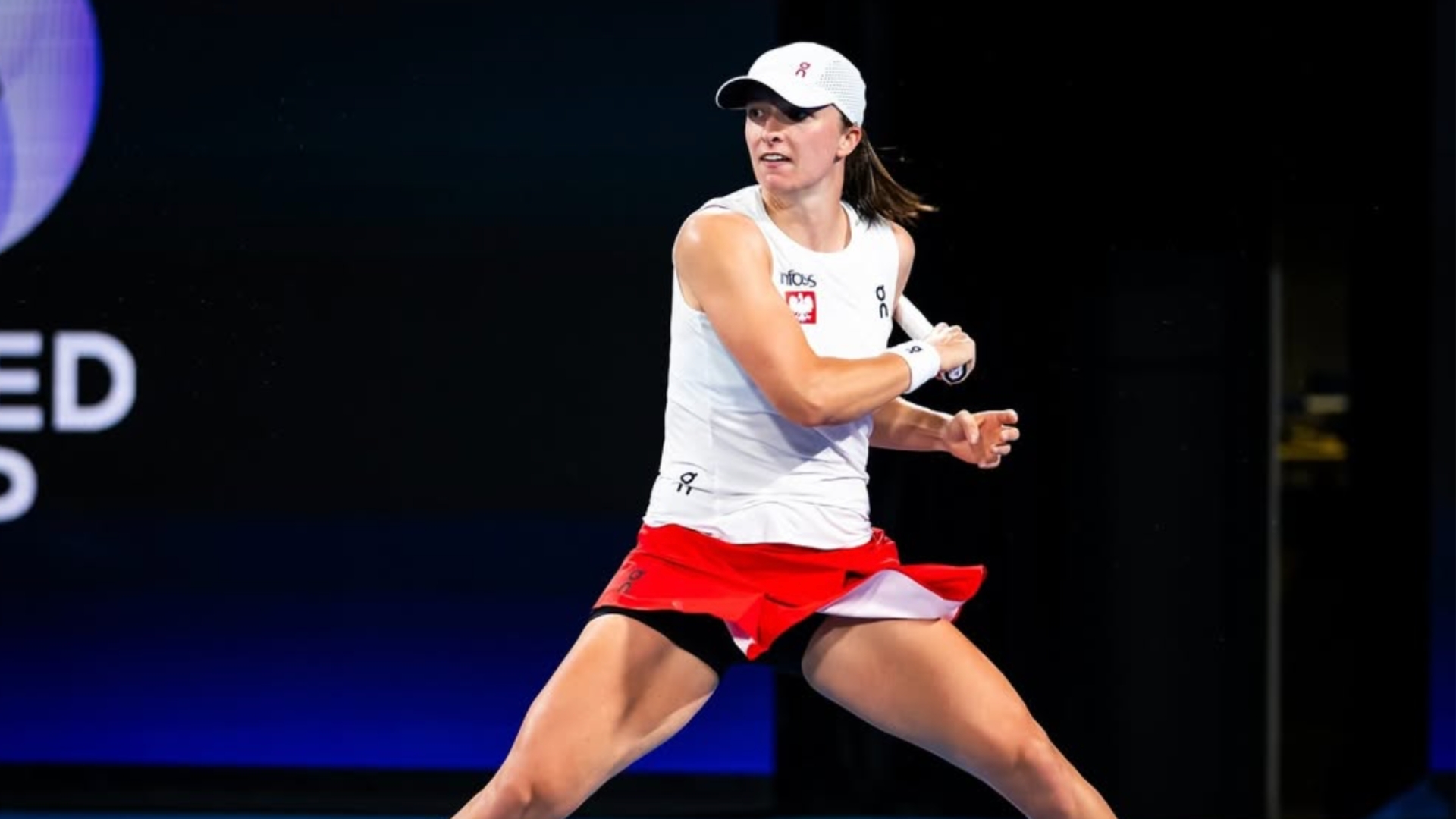
Swiatek began the new year by leading Poland to the United Cup final in Perth, where they faced the USA. In the lead-up, she defeated world No. 6 Elena Rybakina and Katie Boulter of Great Britain, losing one set against Boulter. In her last rubber, she was defeated by Coco Gauff.
Iga Swiatek discusses her ‘horror and disappointment’ about her doping case, after testing positive for a banned substance called trimetazidine (TMZ) last August.
In September, she was informed of her positive test results and issued a one-month penalty, which she partially served during her absence from the Asia swing.
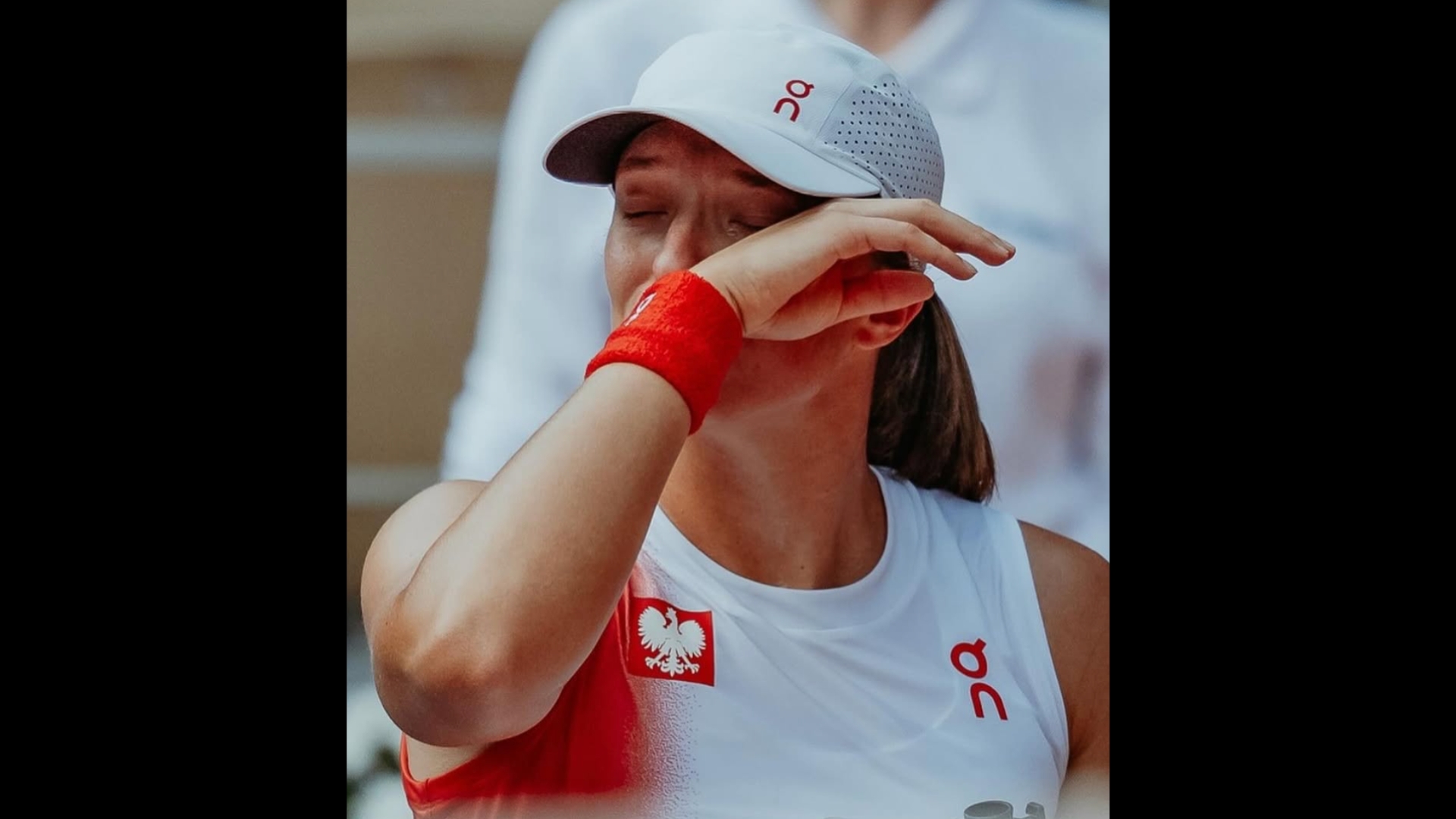
When asked about her reaction to the unexpected test result, Swiatek declared: “My reaction was very intense. It was a mix of confusion and panic. There was a lot of crying…. My manager said my reaction was like someone had died or something serious had happened to my health.”
She added: “I thought it might be a mistake. I really didn’t understand what was happening. The name of the substance itself was completely unfamiliar to me. I had never heard of its origin. I didn’t think much, I was just overwhelmed with emotions.”
After men’s world No. 1 Jannik Sinner, Swiatek is the second well-known athlete to test positive for a prohibited substance this year.
Moreover, Swiatek admitted: “Just stepping onto the court was painful. If it hadn’t been for my training partner, Tomek Moczek, who at the beginning was doing training sessions with me like you do with kids – we were just having fun on the court – I think I wouldn’t have gone out to practice at all… The truth is, I love playing tennis, but not enough to sacrifice my honour or my values. I was put in a situation where suddenly people could judge me very negatively because of what happened.”
In comparison with other athletes’ doping cases
She also stated that it was hard to compare her case to other athletes who also got a doping ban. Swiatek declared: “I know that people automatically need to compare such situations to others that have happened before, but the truth is that each of these cases is completely different. And the process of proving innocence will also vary accordingly.”
“It’s hard to compare me to Sinner, Halep, or Kamil Majchrzak because each of us is dealing with a different issue. I think that’s more of a question for the ITIA than for the player. My fate, just like others, was in their hands, and they decide how each case unfolds…. I trust that this process is objective, that everything is done according to the rules, and that no one judges a player either way based on their ranking.”
“What mattered most to me was that I could start the new season with a clean slate and just focus on playing,” she said.
The International Tennis Integrity Agency (ITIA) announced that Polish athlete Iga Swiatek has agreed to a one-month suspension after testing positive for an illegal substance.
The five-time Grand Slam winner tested positive for a prohibited drug called trimetazidine.
The ITIA declared: “The ITIA accepted that the positive test was caused by the contamination of a regulated non-prescription medication (melatonin), manufactured and sold in Poland that the player had been taking for jet lag and sleep issues, and that the violation was therefore not intentional.”
The ITIA offered the athlete a suspension on November 27. The agency added: “The player was provisionally suspended from 22 September until 4 October, missing three tournaments, which counts towards the sanction, leaving eight days remaining… In addition, the player also forfeits prize money from the Cincinnati Open, the tournament directly following the test.”
In a social media post, the athlete admitted: “In the last 2.5 months I was subject to strict ITIA proceedings, which confirmed my innocence. The only positive doping test in my career, showing unbelievably low level of a banned substance I’ve never heard about before, put everything I’ve worked so hard for my entire life into question. Both me and my Team had to deal with tremendous stress and anxiety. Now everything has been carefully explained, and with a clean slate I can go back to what I love most.”
It is prohibited for athletes to use trimetazidine, both during and after competition, as it is classified as a ‘metabolic modulator.’ Unlike other stimulant-class performance-enhancing medicines, this specific drug is made to help with endurance in physical exercise, even though it would not raise the athlete’s heart rate.
All because of melatonin
The result of the test shocked Swiatek. She said: “It was a blow for me, I was shocked and this whole situation made me very anxious. At first I couldn’t understand how that was even possible and where it came from.”
The 23-year-old athlete immediately cooperated with the ITIA, and began conducting tests on medications and nutritional supplements. According to these tests, the melatonin that the athlete claimed to take to aid her in her sleep was contaminated.
Swiatek further said: “This experience, the most difficult in my life so far, taught me a lot… The whole thing will definitely stay with me for the rest of my life, it took a lot of strength, returning to training after this situation nearly broke my heart. So there were many tears and lots of sleepless nights. The worst part of it was the uncertainty.”
The WTA claimed to support Swiatek. WTA stated: “The WTA fully supports Iga during this difficult time. Iga has consistently demonstrated a strong commitment to fair play and upholding the principles of clean sport, and this unfortunate incident highlights the challenges athletes face in navigating the use of medications and supplements.”
“The WTA remains steadfast in our support for a clean sport and the rigorous processes that protect the integrity of competition,” WTA added.
World No. 1 Jannik Sinner avoided the consequences of testing positive after using a banned substance twice in March. This news was disclosed less than 24 hours after the athlete’s victory in the ATP 1000 Cincinnati Open.
In a statement, the International Tennis Integrity Agency (ITIA) declared that Sinner was not at fault or negligent, even though a sample taken in Indian Wells on March 10 tested positive for the anabolic steroid Clostebol at low levels. Eight days later, a second sample was taken, and this one also tested positive at low levels.
Sinner claimed that his physiotherapist’s treatments had accidentally contaminated a substance called Clostebol and this might be the cause of his positive test results. The 2024 Australian Open champion also revealed that his personal trainer had been using an over-the-counter spray on their own skin, rather than on Sinner, in order to heal a minor cut.
In a social media post, the athlete posted a statement declaring: “His fitness trainer purchased a product, easily available over the counter in any Italian pharmacy, which he gave to Jannik’s physiotherapist to care for a cut on the physiotherapist’s finger”
“Jannik knew nothing of this, and his physiotherapist did not know that he was using a product containing Clostebol. … The physiotherapist treated Jannik without gloves and coupled with various skin lesions on Jannik’s body caused the inadvertent contamination,” the statement added.
A player would normally receive an immediate provisional ban following a positive test, but according to the ITIA, they can petition an independent tribunal chair designated by Sport Resolutions to have that suspension lifted.
According to the ITIA, Sinner was able to keep playing after both cases because he successfully appealed the provisional suspension. Moreover, scientific experts found the athlete’s explanation to be reasonable, thus the organization did not object to his requests to have the temporary bans lifted.
Sinner declared: “I will now put this challenging and deeply unfortunate period behind me… I will continue to do everything I can to ensure I continue to comply with the ITIA’s anti-doping programme and I have a team around me that are meticulous in their own compliance.”
Doping allegations really aren’t rare in the sports community anymore. So many athletes have received punishment and have fallen from grace because of it. Their previous achievements were revoked, and their remaining potential was left untapped because of one wrong decision.
The latest athlete to be caught up in doping allegations is none other than the two-time grand slam champion, Simona Halep. The Romanian tennis player, however, continues to challenge the allegations in her latest X post, entitled “My fight continues”.
Halep’s Doping Case
At the 2022 U.S. Open, the 31-year old tennis star was eliminated in the first round of the tournament after losing to Ukraine’s Daria Snigur. But what’s more devastating than her loss, was the news that she tested positive for the AAF, a standard test for the presence of a prohibited substance in a person’s urine. She tested positive for an illegal substance known as “Roxadustat”.
In May of this year, the ITIA found some discrepancies in her ABA (Athlete Biological Report) that were said to be the effects of doping and subsequently filed a second charge against her.
The tribunal ruled on September 11, 2023, that the player had committed an intentional anti-doping rule violation pursuant to Article 2 of the Tennis Anti-Doping Programme (TADP).
Although Halep had argued that she had taken a ‘contaminated supplement’, they said that even if this was the case, the results shouldn’t have produced such a substantial volume of Roxadustat.
Halep has since been provisionally banned for four years. This was made official last October 2022.
So, what is a Roxadustat?
Roxadustat is a medicine for the treatment of anaemia associated with chronic renal disease.
This medicine helps your body make more red blood cells. It does this by making sure your body absorbs iron better and makes more red blood cells, it also helps your body produce more erythropoietin and lowers your hepcidin levels.
So, why are athletes not allowed to ingest this? As mentioned above, this increases red blood cell production, meaning that it also increases the oxygen that’s available to one’s body. And, this can be especially beneficial for athletes due to its ability to improve endurance.
She posted in her X account a recount of what she has gone through in the past year and how she was unfairly charged by the ITIA.
She said that she believes in a clean sport and has undergone 200 blood and urine tests that all came out clean until August 29, 2022.
She also explained that she had altered her nutritional supplements at that time, in accordance with the advice of her team and physiotherapist. However, it has since been discovered that the supplement she was taking was contaminated with the illicit drug Roxadustat, which is why her AAF tests showed a positive result.
She proceeded to blast the ITIA’s experts, claiming they only filed charges for discrepancies in her athlete passport after they knew who she was.
“This group ignored the fact no prohibited substance has ever been found in my blood or urine samples with the sole exception of one August 29 positive for roxadustat, which was present at an extremely low level and which, when considering my negative test three days prior, could only have been caused by accidental exposure to roxadustat.”
Patrick Mouratoglou also released a statement regarding Halep’s four-year ban in his X account, in which he supported the tennis champion.
“I do not believe that the ITIA looked for the truth in Simona’s case, and I do not believe that they treated her in a way that is acceptable. I hope that the WTA, ATP, and PTPA will do their best to change a system that is destroying the careers of innocent players.”