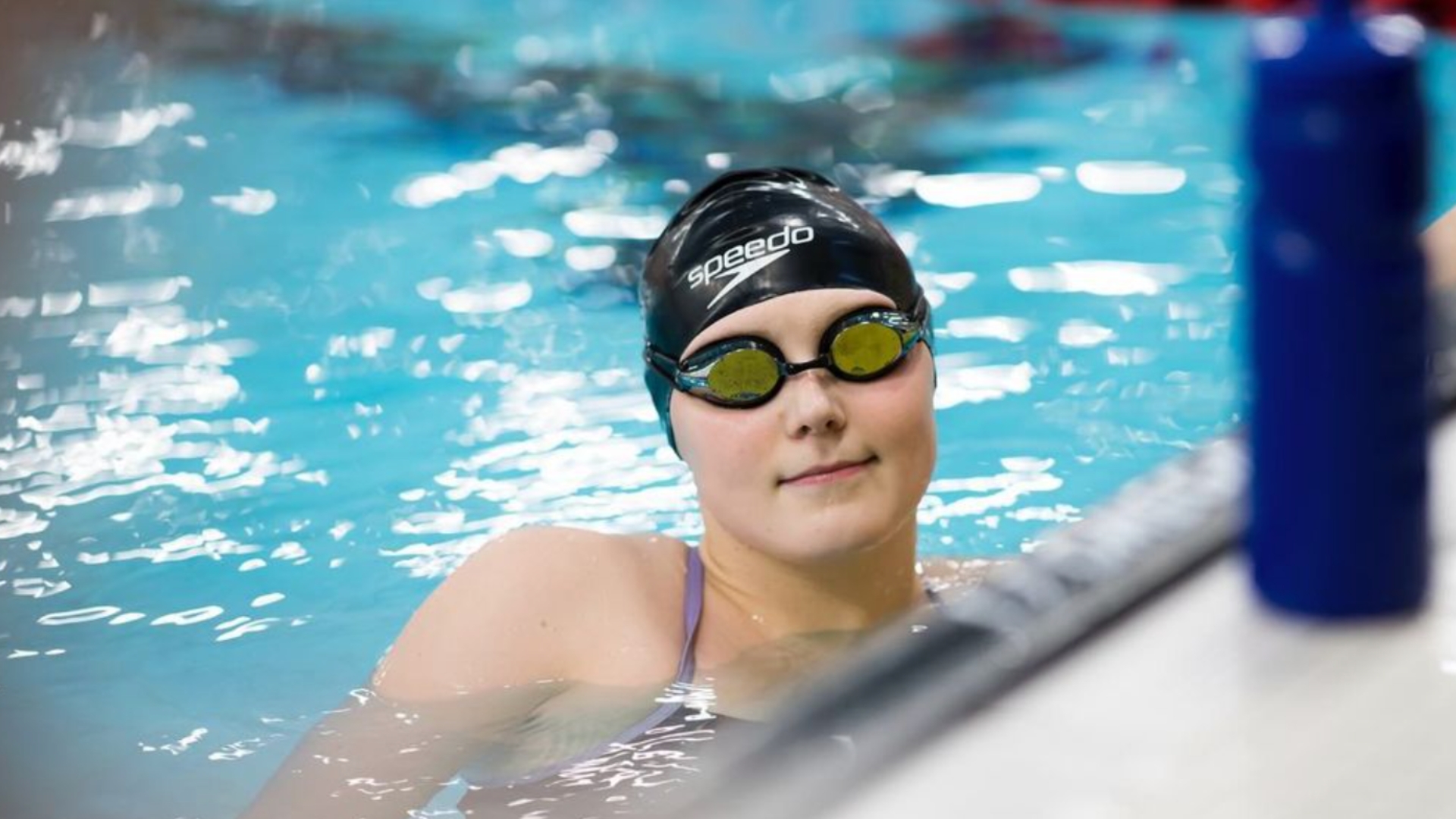
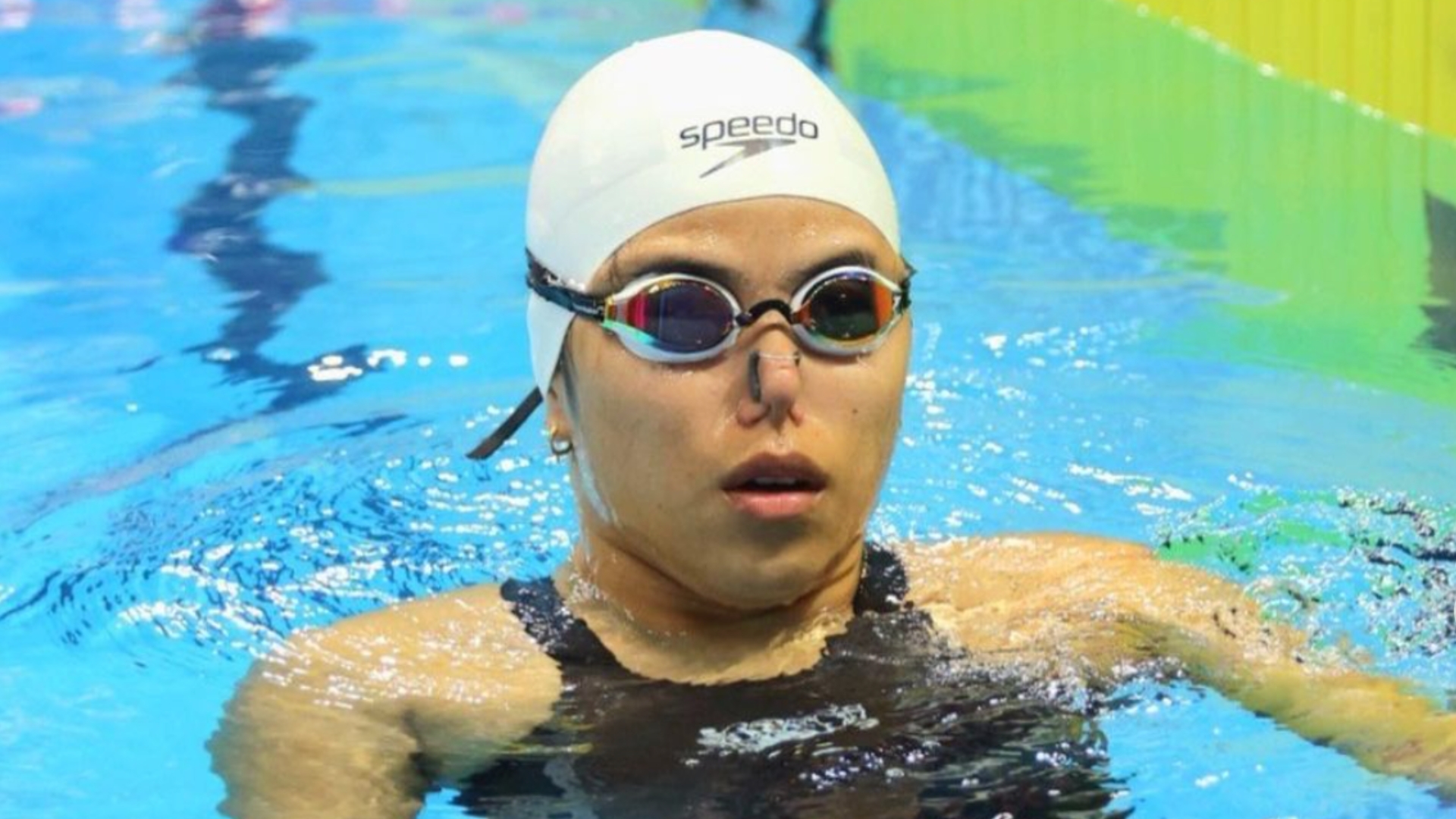
Poppy Maskill of Great Britain won the S14 100m backstroke, earning her third gold medal at the Paralympics in Paris. The athlete also won two silvers at the Games.
She fell behind Valeriia Shabalina at the halfway point of the 100m backstroke, but she recovered to win in 1 minute, 5.74 seconds, defeating fellow Brit Olivia Newman-Baronius, who won third place.
Maskill’s triumph brought Great Britain’s Paralympic gold medals tally to 41 in Paris, matching the team’s accomplishment in Tokyo three years ago.
After her victory, Maskill said: “I was a little bit annoyed because it was not a personal best but it was still a gold so I can’t be too annoyed…I’m obviously happy with my medals as they are a great achievement but I’m slightly disappointed in my time because I know I can be better.”
Athlete with most medals
Maskill is the Paris Paralympic Games’ most decorated athlete from Great Britain athlete with five medals. She won first place in the mixed 4×100-metre S14 freestyle relay and the 100-metre S14 butterfly before taking home another gold.
Moreover, in the 200-metre individual medley and 200-meter freestyle S14 competitions, Maskill won silver. The athlete admitted: “I would have thought it would be Alice [Tai] or someone else. It feels great.”
At the Paris Paralympics, Yip Pin Xiu of Singapore achieved a first-ever three-peat by winning the women’s 100-metre backstroke S2 final. With a performance time of 2:21.73 at the La Defense Arena, the reigning champion secured Singapore’s first medal of the Paris Games.
She finished just in front of the silver-medallist Haidee Aceves of Mexico, who achieved a record of 2:21.79, and the bronze-medallist Angela Procida of Italy with a time of 2:24.48.
At the 2016 and 2020 Paralympics, Yip, 32, took home the gold in this event as well. Currently holding the world record for both the event and the 50m backstroke S2, she is Singapore’s most decorated Paralympian.
Three para swimmers from Team Singapore have qualified for the current Games, including the six-time Paralympic gold champion. Towards the end of the meet, Toh Wei Soong and Sophie Soon will also compete for their home country.
Yip will next swim on Saturday in the S2 heats of the 50-metre backstroke.
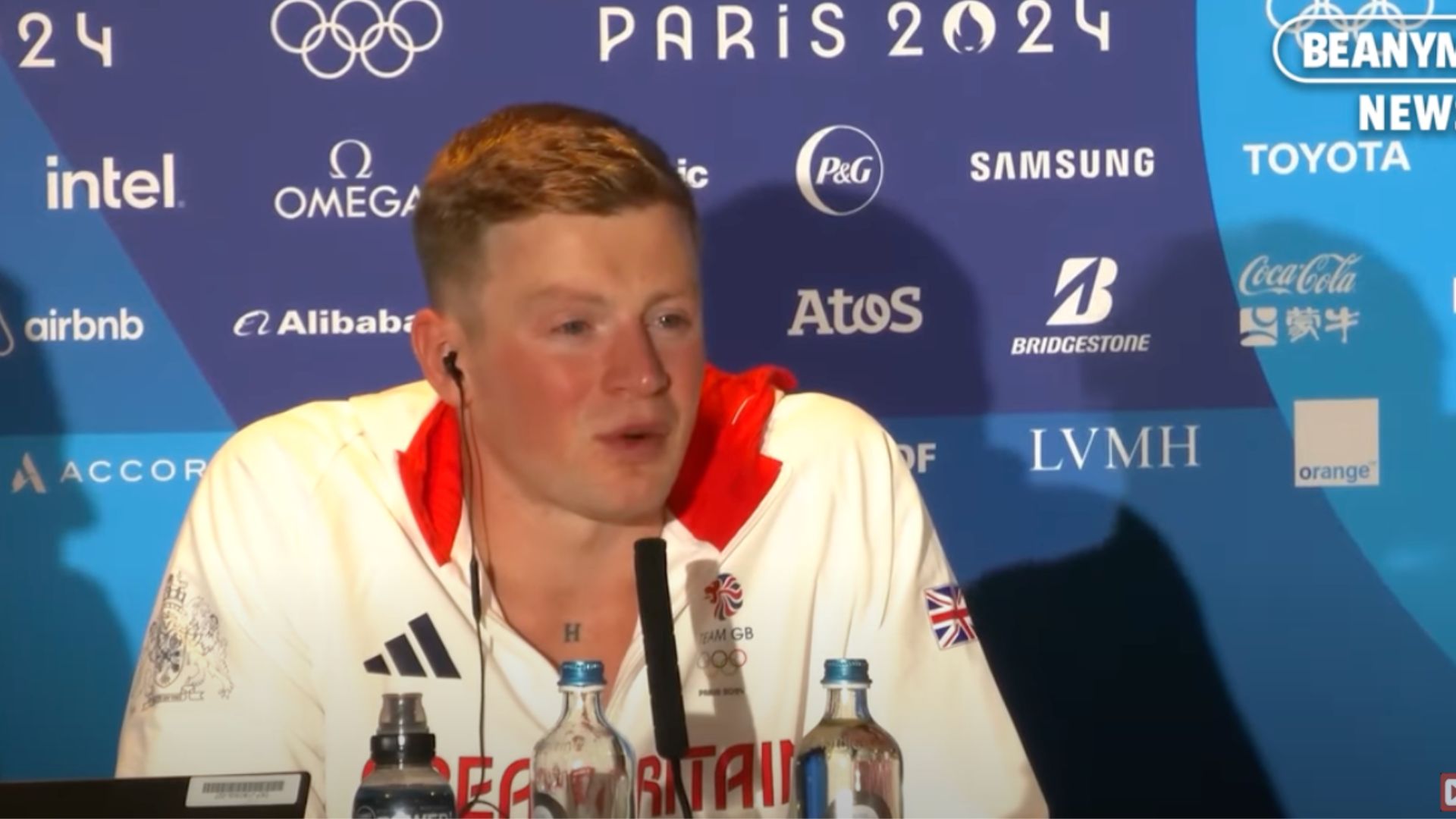
Three-time Olympic gold medallist Adam Peaty failed to retain his 100 metres breaststroke title in Paris. He won silver, not gold, but still, it was a remarkable achievement. He was unwell and, after the event, was diagnosed with Covid.
The 29-year-old Englishman lost by only 0.02 seconds to the Italian Nicolo Martinenghi, tying with the American Nic Fink in second place. They both completed the 100 metres in 59.05 and went on to share the podium step together.
Before feeling unwell, Peaty had swum faster in the semi-finals, where he clocked 58.86, a time that would have won gold in the finals, where Martinenghi won the race in 59.03.
Peaty, who won the 100 metres breastroke in Rio de Janeiro in 2016 and Tokyo three years ago, had been aiming to match the American Michael Phelps’ record of winning the same swim race at three straight Olympics, but he woke up on Sunday (July 28) morning with a sore throat. (Phelps won the 100 metres butterfly as well as the 200 metres medley in Athens, 2004; Beijing, 2008; and London, 2012).
World record holder
Peaty is the world record holder in the men’s 100 metres breaststroke with a time of 56.88 recorded in 2019.
Team Great Britain said in a statement: “Adam Peaty began feeling unwell on Sunday, ahead of his men’s 100 breaststroke final. In the hours after the final, his symptoms became worse and he was tested for COVID early on Monday morning. He tested positive at that point.”
“The situation is being managed appropriately,” the British team statement said, “with all usual precautions being taken to keep the wider (British) delegation healthy.”
The Paris Olympics do not have COVID-specific health rules, a departure from the Tokyo Games and the 2022 Beijing Winter Games.
Peaty is not the first athlete to come down with Covid in Paris. Five Australian women water polo players tested positive even before the Games began.
Peaty hugged Martinenghi and Fink on the medal podium and said he was delighted for Martinenghi.
Later, he wrote on Instagram that he had a tough time before the Olympics and added that the silver medal was a “blessing”.
“A night full of raw emotion and sport in its true form,” he wrote. “These last 14 months have been incredibly testing and I do not regret one training session or decision I made.
“I’ve continued to fight and find new ways to enjoy something that has broken me to the core and to end up with an Olympic silver through all of that is an absolute blessing. I’m more proud of the man and athlete I am from last night than I have been across my entire career.”
He now has six Olympic medals, including three gold medals (for 100 metres breaststroke in Rio and Tokyo and 4×100 metres mixed medley in Tokyo) and three silvers (for 4×100 metres medley in Rio and Tokyo and 100 metres breaststroke in Paris).
Peaty, who returned to racing in February after mental health struggles, described his silver medal as a personal victory.
“In my heart I’ve won and these are happy tears because I said to myself that I would give my absolute best every single day and I have. You can’t be upset about that,” he said.
Fresh from a ‘three-peat”, the Australian foursome pulled off a fourth feat. The Australians won their fourth consecutive Olympic gold in the 4×100 metres women’s freestyle in Paris, leading almost from start to finish.
The quartet of Mollie O’Callaghan, Shayna Jack, Emma McKeon and Meg Harris set an Olympic record with a time of 3 minutes, 28.92 seconds, breaking the record the Australians set in Tokyo three years ago.
The Americans won silver and the Chinese bronze.
Australia’s O’Callaghan was slow off the blocks and well behind China’s Yang Junxuan in the opening 50 metres, but then she surged ahead, and the Australians led all the way. Jack and McKeon extended the lead before Meg Harris anchored the team home with a sizzling 51.94 second split.
Behind the success
What explains the Australian success?
Well, nothing succeeds like success.
The Australian foursome also hold the world record in the 4×100 metres freestyle. They set a time of 3:27.96 last year, which remains unbroken.
They have become used to setting records.
O’Callaghan, McKeon and Harris also set the previous Olympic record in Tokyo three years ago, which they broke this year.
🥇GOLD🥇
An Olympic record, and a 6th gold for Emma McKeon. Australia win the 4 x 100m Relay: pic.twitter.com/aet0sOqpzJ
It was an especially big win for the 30-year-old McKeon, swimming her final Olympics, as it gave her a sixth Olympic gold and a 12th Olympic medal overall.
That ties McKeon with Americans Katie Ledecky, Jenny Thompson, Natalie Coughlin and Dara Torres for the most career Olympic medals by a women’s swimmer.
McKeon, who won her first Olympic gold in Rio de Janeiro in 2016, returned home with seven medals from Tokyo three years ago, including four gold.
She is now Australia’s most decorated Olympian of all time, surpassing former swimmer Ian Thorpe with her sixth gold medal.
Mollie O’Callaghan
Meanwhile, Mollie O’Callaghan, 20, picked up another gold in Paris, winning the 200 metres freestyle, defeating compatriot Ariarne Titmus, who won the title in Tokyo. With the two golds she won in Paris, O’Callaghan now has four Olympic gold medals. She also helped the Australians win the 4×100 metres medley and the 4×100 metres freestyle in Tokyo.
Meg Harris
Meg Harris, 22, competing in her second Summer Games, now has two Olympic golds, both won in the 4×100 metres freestyle relay, first in Tokyo and now in Paris.
Harris has reached the pinnacle of success despite hearing loss in both ears.
She can normally lip-read others and also taught herself to hear the starter’s gun.
Her hearing loss could be due to nerve damage, probably as a result of illness at a young age, but it is moderate, and she can cope, she says.
Shayna Jack
The Paris gold is especially sweet for Shayna Jack, 25, who made her Olympic debut three years after returning from a doping ban.
From 2019 to 2021, she served a 24-month suspension after testing positive for a banned substance. She didn’t take it intentionally, she said.
She cherished her Olympic moment. “For me it’s definitely about getting up there and doing my country proud,” Jack said after winning the gold in Paris. “It’s a really special moment to stand on the podium with the other three girls.”
There are highs and lows.
Emma McKeon broke down in tears after missing podium in her last individual Olympic race, the 100 metres butterfly, on July 28.
“It’s just emotional,” she said, an athlete planning to retire from the sport.
“I definitely hoped that would’ve been better, but I know I’ve got a lot to be proud of,” said McKeon, who finished sixth.
Torri Huske and Gretchen Walsh, who were part of the US team which finished second in the 4×100 metres freestyle, won gold and silver respectively.
“It’s always going to be emotional finishing something that’s brought me so much joy. So many great relationships and so many great life lessons,” said McKeon.
Katie Ledecky wins her eighth Olympic gold — only one woman swimmer has as many, none has more
American Katie Ledecky won her eighth Olympic gold medal, and her first in Paris, when she coasted to victory in the 1,500-metre freestyle on Wednesday (July 31). She set a new record, winning the race in 15:30.2.
This was her second medal in Paris. She picked up a bronze in the 400-metre freestyle, a race won by the Australian Ariarne Titmus, on July 27.
Biggest gold haul
With her eighth gold and 12 Olympic medals in all, Ledecky is now the most decorated female Olympian swimmer. She shares the honour with fellow American Jenny Thompson, who also won eight golds and four other medals during her reign from the 1992 Barcelona Games to the 2000 Sydney Olympics.
Americans Dara Torres and Natalie Coughlin, and Australian Emma McKeon, are the only other women swimmers with 12 Olympic medals each.
No other swimmer was even in the frame when Katie Ledecky finished 😳
Absolute DOMINANCE as she breaks the women’s 1500m freestyle Olympic record 🔥 pic.twitter.com/YcoQS2AlzB
Ledecky, 27, won the 1,500 metres, surging ahead of the competition like a force of nature, building a commanding lead as she went.
Leading by three seconds a quarter of the way through, she increased the lead to nearly eight seconds at the 1,200-metre mark and finished more than 10 seconds ahead of Anastasiia Kirpichnikova of France, who won silver. Germany’s Isabel Gose took the bronze.
Her signature race
Ledecky was expected to win the 1,500 metres with good reason. It is her signature race. She won in the Tokyo Olympics, where women were allowed to compete in the 1,500 metres for the first time, and is a five-time world champion in the event (2013, 2015, 2017, 2022, 2023).
Ledecky will go for gold again in the 800-metre freestyle, which she won in all three previous Olympics –Tokyo, London (2012) and Rio de Janeiro (2016).
If she wins, she will become the first woman to win nine gold medals in swimming. The former Soviet gymnast Larisa Latynina, who competed in the late 1950s and early 1960s, is the only woman who won nine gold Olympic medals.
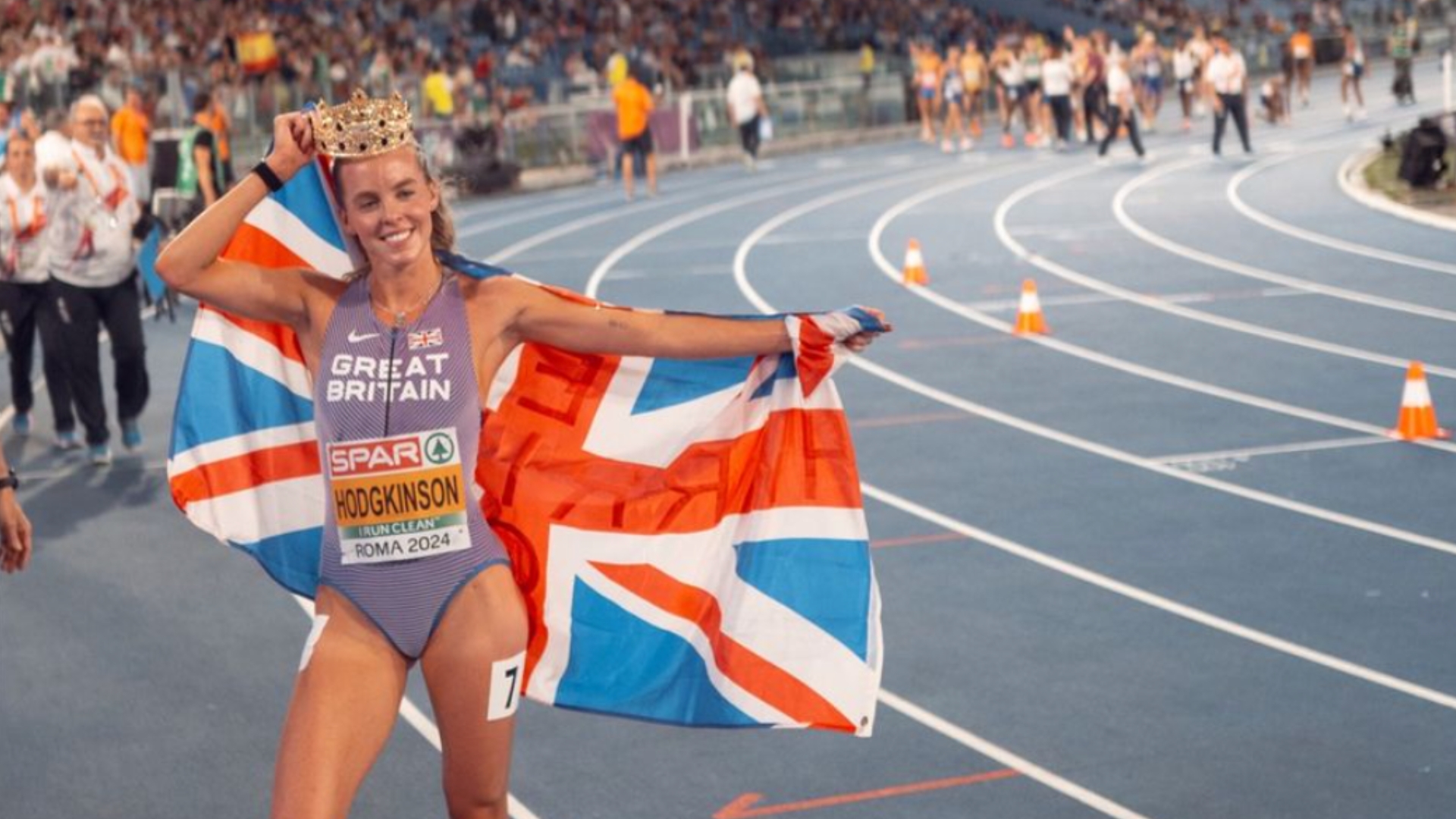
Battling illness, Great Britain’s Keely Hodgkinson successfully defended her European 800-metre title, leaving behind her rivals to win the gold in 1 minute and 58.65 seconds on the final day of the European championships in Rome.
After her exceptional performance, the Olympic silver medallist and two-time world champion disclosed that she had been ill the day before.
Hodgkinson admitted: “Sometimes you’ve just got to find a way to win…I wanted to go out and have a a good time today, but I’m happy with the win. I would have been disappointed if I didn’t try.”
Hodgkinson for Paris 2024
This was Hodgkinson’s second major victory following her win in Munich two years ago. She now hopes to win gold at the 2024 Paris Olympics.
“I’m super excited for Paris. The next seven weeks are going to be incredible… I do believe in the power of manifestation, so it’s obviously something I think about. The Olympic Games are so special; it’s a huge opportunity to change your life, and I’m just ready to go for it.” Hodgkinson said.
She will probably compete for gold in Paris with world champion Mary Moraa and American Olympic champion Athing Mu.
Another gold for Great Britain
On the final day of the European championships,Team Great Britain had another reason to celebrate besides Hodgkinson’s victory.
Team Great Britain also won gold in the women’s 4x100m relay. The team features athletes Dina Asher-Smith, Desiree Henry, Amy Hunt, and Daryll Neita.
They won in 41.91 seconds, beating France and the Netherlands. Asher-Smith, the 100-metre champion, led the way, and Neita, the 200-metre silver medallist, led home.
“That felt amazing, we are definitely trying new things before the Olympic Games. Obviously, we are looking to absolutely do amazing in Paris,” Asher-Smith declared.
Neita added: “To finish the championships with a gold medal with these amazing ladies, it’s just an incredible feeling, really electric and I really have a good feeling going into Paris.”
With four golds and thirteen medals overall, the British team finished third in the medal table. Italy, the host nation, topped the table ahead of France.