ICC had introduced 2 new rules. The first rule is for in Match penalty and the second rule is for the drink break in the mid of each inning of the test match. These 2 rules were introduced by ICC to increase the pace of the game. After the implementation of this rule in T20 International, we can see a certain amount of changes in the gameplay. Check the two rules framed by ICC for T20 International matches.
1st Rule-In match penalty for slow over rates
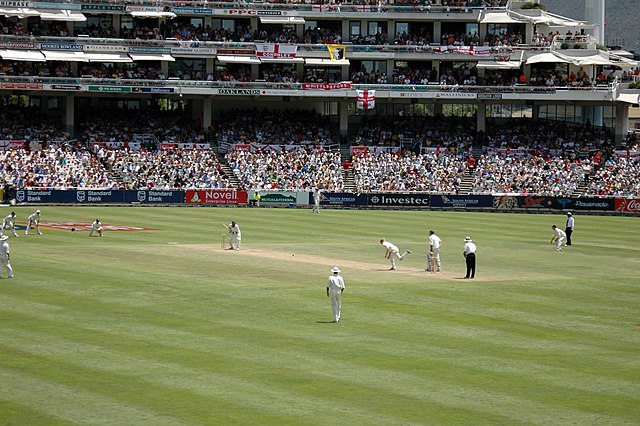
The penalty had been sanctioned and introduce in addition to article 2.22 of the ICC code of conduct. This penalty states that the first ball of the final over of the innings is started at the schedule or reschedule time. If the time exceeds the schedule or reschedules time then the players have to keep a less player outside the 30-yard circle boundary. This penalty is implemented to increase the pace of the game and to complete the game on time.
These changes will bring a good pace to the game. As the team would have a less player outside the 30-yard circle boundary which certainly is a disadvantage for the team at the most important time of the match. The depth overs are the main overs for T20 International matches which can lead to 20-25 runs in over if they exceed the schedule or reschedule time.
2nd Rule- Drinks break in mid of each innings
The second rule introduced by ICC was mid-innings drink break for both the innings of the T20 International match. A certain time limit is kept for the drink break. Only 2 minutes and 30 seconds will be there in the middle of the match. To improve the pace of the game ICC bring up new rules to increase the entertainment experience of the viewers. Stay updated on the page to get live updates on ICC’s new rules and game formats.
International Cricket Council is the highest governing body of International Cricket. The Council was formed on 15 June 1909 and currently has 106 active members. ICC keeps check on Malpractices and organizes Matches and Tournaments.
ICC constantly keeps on making changes in rules so that the game is more flexible and benefits both Batsmen and Bowlers. ICC once again came up with new rules for T20 International matches to make the matches more interesting.
Now teams will have to face an in-match penalty for slow over rates. This means if the first ball of the over is not bowled in the scheduled or rescheduled time, this will result in a reduction of one fielder from fielding outside the 30-yard circle.
This step was taken to reduce the slow bowling rate in T20 matches. Both Men’s and Women’s cricket teams will have to follow the rules. The rule has been introduced so that pace of the game can be improved and the game becomes more interesting.
This rule is similar to that of the Hundred Tournament organized by ECB. The tournament is played in England and the board found the rule very good to improve the matches.
Another rule introduced by ICC is the introduction of Drinks break in midpoints of each innings. The Break will be of 2 minutes 30 seconds in duration and with mutual agreement between the members. The agreement should be made at the start of the series.
The new rules will come into effect from January 16, 2022. The match that will be played on that date is between West Indies and Ireland. The game will be played in Sabina Park in Jamaica. Now let’s see how much the new rules will be effective and how the players and officials react to them. It will be very interesting to see the match and cannot wait for the encounter.
The Men’s Cricket Committee, led by former India captain Sourav Ganguly, suggested changes for the 2017 Code of the Laws of Cricket in its revised third edition. The Women’s Cricket Committee also approved the recommendations.
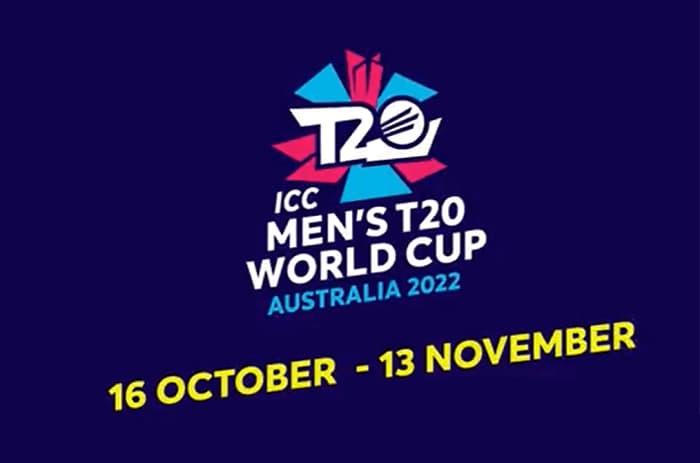
The updated playing conditions will be used for the first time at the ICC Men’s T20 World Cup in Australia starting next month. They will take effect on October 1st, 2022.
The International Cricket Council stated on Tuesday that new hitters will be brought in at the striker’s end after a catching dismissal even if those in the middle have crossed. In limited-overs cricket, crossing gives an arriving player a little bit more time to catch up and may be essential in close games.
In limited-overs cricket, crossing gives an arriving player a little bit more time to catch up and may be essential in close games.
Although this adjustment has already been made at the Hundred competition in England, the new rule from the ICC goes into force on October 1st.
Whether or not the batter crossed before the catch was made, the ICC stated that when a batter is out caught, the new batter will come in at the end the striker was.
The use of saliva to polish the ball has also been outlawed by the regulating body. It had temporarily banned the practice to prevent the spread of COVID-19.
In addition, it implemented restrictions on slow over rates in one-day international matches in accordance with advice from the Marylebone Cricket Club (MCC), the guardians of the game’s rules.
Similar to Twenty20 Internationals, teams that don’t finish their allotted number of overs within the allotted time will be forced to add a player to the 30-yard circle for the balance of the innings.
After the 2023 men’s World Cup Super League concludes, this rule will take effect.
Despite hard truths, the T20 World Cup seeks to preserve romance
The planning of a large International Cricket Council event such as the T20 World Cup is generally challenging.
You are entrusted with uniting the various cricket-related communities in a festival of joyful inclusivity while financially benefiting Australia, England, and India, the game’s three most powerful countries.
You would need a tight, competitive format that guarantees that the most successful teams play lots of games before they are at risk of being eliminated.
Events like the T20 World Cup are supposed to fill stadiums with recycling stations marked with the oil sponsor that pumps out 12.3 million barrels per day in order to spread your message of protecting the planet.
While the Saudi monarchy is supported by the same oil company that sponsors one of your top teams, and while you advertise your charity partnership to aid girls and women who play cricket in between times, the Taliban-run country represented by one of your top teams is supported by the Saudi monarchy.
Cricket World Cup comparisons
The 50-over World Cup in 2007 is where the issue with the format first surfaced. India and Pakistan had only played three times when they were each eliminated from their respective four-team squads during the preliminary rounds.
A significant portion of the Radcliffe Line’s television viewers vanished with their departure. Whispers of “never again” caused the match’s construction to change and keep changing. In 2019, each team played nine times before the commencement of the knockout games.
Even if the 20-over World Cup isn’t quite as bloated, some ICC members might have felt happy that Australia’s game against England on Friday was called off due to rain.
Plan A, which had a large TV audience to attract and more than 90,000 tickets to sell, was to fill the Melbourne Cricket Ground for a championship match between two great rivals.
The fact that each group may be on the verge of being eliminated from the competition after two matches of five in the group stage, however, was not anticipated.
Neither were biblical precipitation, an Arctic environment entrance, or the fact that each group could be facing elimination.
It wasn’t an issue when Ireland had a great day earlier in the week and had technically defeated England in back-to-back World Cup games.
Yes, the last time was at the beginning of 2011, and yes, they may have only defeated England once more in all formats since then, but these three victories came from just twelve games during that time.
Perhaps with even less vision, it also didn’t result in an Australian defeat to the upbeat team from New Zealand, who are the current World Test Championship winners as well as 2015, 2019, and 2021 World Cup, T20 World Cup, and World Cup finalists.
After dismissing Shan Masood during Zimbabwe’s unexpected victory over Pakistan, Sikandar Raza joins Regis Chakabva in a celebration.
The problems with the ICC are mostly due to the New Zealanders. Yes, they capture the spirit of the problem, the victory of effort over adversity, and all of these wonderful sporting ideals.
They also represent a 5-million-person sales market, which contrasts with the orders-of-magnitude more promising sales messaging elsewhere. We adore your “underdog with a chance” act, but have you considered picking the underdog somewhere else? The couch is covered in fur all over.
The matches for the qualifications are on their way to the start. The ICC Men’s T20 World Cup 2022 is most probably going to start from October 2022. The Cricket tournament is played annually every year at different locations with different venues and host countries. Take a look at ICC Men’s T20 World Cup 2022 Schedule: Fixtures, Dates, Timings & Teams List.
The matches are played in T20 format where 16 qualifying countries face each other at this stage. This is the biggest T20 Men tournament conducted all over the world. The matches or the tournament format is the Round Robin format. The teams are Qualified on the basis of their performance in the previous tournament and the Group qualifications rounds between the countries.
ICC Men’s T20 World Cup 2022 Teams List
As said Earlier the teams are Qualified on the basis of their performance in the previous tournaments and the Group qualifications rounds between the countries. So take a look at ICC Men’s T20 World Cup 2022 Teams List Qualified.
Sr No.
Teams
1
Afganistan
2
Australia
3
Bangladesh
4
England
5
India
6
Ireland
7
Namibia
8
New Zealand
9
Pakistan
10
Scotland
11
South Africa
12
Sri lanka
13
United Arab Emirates
14
West Indies
ICC Men’s T20 World Cup 2022 Schedule: Fixtures, Dates, Timings
The dates are been scheduled but as the team matches and formats are not yet fixed so take a look at the Probable format of the schedule. So take a look at ICC Men’s T20 World Cup 2022 Schedule: Fixtures, Dates, Timings.
Round 1 qualifiers
Oct. 16 — Sri Lanka vs Namibia – 9:30am
Oct. 16 – TBD vs TBD – 1:30pm
Oct. 17 — West Indies vs Scotland – 9:30am
Oct. 17 — TBD vs TBD- 1:30pm
Oct. 18 — Namibia vs TBD – 9:30am
Oct. 18 — Sri Lanka vs TBD- 1:30pm
Oct. 19 — Scotland vs TBD – 9:30am
Oct. 19 — West Indies vs TBD -1:30pm
Oct. 20 — Sri Lanka vsTBD – 9:30am
Oct. 20 — Namibia vs TBD- 1:30 -pm
Oct. 21 — West Indies vs TBD – 9:30am
Oct. 21 — Scotland vs TBD – 1:30pm
Super 12
Group 1 fixtures
Oct. 22 – Australia vs New Zealand
Oct. 22 – England vs Afghanistan
Oct. 23 – TBD vs TBD – 9:30am
Oct. 25 – Australia vs TBD – 4:30pm
Oct. 26 – England vs TBD – 9:30am
Oct. 26 – New Zealand vs Afghanistan – 1:30pm
Oct. 28 – Afghanistan vs TBD – 9:30am
Oct. 28 – England vs Australia – 1:30pm
Oct. 29 – New Zealand vs TBD – 1:30pm
Oct. 31 – Australia vs TBD – 1:30pm
Nov. 1 – Afghanistan vs TBD – 9:30am
Nov. 1 – England vs New Zealand- 1:30pm
Nov. 4 – New Zealand vs TBD – 9:30am
Nov. 4 – Australia vs Afghanistan – 1:30pm
Nov. 5 – England vs TBD- 1:30pm
Group 2 fixtures
Oct. 23 – India vs Pakistan – 1:30pm
Oct. 24 – Bangladesh vs TBD – 9:30am
Oct. 24 – South Africa vs TBD – 1:30pm
Oct. 27 – South Africa vs Bangladesh – 8:30am
Oct. 27 – India vs TBD- 12:30pm
Oct. 27 – Pakistan vs TBD – 4:30pm
Oct. 30 – Bangladesh vs TBD – 8:30am
Oct. 30 – Pakistan vs TBD – 12:30pm
Oct. 30 – India vs South Africa – 4:30pm
Nov. 2 – B1 vs TBD- 9:30am
Nov. 2 – India vs Bangladesh – 1:30pm
Nov. 3 – Pakistan vs South Africa – 1:30pm
Nov. 6 – South Africa vs TBD – 5:30am
Nov. 6 – Pakistan vs Bangladesh – 9:30am
Nov. 6 – India vs TBD – 1:30pm
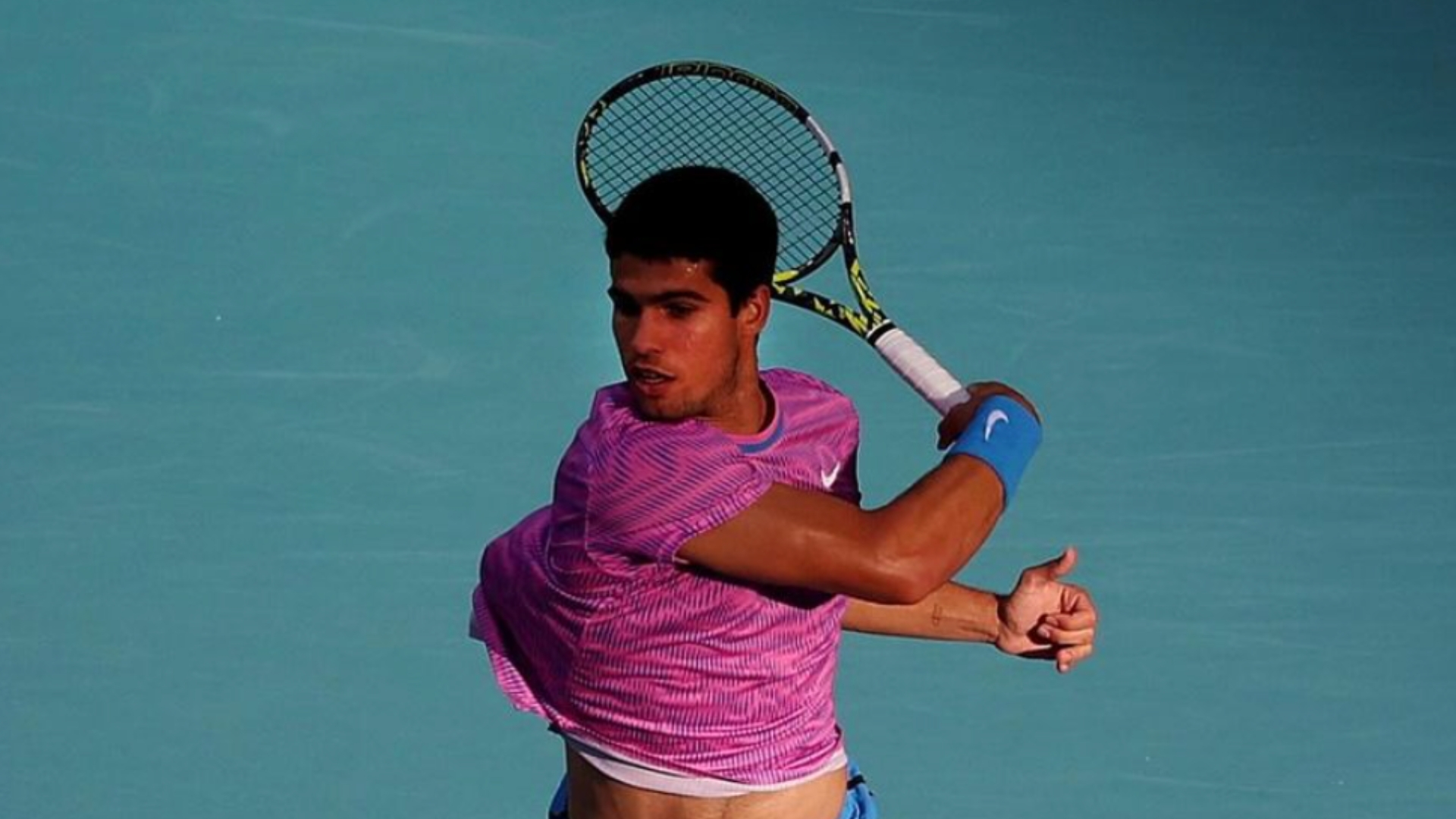
Carlos Alcaraz to discuss new ‘shot’ rule with ATP
World No. 2 Carlos Alcaraz, who felt hurried after his loss to British player Jack Draper at the Queen’s Club Championships, promised to address the ATP on a “new” shot time rule being tested by the organization.
Recently, Alcaraz’s record of 7-6(3) 6-3 loss to Draper in the round of 16 dealt a blow to his plans for defending his Wimbledon championship.
The new regulation
After the rule was modified in the trial, the countdown to a serve started nearly instantly after a point was finished. Previously, the 25-second shot clock would only start when the chair umpire called the score.
Since the French Open ended, a new rule that aims to ensure uniform time management and streamline game flow has been on trial. The rule will be in place in ATP tournaments until the end of the current season.
Alcaraz claimed that he had communicated his concerns to chair umpire Mohamed Lahyani during the match because he was rushed for time to complete his usual process.
The athlete said: “He told me that there is a new rule, this new thing, that the clock never stops. After the point is finished, the clock is putting on…I think for the players it’s something bad. I finish the point at the net and I had no time to ask for balls. I’m not saying to go to a towel and take my time. I feel like I can’t ask for the balls.”
He added: “It’s crazy. I have time just to ask for two balls and no bounces. I’ve never seen something like that in tennis… Today I felt like I was in a rush all the time. I had no time to bounce and do my routine.”
According to the ATP source, if there are any disturbances beyond the control of the players or the tournament, umpires will still be able to stop the shot clocks. When asked if Alcaraz had discussed his concerns with the governing body, he declared: “Not yet, but I will, for sure.”