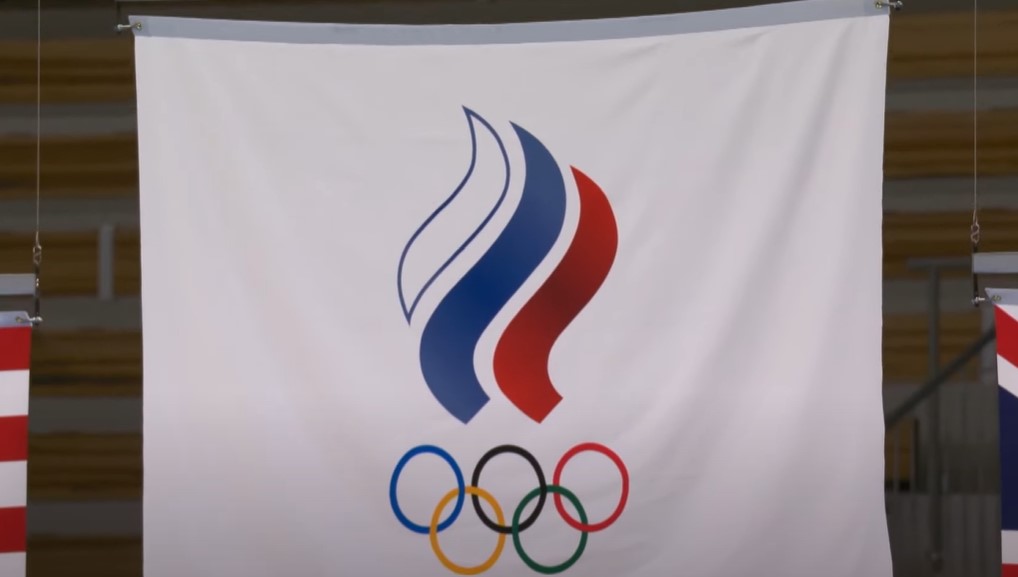
The International Olympic Committee’s October ban was upheld by the Court of Arbitration for Sport, dealing a severe blow to the Russian Olympic Committee’s hopes. The ROC’s appeal against the suspension was denied, according to the decision, which was made public on Friday.
The IOC was fiercely against the ROC’s absorption of four sports bodies, which represented areas of eastern Ukraine, and this was at the heart of the conflict. This choice demonstrates the IOC’s dedication to maintaining its standards and the complex geopolitical dynamics influencing the world of international sports.
CA’s said; “did not breach the principles of legality, equality, predictability, or proportionality.” an article from indianexpress.com mentioned.
IOC – Final Decision?
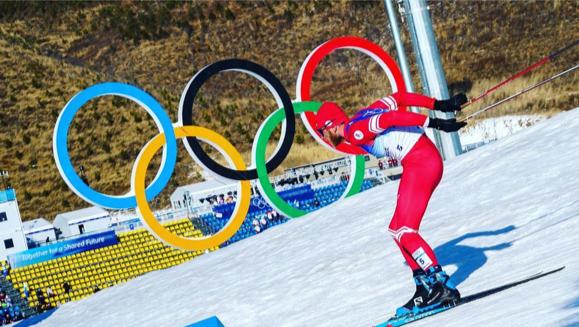
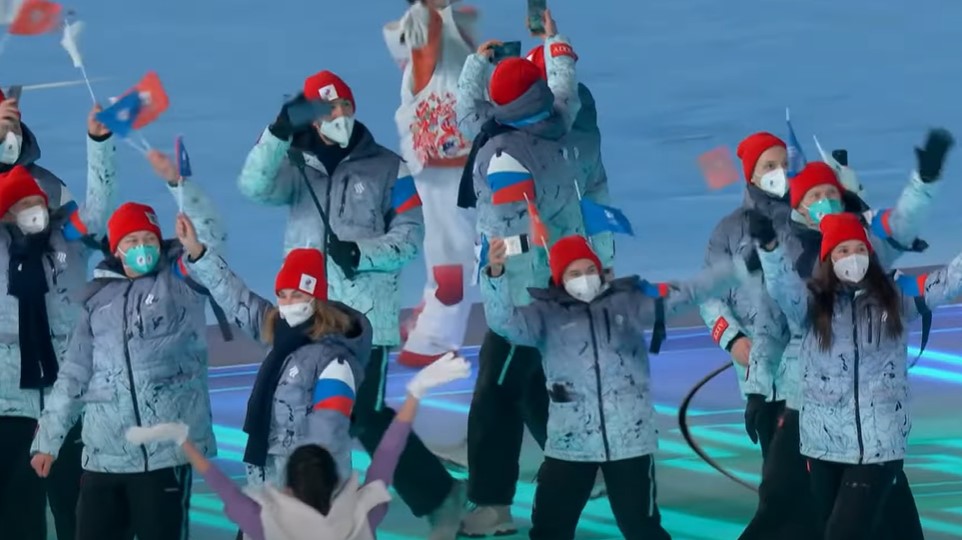
Russian athletes are still able to compete on the international scene even though the suspension has resulted in the ROC losing its IOC funding. Many Russian athletes are competing as neutrals, including in important qualification events for the 2018 Olympics in Paris, thanks to a strategy supported by the International Olympic Committee.
Financial support may have decreased as a result of the suspension, but Russian athletes have remained resilient and unfazed by bureaucratic roadblocks, eager to pursue their sports aspirations.
These athletes exhibit the power of tenacity and self-dedication to achieve their objectives as they successfully negotiate the challenging landscape of worldwide competition. Even though the ban might have altered the character of the match off the field, Russian rivals in the arena represent tenacity and fair play, proving that genuine sportsmanship is untouched by bureaucratic barriers.
In response to their aggression in Ukraine, both Russia and Belarus have been subject to severe sanctions from the International Olympic Committee (IOC), with their respective athletes being prohibited from competing under their respective flags or wearing any associated national insignia.
Furthermore, the Russian Olympic Committee (ROC) was also immediately banned by the IOC after it recognized Olympic Councils from the regions of Luhansk, Donetsk, Kherson, and Zaporizhzhia, which were all located in Ukraine.
“This constitutes a breach of the Olympic Charter because it violates the territorial integrity of the National Olympic Committee of Ukraine, as recognized by the IOC in accordance with the Olympic Charter,” the IOC spokesperson said.
IOC’s double standard?
Following the sanctions imposed on the Russian and Belarusian athletes, the Committee was asked whether the same treatment would be applied to Israeli athletes, to which their spokesperson replied that their athletes should not be held responsible for the decisions of their government.
Via Deseret News: “The IOC is committed to the concept of individual responsibility and athletes cannot be held responsible for the actions of their governments,” an IOC spokesperson told the German news agency Deutche Presse-Agentur (DPA).
“If discriminatory behavior by an athlete or an official occurs, the IOC works with the National Olympic Committee and the International Federation concerned to ensure that swift action is taken, as during the Olympic Games Tokyo 2020,” the spokesperson added.
After catching wind of the IOC’s statement, Russian Foreign Minister Sergei Lavrov denounced the organization, calling them ‘biased’ and ‘shameful’.
Via ESPN: “This, of course, is outrageous. Once again we see an example of the bias and failure of the International Olympic Committee, which time after time proves its political bias,” Lavrov said.
Furthermore, Lavrov noted that the IOC is aligned with the interests of Western countries, particularly the United States.
“Everything that is responsible interests of Western countries, primarily the United States, it actively supports and tries to find formulations that will generally approve of this line. Shameful and of course, the IOC greatly discredited itself,” he added.
A few days after the IOC suspended the Russian Olympic Committee, Russia reiterated its plans to re-launch the multisport friendship games next year.
BREAKING: The International Olympic Committee Executive Board has with immediate effect suspended the Russian Olympic Committee of it’s membership of the IOC. pic.twitter.com/vPMBNFm1NL
Russia and Olympics’ situation right now can be summed up in the words of the great humorist, Mark Twain, who once said, “history doesn’t repeat itself, but it often rhymes.”
The boycott gives birth to Friendship Games
The first Friendship Games were born as a result of Russia’s vehement protest against the host of the Summer Olympics in 1984, the United States.
In 1980, the US boycotted the Olympics that were held in Moscow.
And as a response to their actions, the Russians likewise did the same in 1984, announcing that they would not take part in the Games due to ‘inadequate’ security for their athletes, although speculations arose that their perception that the Games were being exploited politically was really the main reason.
“It is known from the very first days of preparations for the present Olympics the American administration has sought to set course at using the Games for its political aims. Chauvinistic sentiments and anti-Soviet hysteria are being whipped up in this country,” the Soviet Government stated, as per History.
Around fifty states participated in the Friendship Games from July to September of that year, including eight other socialist states that also skipped the Olympics. The Games were infamously referred to as the “alternative Olympics,” despite the officials’ strenuous denials that they were a “counter-Olympic” event to avoid conflicts with the IOC.
“We hope that ‘friendship’ competitions will show to the world at large anew the strength of athletes from socialist countries and their loyalty to the Olympic ideals, ” former pole vaulter Sergey Bubka said in an interview with TASS, Russia’s official press agency.
Friendship Games in 2024
Now, after a string of issues with the IOC, Russia has once again found itself in the same spot as it did forty years ago: outside the Olympics.
This started when the Russians, with the help of Belarusians, invaded Ukraine, instigating a war that cost thousands of innocent lives, including Ukranian coaches and athletes. Following the tragedy, the IOC banned Russian and Belarusian athletes from participating in any Olympic qualifiers unless they competed under a neutral flag.
Oleg Matytsin, Russia’s Sports Minister, stated that they had proposed plans for relaunching the World Friendship Games, an event where their athletes could compete without restrictions.
“We propose to intensify the practice of holding competitions in an open format with the invitation of partner countries,” Matytsin said, according to Reuters. “We continue to fulfill your (Putin’s) instruction to organise the World Friendship Games in the autumn of 2024.”
He continued by saying that going forward, the Games would be held on a regular basis, elaborating, “we consider it necessary to use the resources of both Russian and international public and state organisations to the maximum for the successful holding of the Games, which should be held on a regular basis in the future.”
Russia has come up with an alternative to the Olympics to hold next year – World Friendship Games. It plans to invite Ukrainian athletes as well.
Russia will spend 8.3 billion rubles (approx. $90 million) on an analog of the Olympics as it is denied access there.
The Russian Olympic Committee was suspended by the International Olympic Committee (IOC) on October 12 ‘with immediate effect until further notice’ as a result of their inclusion of the Ukrainian districts of Kherson, Zaporizhzhia, Donetsk, and Luhansk in their Olympic councils.
The International Boxing Association’s Russian president, Umar Kremlev, and the Games Chiefs were also reportedly at odds earlier this year, according to reports.
In addition, the IOC removed the IBA from its position as the combat sport’s governing body in June of this year due to its dubious management and financial practices. As a result, any decisions involving the boxing competition taking place at the 2028 Los Angeles Olympics were put “on hold.”
The Russian and Canadian Olympic committees have filed an appeal with the Court of Arbitration for Sport (CAS), engulfing the 2022 Winter Games figure skating team event in controversy.
The disagreement arises from the revised Beijing final rankings after Kamila Valieva tested positive for drugs. Four appeals have been submitted to CAS after the International Skating Union (ISU) came under fire for rejecting Valieva’s results. The story of the Winter Games gains a powerful depth from this developing drama.
The Russian Olympic Organization (ROC), the Figure Skating Federation of Russia, and Russian athletes have initiated three opposing appeals against the ISU judgment. In a dramatic change of events, Canadian skaters, their Olympic organization, and Skate Canada have filed an appeal against the ISU ruling.
More Appeals
The main player in this story is 15-year-old Kamila Valieva, who participated in ROC in Beijing. Despite their triumph, Valieva’s failing drug test during the Games caused a two-year pause in the medal distribution process. The sporting world is now waiting to see how this protracted issue will be resolved.
In the post-Olympic frenzy, a bitter argument has emerged between the Russians and the International Skating Union (ISU) over the revised results. The Russian Olympic Committee (ROC) fiercely claims that their team should be reinstated in the gold medal position, even though ISU’s updated calculations have Russia ranked third, after the US and Japan.
A surprising development is that the Court of Arbitration for Sport (CAS) has verified that Canadians are promoting a reordering of the podium, with Japan securing silver, the United States claiming gold, and Canada claiming bronze. There’s a sense of tension in the aftermath of the Games as the race to find the proper medal allocations gets stronger.
CAS said; “All four CAS arbitration procedures have just commenced. Given the early stage of the proceedings, no indication can be given as to when a hearing may take place, if any,” an article from sportstar mentioned.
According to the news source Ria Novosti, Russian athletes who were not allowed to compete in the 2024 Summer Olympics in Paris have received cash compensation.
The Russian Olympic Committee’s (ROC) Director General, Vladimir Sengleev, claims that athletes who were refused neutral status and were unable to compete in foreign contests to earn a spot at the Games were compensated. A total of 200 million roubles ($2.09 million) was given to 245 athletes so that their efforts would be supported even though they were unable to compete.
Sengleev said, “The last payment was made on June 23, the day of the All-Russian Olympic Games.”
Bans and boycotts against Belarusian and Russian athletes in Paris 2024
Athletes from Belarus and Russia have particular difficulties when competing at the Paris Games because of the ongoing conflict between their countries and Russia.
They are required to compete as neutral athletes and are only permitted to take part under strict guidelines. This strategy seeks to strike a balance between the athletes’ chances to display their abilities and the global community’s views on fair play and sportsmanship.
By preserving the values of impartiality and honesty at the forefront of international athletic competitions, this choice highlights a fine line between sports and geopolitical unrest.
Keeping the inclusive spirit alive while handling intricate international relations with tact and respect is the goal of the organizers, who permit these athletes to compete under neutral status.
Invoking “humiliating conditions” set by the International Olympic Committee (IOC), many Russian sports federations, including judo and wrestling, have chosen not to participate in the Games.
Their choice highlights the continued hostilities and reflects their displeasure with the conditions established by the IOC. This action is indicative of a major shift, indicating discontent in the athletic community. The Paris Games are scheduled for July 26–August 11, 2024.
European Gymnastics denies Russian and Belarusian athletes’ entry next year
The Russian and Belarusian athletes are now facing a crisis as the European Gymnastics just voted against their participation in the upcoming competitions.
FIG uplifts ban
After Russia and Belarus invaded Ukraine in 2022, the International Gymnastics Federation (FIG) barred their gymnasts from competing in any international competitions/Olympic-qualifying events, slimming their chances to qualify for the Summer Olympics in Paris next year.
But this decision was reversed in July of this year, as reported by Jonathan Crane of DW.
NEW: The International Gymnastics Federation (FIG) has decided to lift its ban on Russian and Belarusian gymnasts.
They'll be allowed to return to competition as neutrals from January 1, if they adhere to the FIG's as yet unpublished "Ad-hoc Rules" used to determine neutrality.
Following the International Olympic Committee’s (IOC) recommendations, the FIG decided to withdraw the suspension and allow the Russian and Belarusian gymnasts to compete starting January 1st, so long as they complied with its “ad hoc rules.”
Gymnasts were thus allowed to take part in Olympic qualifying events as long as they joined the competitions as “individual neutral athletes,” did not actively support the war, or had no direct military affiliation.
Although this is the case, the FIG added that the IOC will ultimately have the last word regarding their eligibility for the Olympics.
The president of the FIG, Morinari Watanabe, also reaffirmed his belief that athletes who are not engaged in the conflict ought to be granted equal opportunities to compete.
European Gymnastics opposes FIG’s decision
A few months after this declaration, however, the General Assembly of European Gymnastics chose not to accept FIG’s ruling and voiced their disapproval of permitting the aforementioned athletes to participate in the official European gymnastics tournaments next year.
The likelihood of their gymnastics team qualifying for the Olympics is now doubtful due to this vote.