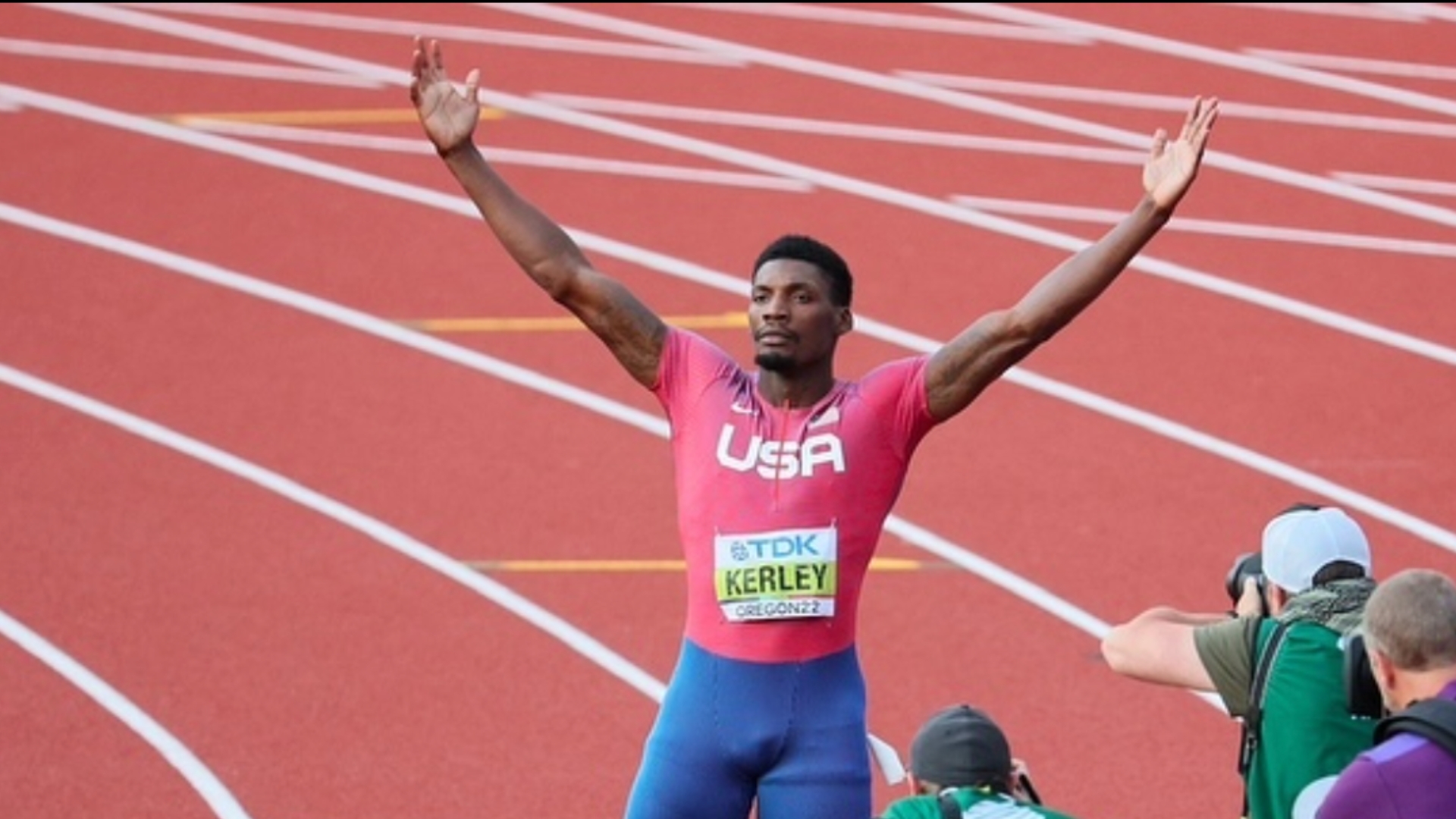
US Olympic sprinter Fred Kerley recently got into a fight with police and was tasered and taken into custody.
The 29-year-old athlete, who took home the bronze medal in the 100-metre event at the Paris Olympics, won 100m silver at the Tokyo Games in 2021, and gold at the 2022 World Championships, is accused of violence, resisting an officer, and disturbing the peace after a Thursday night (Jan 2) incident.
According to police reports, Kerley approached the officers with an “aggressive demeanour” about an incident regarding his car. Furthermore, the report stated that the athlete “continued to resist officers and used evasive movements to avoid being arrested” which caused him to be wrestled by four officers to the ground.
Additionally, Kerley was seen standing up again, getting tasered, and then falling back to the ground in police footage.
Miami’s local media reported that the athlete appeared in court on Friday (Jan 3) and was released on bail. His lawyer explained that the incident was a “total misunderstanding”.
Sprint wonder Fred Kerley, an American, has had disappointments in the outdoor season’s 100- and 200-meter sprints, but he still wants to take home the gold at the Oslo Diamond League.
According to an Instagram post from Diamond League Athletics, Kerley will compete against fierce rivals Akani Simbine and Lamont Marcell Jacobs on May 30 at the Oslo Diamond League. Kerley demonstrates his willingness to take on the obstacles of the Olympic season as all eyes are focused on this highly anticipated matchup.
Four-time world champion Kerley Kerley is at a turning point in his athletic career amid the intense pressure of qualifying for the Olympics. Even though he had a season filled with both victories and disappointments, his goals for the next outdoor track events—the 100 and 200 meters in particular—are very clear.
But when a British runner shows up out of nowhere at the Jamaica Athletics venue, adding a sense of surprise and suspense to the already tense situation, his determination is put to the test.
The Gold Medal and Kerley
Track talent was displayed in a way that had fans excited, and Jamaica’s sports culture delivered on their intense expectations. Amidst the impressive field of competitors, Fred Kerley, who was ready to compete in the highly competitive 200-meter class, and Christian Coleman, another member of the USATF squad, contributed to the grid’s enthusiasm.
With everyone’s eyes focused on these dynamic athletes, excitement was building for a match that promised to be incredibly fast and skilled.
British sprinter Zharnel Hughes astonished onlookers by winning the gold medal in a fast time of 19.96 seconds, the only competitor to go under the 20-second barrier, in a race that was widely anticipated and included American competitors.
Coleman surprisingly dropped to sixth place, while Kerley, despite his best effort, had to settle for silver. Hughes’s triumph gave the tournament a thrilling new dimension that captivated spectators and altered the plot of the occasion.
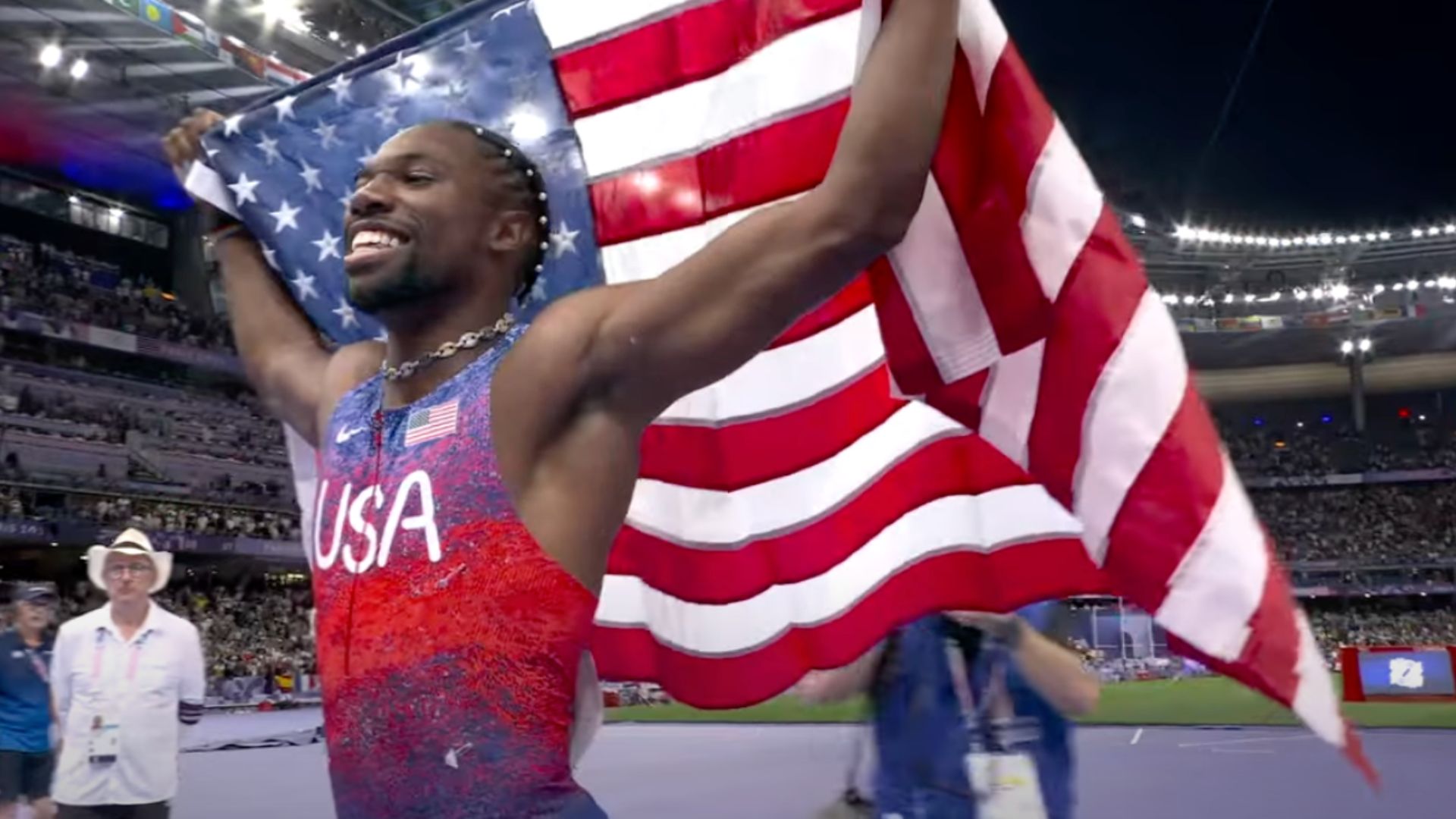
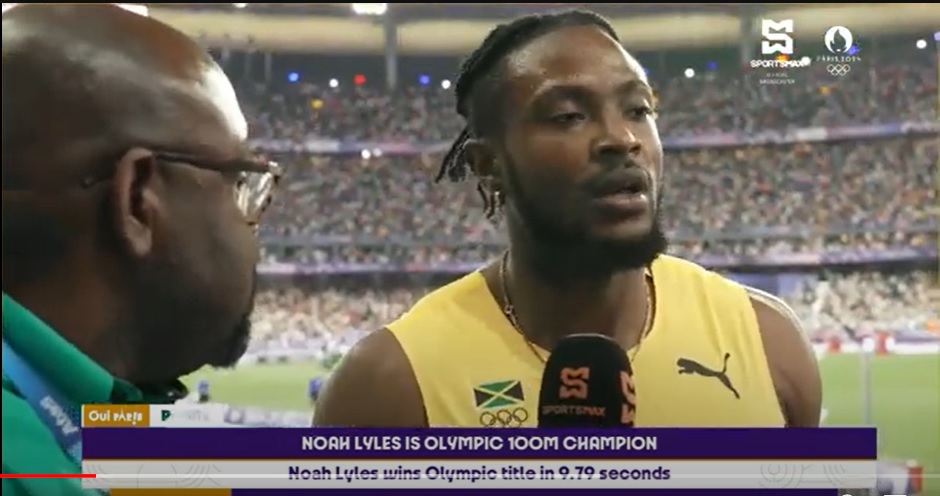
Noah Lyles became the first American to clinch the Olympic gold in the men’s 100-metre in 20 years when he won the race in Paris by five-thousandths of a second.
Lyles, who won with a time of 9.784 seconds, finished barely ahead of Jamaica’s Kishane Thompson (who ran in 9.789) and the US’ Fred Kerley (whose time was 9.81).
“That’s probably one of the most beautiful races I’ve been in,” said Kerley.
In the photo finish, Kerley’s orange shoe crossed the line first. But it’s the chest breaking the barrier that counts. Lyles’ chest crossed first.
The race was so close that even the commentators nearly called the wrong winner before the photo finish, which showed Lyles was the first to lean over the finish line even though others managed to step over it before him.
According to Olympic rules, the first athlete whose torso reaches the closest edge of the finish line is the winner. That means the trunk of the body is what counts rather than the head, limbs or feet.
Closest 100m race since 1980 Moscow Olympics
It was the closest 100-metre final since at least Moscow in 1980. Great Britain’s Allan Wells won the gold in Moscow narrowly beating Cuba’s Silvio Leonard in 10.25 seconds in an era when timing didn’t go down to the thousandths of a second.
Lyles is the first American to win the 100 metres since Justin Gatlin in 2004.
Lyles’ only other Olympic medal is a bronze, which he earned in the 200-metre at the Tokyo Games three years ago.
The 2020 Tokyo Olympics 100-metre champion, Marcell Jacobs of Italy, finished fifth with a time of 9.85 seconds.
Thompson, the betting favourite, said, “I’m going to be disappointed, but I’m super happy and grateful at the same time. I just got to take it as what it is and just move forward from here.”
Photo finish
Thompson seemed to be leading for much of the race.
‘’Through 30 metres, Lyles, 27, was last. He still trailed with 10 metres remaining and did not lead until his final steps, kicking past Kishane Thompson of Jamaica, who held the fastest time in the world this year,” reported the New York Times.
The race was so close that when the sprinters crossed the line and the word “Photo” popped up next to the names of Lyles, Thompson and five others in the eight-man field, Lyles walked over to the Jamaican and said, “I think you got the Olympics dog.”
Thompson wasn’t convinced. “I was, ‘Wow, I’m not even sure, because it was that close,’” he said.
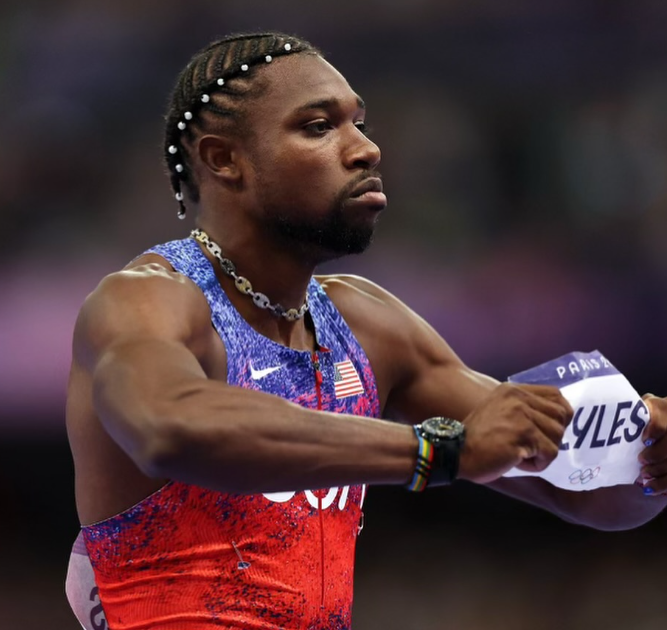
When Lyles’ name came up first, he snatched his name tag off the front of his bib and held it aloft. Then he shouted at the TV camera, “America, I told you I got this!”
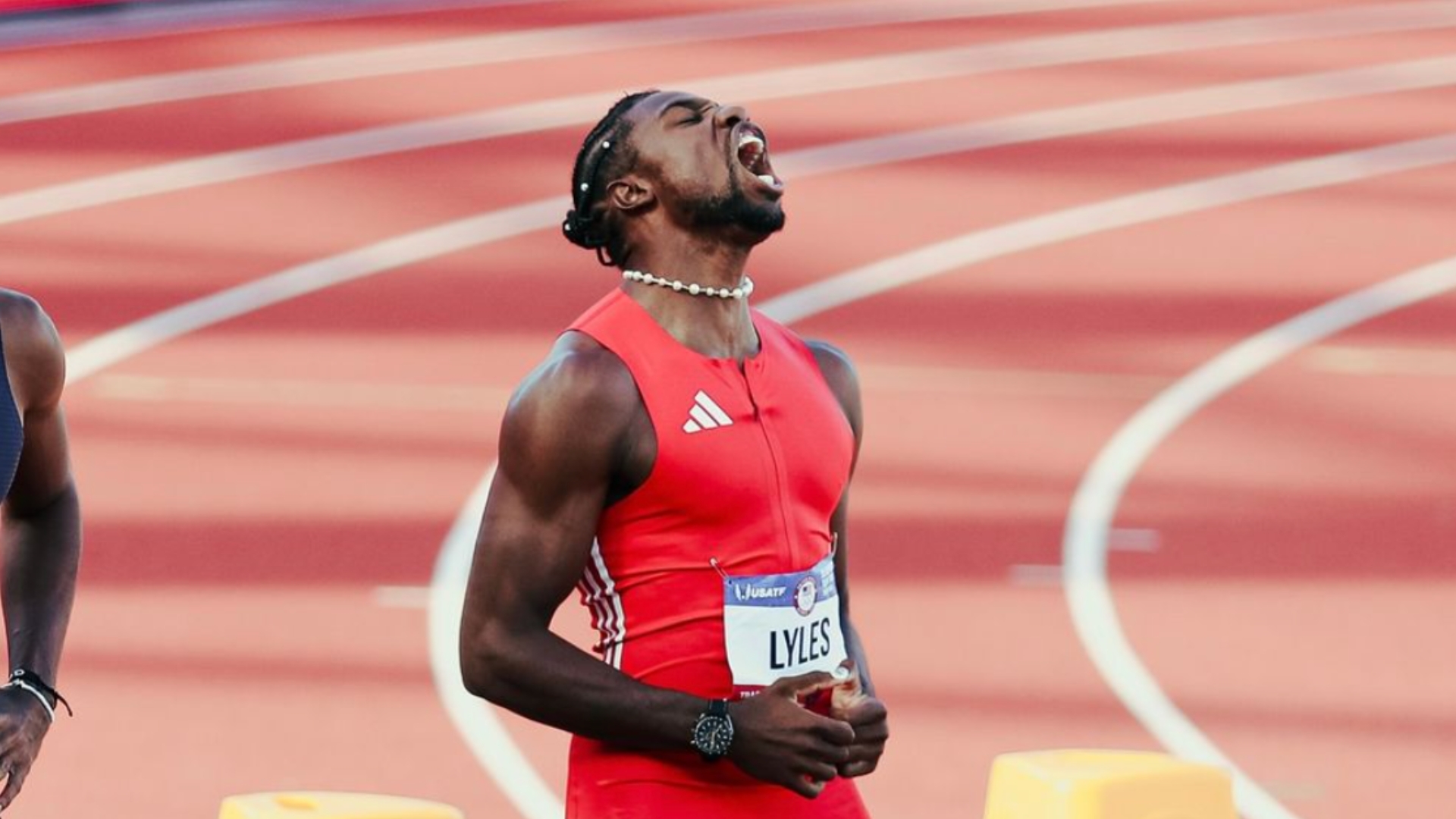
World champion Noah Lyles won the men’s 100-metre race in the US Olympic trials in Eugene, Oregon, to guarantee his spot in this year’s Paris Olympics. The athlete crossed the finish line first in the finals and secured his ticket to France, tying his personal best time of 9.83 seconds.
Spinter Kenny Bednarek came in second with a time of 9.87 seconds—his personal best—and Fred Kerley was third with a season’s best of 9.88 seconds. Both athletes qualified for the Paris Olympics. They also took home a silver medal in the 100- and 200-metre events in the 2020 Tokyo Olympics.
Lyles: “I wouldn’t have had that fire burning”
In his recent performances, Lyles, the current world champion in the 100, 200, and 4 x 100-metre relays, was not selected for the 100 metres in Tokyo after finishing ninth in the trials. Still, he qualified for the 200-metre competition and took home the bronze.
Lyles admitted: “Three years ago I got second to last. This year I came and won it… Part of the plan. Nothing changed. Might be a shock to everybody else, but when you know the goal, you know the goal.”
“If I didn’t get that third place in Tokyo, I wouldn’t have had that desire. I wouldn’t have had that fire burning. I wouldn’t have accomplished what I have accomplished in the past… Now we constantly look to the future with open eyes because anything can happen,” he added.
Lyles will also be trying to win the 200-metre race in which he won a bronze medal at the Tokyo Olympics three years ago.
The men’s 100-metre finals will be held on August 4 during the Paris Olympic Games, which will run from July 26 to August 11.
In a heart-stopping moment that had sports fans on the edge of their seats, Kishane Thompson was declared the Olympic champion in the men’s 100m sprint, but only for a fleeting moment and only to viewers in the United States. As the athletes surged towards the finish line in a nail-bitingly close race, NBC’s Leigh Diffey was the first to call the race, his excitement palpable as he announced, “Jamaica’s going to do it! Kishane Thompson is a gold medallist!” A fleeting victory because it wasn’t Thompson who won but Noah Lyles.
Olympic drama: It was Lyles, not Thompson
However, the celebration was premature. Other broadcasters, like the BBC in the UK, exercised caution and waited for the official photo finish results before announcing the winner. When the results were in, it was Noah Lyles of the USA who emerged victorious, clinching the gold medal in one of the closest races in Olympic history.
On Monday, Diffey took to social media to acknowledge his mistake, expressing his genuine belief that Thompson had won and congratulating Lyles on his remarkable achievement. “The men’s 100 was epic & closest of all time! My eyes & instinct told me Kishane Thompson won,” he wrote. “Obviously, that wasn’t the case. I am thrilled for @LylesNoah as his story only gets bigger!”
Diffey, who has an international background having grown up in Australia and later moved to the UK and the US for his career, is known for his coverage of motorsports as well as the Olympics for NBC.
Interestingly, Diffey wasn’t the only one who thought Thompson had won; even Lyles himself admitted he believed he had been narrowly beaten. “After the race, we were waiting for the names to pop up and I’m going to be honest, I came over, I was like ‘I think you got the Olympics, dawg.’ He was in lane 4, I was in lane 7, so I couldn’t really see what was happening,” Lyles shared. “I continued to run like I would win it. Something told me: ‘I need to lean.’ It is that type of race. It was crazy.”
The race between Kishane Thompson and Noah Lyles in the men’s 100m sprint at the Olympics was a dramatic and closely contested event that unfolded differently from the perspectives of the athletes and commentators.
From the perspective of the athletes, both Thompson and Lyles experienced the race as a high-stakes, high-speed battle. Thompson, running in lane 4, and Lyles, in lane 7, were among the top contenders. As they surged towards the finish line, the race was incredibly tight, with neither athlete clearly ahead. Lyles himself admitted that he thought Thompson had won, as he couldn’t see what was happening in the other lanes due to their positions on the track. Both athletes gave their all, with Lyles mentioning that he continued to run as if he would win and even leaned at the finish line, sensing the closeness of the race.
This race was a testament to the unpredictable nature of sprinting at the elite level, where victories can be decided by mere fractions of a second, and the excitement and tension can lead to even experienced commentators making premature calls.
Fans can look forward to more thrilling moments from Lyles, as he is also competing for gold in the 200m, 4x100m, and possibly the 4x400m events this week. Diffey, undoubtedly, will be watching closely, ready to call the race with the precision of a seasoned sports commentator, hoping to get Lyles’s finishing position right this time.
When Noah Lyles turned the corner in his signature 200-meter event, the Olympic final, on Thursday night, it was clear that danger was ahead. This is often when Lyles makes his move and separates himself from his rivals, who have been fierce but ultimately inferior to him for the last three years.
At the Paris Games, Noah Lyles, the American favorite who hadn’t lost in the 200 meters for three years, couldn’t get going. Rather than closing the gap with Botswana’s Letsile Tebogo, who was two lanes to his right, Lyles watched as Tebogo pulled further away, struggling to the finish line before collapsing on the track to finish third. The COVID-19 virus, which had rocked the world four years prior and caused havoc at the previous Olympics, was also a lingering specter in Paris.
The best sprinter in the world disclosed that he had tested positive for the virus two days prior to his unexpected 200-meter bronze medal, a warning that it is still a major issue even though its devastating impact has diminished. His surprise performance on the biggest sporting stage in the world is now more understood in light of this revelation.
Noah Lyles raced the race and finished in 19.70 seconds with approval from USA Track & Field and the U.S. Olympic and Paralympic Committee. He finished third, just 0.24 seconds behind Tebogo, age 21, despite being 0.39 seconds off his personal best. Lyles’s American partner Kenny Bednarek finished second, matching their previous Olympic result of 2-3.
Before things became strange the previous evening, Lyles seemed certain.
As with McLaughlin-Levrone in her races, Noah Lyles was the clear favorite in the 200 meters when he arrived in Paris with the world record time for 2024 and the title of three-time world champion.
Lyles was on track to become the first man to accomplish the 100-200 double since Usain Bolt eight years ago, following his spectacular victory in the 100 meters just four nights before. That night, Lyles lost his first 200-meter race since his disastrous third-place finish in Tokyo, and a worrying indication was that he had finished second to Tebogo in his semifinal heat.