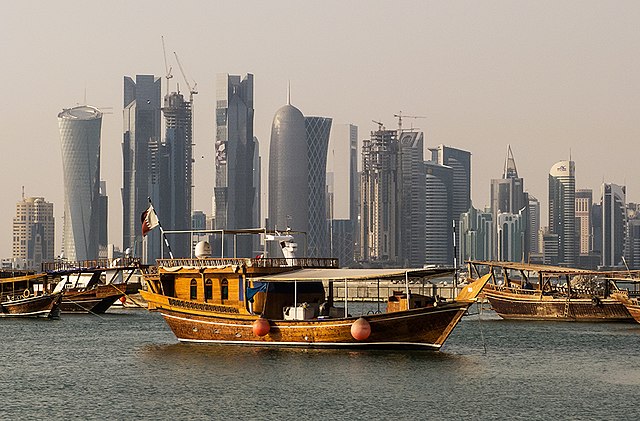
THE positives in Doha, Qatar, are seldom highlighted in the media: Do you know that the eight stadiums are located within a 35-mile radius of this downtown city that the 2022 World Cup is perhaps the most compact in football history.
During the group stage, that makes it possible to attend four games a day!
But to avoid congestion and make more tickets available to more people, the organisers have limited fans and the media to two games a day, with a four-hour window between kickoffs.
FREE TRANSPORT
Isn’t this an organisational wonder worth mentioning to watch four of the best teams in the world on the same day?
And to make it easier, with special free public transportation, to World Cup visitors, serving all eight stadiums.
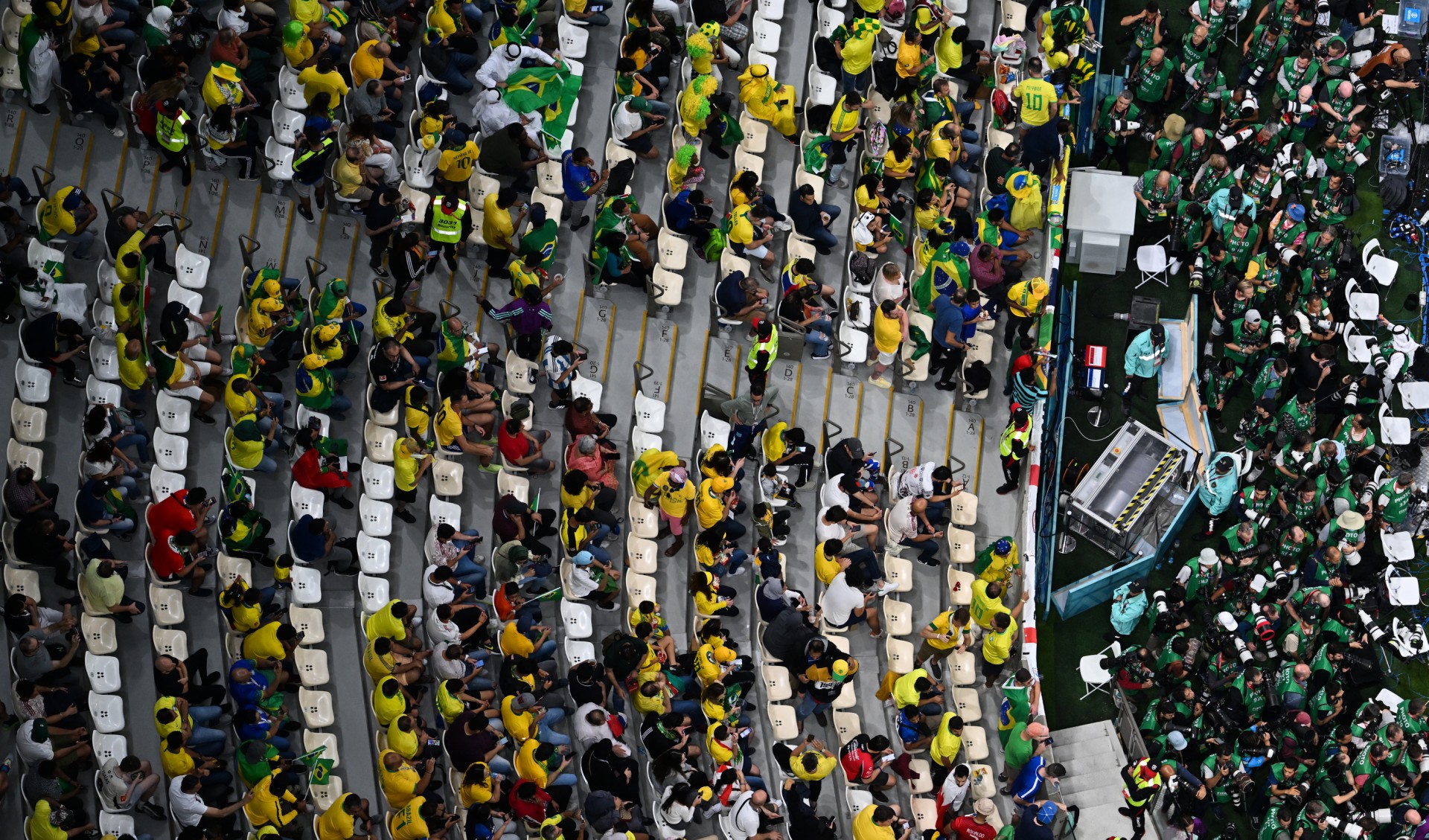
For the record, the top attendance of the tournament so far, according to FIFA, was the game at Lusail Stadium on 24 November, with 88,103 there to see Brazil beat Serbia 2-0. And at the FIFA Football Festival at Bidda Park showed the highest accumulative attendance, with a total of 98,000 fans throughout the day.
GIANT SCREENS
The multi-national and multi-cultured festival of football screens every FIFA World Cup game on giant screens, as well as providing free entertainment between games with some of the most famous names from music scenes around the world – and has been enjoyed by fans from every corner of the globe.
Hats off to the Qatar organisers.
And for the sake of football’s proverbial “fair play”, I think the positives in Doha, Qatar, must be properly highlighted in the global media.
You agree?
* Suresh Nair is an award-winning sports journalist who is also a qualified international coach and international referee instructor
CAN the number of football fans coming to Qatar seriously offer an indication to the brewing success of the world’s biggest tournament?
Only a little over 765,000 visitors reportedly landed up in Doha in the first two weeks of the FIFA World Cup 2022, falling well short of the expectations of the Arab country.
Qatar, which became the first Arab country to host the showpiece football event, had expected an influx of around 1.2 million visitors.
It’s highly unlikely that the number will double in the next 10 days even as a blockbuster quarter-finals line-up awaits the World Cup. With only eight teams left in action, Qatar is unlikely to meet their expected target, according to multiple media reports.
The report which identified the numbers was prepared by the Supreme Committee for Delivery and Legacy (SC), which organises the tournament. And half of the 765,000 have now left the country at the end of the Round of 16.
PEAK PERIOD
The peak period which the organisers expected for visitor influx was between November 24 and 28 during which the action-packed group stages was heading towards its climax.
There was plenty of action during the group stage as teams like Japan, South Korea and Australia and African sides Senegal and Morocco pulled off a few surprises with former champions Japan and World No. 2 Belgium being shown the door.
The report registered 1.33 million match ticket holders and 3.09 million tickets sold across the eight stadiums for the World Cup, which will end on December 18. The stadium attendance at the first 52 matches was 2.65 million.
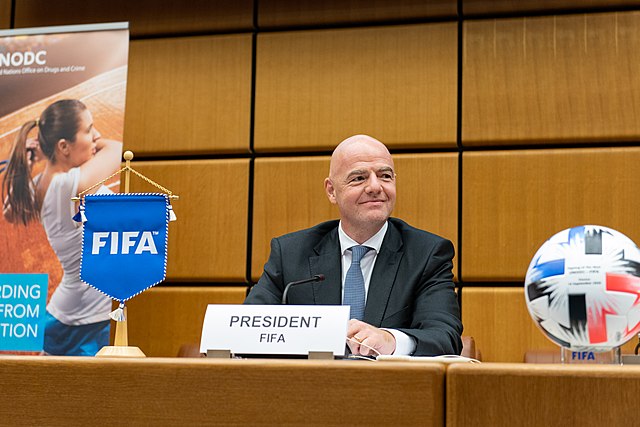
Notably, FIFA president Gianni Infantino claimed record-breaking viewership for the group stage, saying the action in the first phase of the World Cup was one of the best in the history of the tournament.
‘INCREDIBLE EXCITEMENT’
“Fantastic atmosphere, great goals, incredible excitement, surprises, small teams beating big teams,” he was reportedly quoted.
“Well, there are no more small teams and no more big teams. The level is very, very equal.
“For the first time as well, national teams from all continents going to the knock-out phase, for the first time in history. This shows that football is really becoming truly global.”
The organisers were expecting more visitors to flock to Qatar for popular matches and after the country lifted entry restrictions for nationals and residents of fellow Gulf states.
It is learnt on Tuesday, hundreds of Moroccan fans flew into Qatar on special flights arranged ahead of their team’s victory over Spain. Similar fights will be laid on to allow last-minute fans to fly in from overseas to watch their teams advance through the tournament’s final three rounds.
POINTS OF ENTRY FOR FANS
The points of entry have also been very restrictive, too. Visitors to Qatar must obtain a Hayya identification card ahead of travel as it doubles as a mandatory entry visa during the tournament period. But on Tuesday, Qatar dropped this requirement for Gulf Cooperation Council (GCC) countries.
Some surveys have also shown that the Qatar World Cup stands as one of the most expensive in the history of the sport in terms of tickets, accommodation and alcohol sales, which is also banned at the stadium.
“Staging it for the first time in the Middle East marks massive steps and risks for the organisers,” says award-winning Singapore coach Jita Singh, now in Doha, with his family.
“But most view it, even including me, as a once-in-a-lifetime chance to see thebest football tournamentover a month.”
* Suresh Nair is an award-winning sports journalist who is also a qualified international coach and international referee instructor.
ARE you ready for a World Cup break as the big-time matches come to a temporary halt?
Perhaps for some, with their favourite teams knocked out, it may well be time for the curtains to come down.
There have been multiple views as football fans have been spoilt with countless hours of match action since the World Cup began at the end of November.
During the group stages, there were up to four games per day, and even as we reached the Round of 16 there was no let up in the action, with two games per day keeping football fans engrossed as the likes of Lionel Messi and Kylian Mbappe carried their sides to the quarter=finals.
The subject of multi-national fans leaving early was put to Qatar’s head coach Felix Sanchez before his side’s second game against Senegal. But he skilfully dodged it as members of the country’s FA, and indeed FIFA, would have looked on.
THE REAL SUPPORT
I must admit that support for the hosts has been there during this tournament, but you can hardly describe it as vociferous. Many locals also seem to follow another, ‘bigger’ country or indeed an individual, such as Christiano Ronaldo.
I notice, too, that many seem to support multiple teams and players. And that is fine of course. We can rightly question some of the Qatari laws, but we also have to respect cultures and the people’s relationship with football is among those.
Just because they don’t want to congregate en masse in bars, sing songs about how much they detest opposition players and generally put everyone on edge doesn’t mean they are not enjoying themselves.
ARE YOU BORED?
The big question: Is Qatar, hosting the world’s biggest sports tournment, bored of the football already?
It is impossible not to wonder what will become of the country after the tournament, although we already know some elements. For example, the distinctive and temporary Stadium 974, and its 974 shipping containers, will be deconstructed entirely, while the Al Janoub Stadium, the home of Al-Wakrah SC, will have its capacity halved from 40,000 to 20,000.
It’s a fact that after the World Cup is won, the buildings adorned with football superstars are returned to their normal status and the excellent Metro system removes the signs for stadiums that adorn every station.
ROARING SUCCESS?
It is highly likely that Qatar, with its tremendous flow of oil-wealth, evenlaunch a bid to host something else, perhaps not discounting the Olympics, in the very near future.
The cycle of preparation and transformation can then begin again, with sport again used as the tool that the country want it to be. I was told that they will point to this World Cup as a roaring success, cite the sometimes confusing attendance records and, rightly, point to the overwhelmingly positive behaviour of fans.
Truth has to be told if the actual football has captivated the nation though. What do you say?
For many, the lack of games over the next couple of days might not be noticed. But as we approach the final stretch of the tournament with the best eight teams in tow, it’s worth the wait to see who finally picks up the prestigious World Cup.
Hey, your guess may well be as good as mine to who deserves to return homeas 2022 WorldCup supremos.
* Suresh Nair is an award-winning sports journalist who is also a qualified international coach and international referee instructor.
IS someone seriously tickling with crowd-figures as host Qatar appear not to be able to account for thousands of fans who appear to be missing from its official crowd numbers at the World Cup.
Can this really happen at the world’s biggest once-in-four-years football fiesta?
Sincerely, there has been so many varying theories, rumours or otherwise, and differing photos taken from the opening ceremony and even Tuesday’s matches appear to throw fuel on the fire.
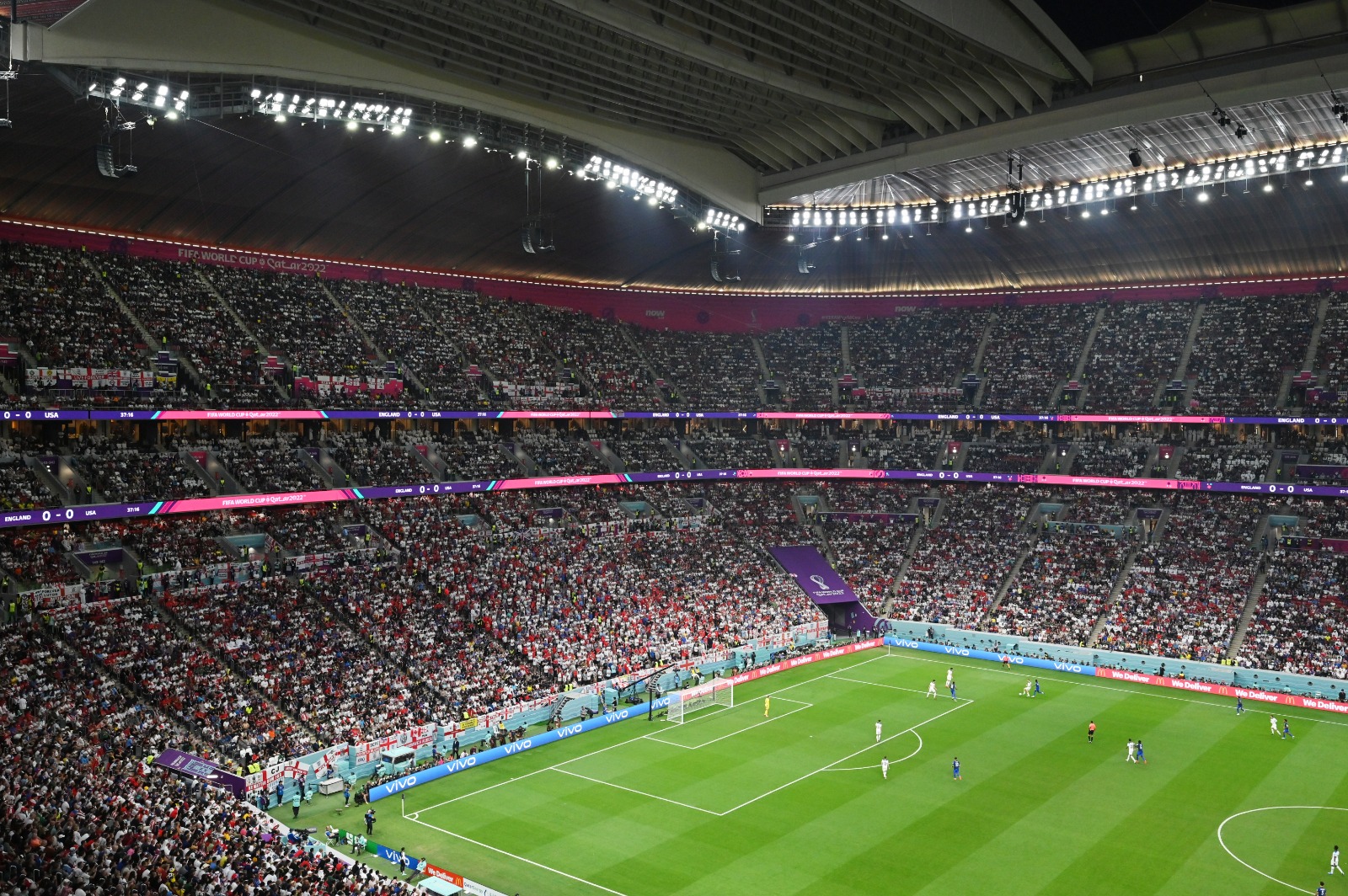
Let’s look definitely at the first four matches played so far. The official crowds for all matches were listed to be well above the official capacity for each of the venues.
Even photos taken of grandstands during the middle of the matches have also shown thousands of missing fans.
These are the official crowds announced for the four matches: (1) Qatar vs Ecuador – 67,372 – official capacity of Al Bayt Stadium is 60,000. (2)England vs Iran – 45,334 – official capacity of Khalifa International Stadium is 40,000. (3) Netherlands vs Senegal – 41,721 – official capacity of Al Thumama Stadium is 40,000. (4) USA vs Wales – 43,418 – official capacity of Ahmad Bin Ali Stadium is 40,000.
PHOTO EVIDENCES
If you work up the total figures, it shows a staggering number of 17,845 have somehow squeezed into stadiums they are not supposed to fit inside. No explanation has been given for the discrepancies.
Can this really happen, you wonder?
More eye-catching were photos taken from the Netherlands’ 2-0 win over Senegal with the Netherlands celebrating a late goal with entire sections of the stadium appearing vacant.
The global media have been caught unawares and the British newspaper, The Sun,reported the announcement that 41,721 spectators had attended the game. And this had fans even chuckling on social media.
It comes after the embarrassing sight of Qatari fans walking out during the second half of the team’s loss to Ecuador, leaving sections of the grandstands looking grim.
CAPACITY FIGURES
FIFA don’t want to be left red-faced in explaining. But has given an indication of the crowd-discrepancies through British journalist Rachel Burden. Burden tweeted FIFA had claimed to her “capacity figure is the reference capacity that meets the FIFA requirements. The final capacity during event mode is higher (hence the mismatch).”
You wonder if you can seriously believe this.
Qatar became the first host nation to lose its World Cup opener in the 92-year history of the tournament. It has only given air to previous speculation that the wealthy state has paid “fake fans” to make public displays of support for various national teams.
Video captured in Qatar in the days leading up to the opening ceremony showed groups of so-called supporters gathering in public to cheer on their team. Cynical commentators have suggested the displays were not exactly convincing.
For the record, the tournament has stated more than one million fans from around the globe will be in Qatar during the tournament. But at least some of those fans have been having a tough time, with accommodation nightmares and alcohol bans.
Austrian manager and former Manchester United boss Ralf Rangnick reportedly told a journalist:“You don’t need to buy fans for anyone to support you, they are automatically there already.”
The big suspicious question: Is anyone playing with crowd-figures just to deliberately beef up the numbers? Otherwise how can thousands of fans appear to be missing from its official crowd numbers at this World Cup?
* Suresh Nair is an award-winning sports journalist who is also a qualified international coach and international referee instructor
Finally, a great message from the boss of Fifa Gianni Infantino, who has taken the pain to write to all the 32 nations competing in the Qatar World Cup, urging them to “let football take the stage’.
An unusual plea indeed and in his letter, Infantino attempts to defuse concerns over the running of the game.
He says there are many challenges and difficulties of a political nature all around the world, in an attempt to deflect criticism about Qatar and the problems other countries and some NGOs or right groups perceive as inherent to the Muslim nation.
Rightfully so, Infantino says football should not be expected to have an answer to every one of the political and social problems that crop up around the world.
Regarding concerns over the safety of travelling fans in the country he reiterates a promise that “everyone is welcome regardless of origin, background, religion, gender, sexual orientation or nationality”, a more detailed commitment than that currently made by the hosts.
Why so much focus on safety when Qatar is known to be a safe nation to visit, no one knows.
Nevertheless, his message is aimed at the nations that are planning protests during the game or countries that have football stars who want to make a political statement during the matches.
Meanwhile, in Qatar things are moving at a rapid pace with the sounds of building work and heavy machinery still filling the air.
Video displays in the capital city of Qatar are displaying the countdown to the start of the competition that will put the wealthy Gulf state at the centre of the sporting world.
Fifa is urging the nations involved not to focus on the problems internal to the country but to give the most beautiful game a chance to show what the stars are made of, certainly after two harrowing years of lockdowns, deaths and fears of infections from one of the deadliest viruses the world has known.
The Fifa World Cup is to kick off in less than three weeks. Being the most prestigious sports and international event in the world, it will bring a lot of attention to Qatar.
But certainly, most of the fans will shun the criticism against the country and would want to keep watching the games, though they are not unaware that things could be better for some in the Emirates.
But the thing is, it will be the month of football soon and people want to watch great games, great goals while the stars get to showcase their talent and grit on the hot pitches in Qatar.
Since he took over as Fifa boss, Infantino has frequently says the country will deliver the “best ever” Fifa World Cup as well as arguing that the presence of the world’s most popular sporting event will help bring about lasting change in the country.
Qatar’s Population Increase due to the Fifa World Cup
On another note, Qatar’s population grew by 13.2 percent in 2021, as the country hired thousands of foreign workers in preparation for the World Cup 2022, which Doha will host in November.
Qatar’s population reached 2.94 million in September, according to data released by the Planning and Statistics Authority, after 370,000 people arrived in the country last year, the majority of whom were migrant workers.
There are approximately 380,000 Qatari citizens, with the remainder of the population consisting of low to medium-income migrant workers and some high earners with residency and working visas.
Qatar has spent $229 billion to construct highways, seven football stadiums, hotels, skyscrapers, and infrastructure in preparation for hosting the World Cup in 2022.
With deluxe match packages selling for thousands of dollars and five-star hotels doing a brisk trade, a sheen of glamour coats Qatar’s World Cup despite football’s working-class roots.
A penchant for luxury in the energy-rich Gulf state, which has one of the world’s highest GDPs per head, has rubbed off on an unusually high-end edition of a tournament for the masses.
If you’re able to spring $4,950 for a VIP ticket to a group game, you can enjoy drinks, a six-course meal and entertainment at a lounge overlooking the halfway line at Lusail Stadium, north of Doha.
Those with bottomless budgets in the resource-rich region have attractive accommodation options too, with one third-party site offering $4,000-a-night hotel rooms and $26,000 for a “head of state” suite — with a 30-night minimum stay.
Things are a little different for ordinary fans.
Cheaper options include a steel bed in a shared room in the semi-desert near the capital at $84 a night, or accommodation on docked cruise ships from $179 to $800.
Stadium crowds will include Qatar’s migrant labourers, who were offered some tickets at 40 riyals ($11) to watch a sport whose players and core supporters are traditionally blue-collar.
According to Ronan Evain, executive director of Football Supporters Europe, the onus on “premium” experiences has left some fans cold.
“It’s clear that there’s a focus on a type of premium tourism, but the vast majority that go to a World Cup are middle-class,” Evain told AFP.
“They’re not the sort of people who can afford to stay on a cruise liner at $5,000 a week.”
– ‘Solution is to cancel’ –
The hordes of ticketless fans that usually descend on a World Cup will be reduced in number, as only ticket holders and up to three guests each can enter Qatar during the November 20 – December 18 tournament.
Many supporters will stay elsewhere in the Gulf and board the estimated 100-200 World Cup shuttle flights a day from the United Arab Emirates (UAE), Saudi Arabia, Kuwait and Oman.
Even those options do not come cheap.
In Dubai, an hour’s flight away and expected to be a major destination, an official World Cup package costs $1,500 for four nights in a shared room, including one return flight to Doha but no match tickets.
The Qatar World Cup is at least compact, with all eight stadiums in and around Doha — eradicating the cross-country travel needed at previous editions such as Brazil 2014 or Russia 2018.
“The problem with the World Cup in Qatar is that there are very few alternatives,” said Evain.
“At a World Cup in Brazil or Russia, you can take a train, hire a car, stay 200 kilometres (120 miles) away or come just for the day of the match.
“None of that is possible in Qatar. Either you can’t find accommodation or accommodation is too expensive,” he added.
“People are looking for a solution and for quite a few people the solution is to cancel, because they can’t afford this sort of budget.”
– High-end experiences –
However, Sue Holt, executive director of Expat Sport, the UAE agent for the official World Cup package provider, said there was a range of accommodation “to suit most budgets”.
The United States, Britain, France, Mexico, China and India were among the countries where fans were showing most interest in packages for the UAE, she said.
“Sports tourists generally tend to be older and travel in groups, which can be families, friends or sporting groups,” she said.
“Part of the appeal of this type of travel is that it is a collective, shared experience watching your favourite team or player together.”
These supporters “will include people who have never ventured to this region before”, added Holt.
According to Robert Mogielnicki, senior resident scholar at the Arab Gulf States Institute in Washington, hosting the World Cup is about “prestige” for Qatar, a monarchy of just 2.8 million people, overwhelmingly expatriate workers.
“What the Qataris don’t want to happen is get stuck with an oversupply of tourism infrastructure for a segment of tourists unlikely to be a regular, consistent presence in the country,” he said, explaining the limited options.
“I suspect that the Qataris will keep looking to attract wealthier tourists from elite circles,” added Mogielnicki, who is also adjunct assistant professor at Georgetown University and George Washington University.
“Lots of the momentum behind regional tourism projects, especially in Saudi Arabia, does seem to focus on high-end, luxury experiences these days.”
More articles related to the 2022 World Cup can be found here.