While Qatar is touting that some of the stadiums hosting the World Cup will disappear after the event, we recall for our readers the fate of some of the majestic stadiums in other countries where the event was held in the past.
The 2018 World Cup in Russia was a fantastic journey for many of the national teams that participated in the tournament. But now, at least 7 of the 11 stadiums built for the Russia 2018 World Cup are not hosting clubs from the top flight.
However, despite regularly drawing crowds of 1,000 to 5,000 for home games, those stadiums must bear operational costs ranging from RUB200 to RUB500 million (approximately RM12.6 to RM31.5 million).
In South Africa where the World Cup 2010 was hosted, the absence of fans at home games caused its World Cup venues to struggle. They do not get enough revenue to sustain themselves financially. with sustaining themselves financially.
The situation is similar in Brazil where many stadiums are now the mark of shame since the end of the devastating World Cup for the nation.
The Middle Eastern country that has constantly been criticised for hosting this year’s World Cup has actually used interesting methods of construction for some of their stadiums. Unfortunately for them, the media focused on the country’s LGBTQ issues and their beer policies.
Most of these issues have been explained by the Qatari officials as a means of safety and precaution. Furthermore, a lot of these rules are in place to make the event a family friendly one.
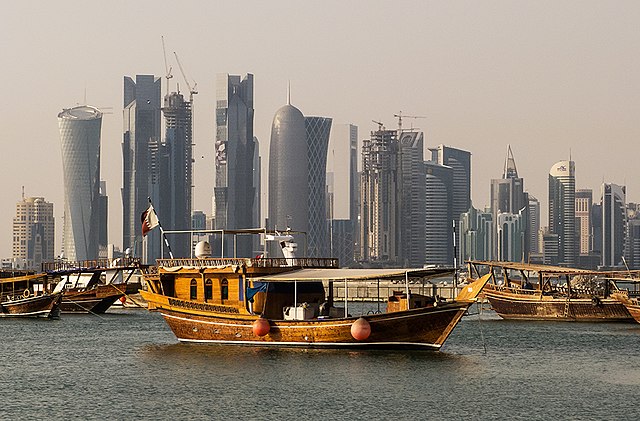
The country spent around $200 billion for the construction of the sports venue and to provide other preparations for the World Cup in Qatar. For this, they built seven new districts where there are themes related to their local culture.
They created a new city especially for the World Cup. Now they are going to dismantle most of these stadiums once the tournament is over. It will be a radical return to normal for the Muslim nation.
ARE you ready for a World Cup break as the big-time matches come to a temporary halt?
Perhaps for some, with their favourite teams knocked out, it may well be time for the curtains to come down.
There have been multiple views as football fans have been spoilt with countless hours of match action since the World Cup began at the end of November.
During the group stages, there were up to four games per day, and even as we reached the Round of 16 there was no let up in the action, with two games per day keeping football fans engrossed as the likes of Lionel Messi and Kylian Mbappe carried their sides to the quarter=finals.
The subject of multi-national fans leaving early was put to Qatar’s head coach Felix Sanchez before his side’s second game against Senegal. But he skilfully dodged it as members of the country’s FA, and indeed FIFA, would have looked on.
THE REAL SUPPORT
I must admit that support for the hosts has been there during this tournament, but you can hardly describe it as vociferous. Many locals also seem to follow another, ‘bigger’ country or indeed an individual, such as Christiano Ronaldo.
I notice, too, that many seem to support multiple teams and players. And that is fine of course. We can rightly question some of the Qatari laws, but we also have to respect cultures and the people’s relationship with football is among those.
Just because they don’t want to congregate en masse in bars, sing songs about how much they detest opposition players and generally put everyone on edge doesn’t mean they are not enjoying themselves.
ARE YOU BORED?
The big question: Is Qatar, hosting the world’s biggest sports tournment, bored of the football already?
It is impossible not to wonder what will become of the country after the tournament, although we already know some elements. For example, the distinctive and temporary Stadium 974, and its 974 shipping containers, will be deconstructed entirely, while the Al Janoub Stadium, the home of Al-Wakrah SC, will have its capacity halved from 40,000 to 20,000.
It’s a fact that after the World Cup is won, the buildings adorned with football superstars are returned to their normal status and the excellent Metro system removes the signs for stadiums that adorn every station.
ROARING SUCCESS?
It is highly likely that Qatar, with its tremendous flow of oil-wealth, evenlaunch a bid to host something else, perhaps not discounting the Olympics, in the very near future.
The cycle of preparation and transformation can then begin again, with sport again used as the tool that the country want it to be. I was told that they will point to this World Cup as a roaring success, cite the sometimes confusing attendance records and, rightly, point to the overwhelmingly positive behaviour of fans.
Truth has to be told if the actual football has captivated the nation though. What do you say?
For many, the lack of games over the next couple of days might not be noticed. But as we approach the final stretch of the tournament with the best eight teams in tow, it’s worth the wait to see who finally picks up the prestigious World Cup.
Hey, your guess may well be as good as mine to who deserves to return homeas 2022 WorldCup supremos.
* Suresh Nair is an award-winning sports journalist who is also a qualified international coach and international referee instructor.
RATHER unusual, I must say: Imagine a football stadium in Qatar will no longer be there after the FIFA World Cup concludes.
It’s reported that Fenwick Iribarren Architects, who designed Stadium 974, said the idea behind the construction was to avoid the stadium turning into a “white elephant,” a structure which is left unused or underused after the tournament ends.
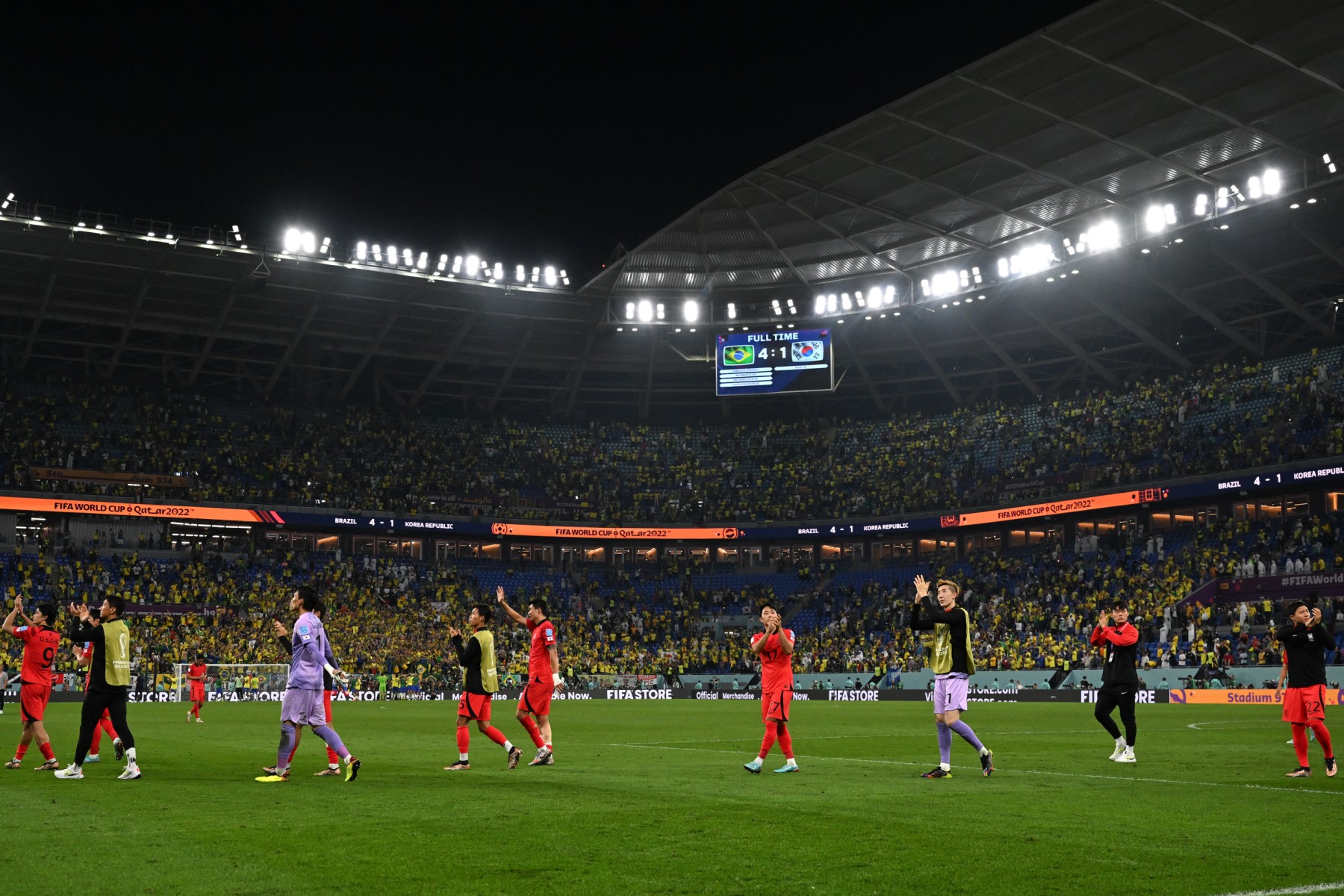
The Round of 16 clash between South Korea and Brazil which ended 4-1 in favour of the South Americans, will be the last match to be played in the stadium.
According to Qatar, Stadium 974 in Doha, one of seven new stadiums built, with a seating capacity of 40,000, will be dismantled soon after the final whistle.
DISMANTLE STADIUM
As per a report from the Associated Press, organisers have said that it is quite easy to dismantle the port-side structure and even send to countries in need. The stadium could also be rebuilt as a venue of the same size elsewhere or into multiple smaller stadiums.
For the record, the stadium that is partially built from recycled materials, including steel and shipping containers, is named after the number of containers used in its construction. 974 is also Qatar’s dialing code.
The sustainable stadium is made with multi-coloured containers used as building blocks and is the only stadium that isn’t air-conditioned. Stadium 974 has been conducting only evening matches.
SUSTAINABLE BUILDING
The main principles of sustainable building is a design for dissemble, Karim Elgendy, an associate fellow at the London-based Chatham House think tank, was quoted by Associated Press.
The stadium designers made it clear that the idea behind the construction was to avoid the stadium turning into a “white elephant,” a structure which is left unused or underused after the tournament ends.
Smart thinking, you may say, but whatever Stadium 974 in Doha will be a very rare example of a new stadium to be brought down.
It is learnt that the stadium will begin its farewell journey after it is completely dismantled and sent to a friendly country, which has not been named.
* Suresh Nair is an award-winning sports journalist who is also a qualified international coach and international referee instructor.
GOOD or not-so-good, Qatar is close to unrecognisable from the country it was 12 years ago when it won its historic bid to host the 2022 World Cup.
Around US$220 billion has been pumped into building an entirely new city, a state-of-the-art metro system and hundreds of new hotel and apartment buildings.
Like previous countries to host major events, Qatar has been under the critical eyes of the international community. At the same time, its own people have been exposed to international ideals as well as shifting cultural and societal norms as they got set for the influx of over a million football fans to their tiny country.
HUGE IMPACT
“Qatar changed a lot in the past 12 years and, culturally speaking, this has made a huge impact,” Qatari football fan Ali Adnan Abel told the global channelCNN. “We have seen more diversity that has made Qataris realise it’s time to let the shields down.”
In hosting the World Cup, the first in the Middle East, Qatar has been under intense pressure to enact legal changes.
For example, they dismantled the controversial Kafala system, a long-established regional labour practice that gives companies and the minority citizen population control over migrant workers’ employment, movement, and immigration status.
“What we’ve seen in this case is, certainly there was no attention whatsoever internationally or even on a national level to the treatment of migrant workers in Qatar and that certainly did change after Qatar won the ability to host the World Cup,” James Lynch, director of the human rights group FairSquare and a former British diplomat in Doha, was quoted as saying.
REFORMS TO CONTINUE?
But the big questions remain as to whether the reforms will stick once the tournament is over and the world’s gaze shifts away from the Gulf nation.
The Qatari organisers of the event insist those changes are here to stay.
However, history shows that it is uncommon for large sporting events like the World Cup or the Olympics to be long-term catalysts for societal change.
Russia infamously hosted the World Cup in 2018 and sought to project an image of tolerance by allowing fans to carry rainbow flags despite a yearslong crackdown on the LGBTQ community.
Will Qatar be on the new road for the changes?
* Suresh Nair is an award-winning sports journalist who is also a qualified international coach and international referee instructor.
GETTING the early boot should not discourage host Qatar.
Even before their third preliminary match, they’re out, in a rare first in the tournament’s 92-year history.
But the premature exit should not be called a “failure and disappointment” from the World Cup, says Qatar manager Felix Sanchez.
The Middle Eastern side battled valiantly before Senegal condemned them to a second straight defeat – and subsequently became the first country knocked out of the competition after the Netherlands drew 1-1 against Ecuador.
Qatar made history by becoming the first country from this desert-region to host the World Cup. And now have the unwanted record of becoming just the second home team to exit the competition at the group stage, after South Africa in 2010.
‘SMALL COUNTRY’
Spaniard coach Sanchez said: “Qatar is a small country, not a very large population. The local league is not a very competitive one. It’s our first time at the World Cup. If we can take part again, that would be great. It’s always useful to get more international experience.”
He reiterated that “our “goal was to be competitive…we have been working for so many months to be able to give a good performance”. Clinically, he added: “But sometimes the match does not play out as you expect. It also depends on the opponents’ performance. I must admit that we didn’t play at our top level.”
Poor Qatar: Ever since the host-choice was made in 2010, it also sparked instant criticism – over the logistics of holding a sporting event in a country where summer-time temperatures regularly top 100 degrees; over allegations of bribery and corruption among FIFA officials who voted for Qatar; and over concerns about human rights abuses that have persisted in the years since.
HOLD HEAD HIGH
Rather amazingly, off the field, Qatar is the smallest nation to ever host the World Cup, a complex international sporting event that draws huge numbers of visitors and requires the infrastructure to accommodate them.
They controversially edged out USA, mind you, and you can imagine the significance to this extraordinary selection.
Nasser Al Khater, chief executive of FIFA World Cup Qatar 2022, has insisted his nation can hold its head in hosting the games.
“Qatar 2022 is finally here and we’ve so far celebrated with a mesmerising opening ceremony, passion in the stands and exciting football on the pitch,” he said.
“Our nation is gripped by football fever and the party will last all the way to the final on December 18.”
* Suresh Nair is an award-winning sports journalist who is also a qualified international coach and international referee instructor.
With deluxe match packages selling for thousands of dollars and five-star hotels doing a brisk trade, a sheen of glamour coats Qatar’s World Cup despite football’s working-class roots.
A penchant for luxury in the energy-rich Gulf state, which has one of the world’s highest GDPs per head, has rubbed off on an unusually high-end edition of a tournament for the masses.
If you’re able to spring $4,950 for a VIP ticket to a group game, you can enjoy drinks, a six-course meal and entertainment at a lounge overlooking the halfway line at Lusail Stadium, north of Doha.
Those with bottomless budgets in the resource-rich region have attractive accommodation options too, with one third-party site offering $4,000-a-night hotel rooms and $26,000 for a “head of state” suite — with a 30-night minimum stay.
Things are a little different for ordinary fans.
Cheaper options include a steel bed in a shared room in the semi-desert near the capital at $84 a night, or accommodation on docked cruise ships from $179 to $800.
Stadium crowds will include Qatar’s migrant labourers, who were offered some tickets at 40 riyals ($11) to watch a sport whose players and core supporters are traditionally blue-collar.
According to Ronan Evain, executive director of Football Supporters Europe, the onus on “premium” experiences has left some fans cold.
“It’s clear that there’s a focus on a type of premium tourism, but the vast majority that go to a World Cup are middle-class,” Evain told AFP.
“They’re not the sort of people who can afford to stay on a cruise liner at $5,000 a week.”
– ‘Solution is to cancel’ –
The hordes of ticketless fans that usually descend on a World Cup will be reduced in number, as only ticket holders and up to three guests each can enter Qatar during the November 20 – December 18 tournament.
Many supporters will stay elsewhere in the Gulf and board the estimated 100-200 World Cup shuttle flights a day from the United Arab Emirates (UAE), Saudi Arabia, Kuwait and Oman.
Even those options do not come cheap.
In Dubai, an hour’s flight away and expected to be a major destination, an official World Cup package costs $1,500 for four nights in a shared room, including one return flight to Doha but no match tickets.
The Qatar World Cup is at least compact, with all eight stadiums in and around Doha — eradicating the cross-country travel needed at previous editions such as Brazil 2014 or Russia 2018.
“The problem with the World Cup in Qatar is that there are very few alternatives,” said Evain.
“At a World Cup in Brazil or Russia, you can take a train, hire a car, stay 200 kilometres (120 miles) away or come just for the day of the match.
“None of that is possible in Qatar. Either you can’t find accommodation or accommodation is too expensive,” he added.
“People are looking for a solution and for quite a few people the solution is to cancel, because they can’t afford this sort of budget.”
– High-end experiences –
However, Sue Holt, executive director of Expat Sport, the UAE agent for the official World Cup package provider, said there was a range of accommodation “to suit most budgets”.
The United States, Britain, France, Mexico, China and India were among the countries where fans were showing most interest in packages for the UAE, she said.
“Sports tourists generally tend to be older and travel in groups, which can be families, friends or sporting groups,” she said.
“Part of the appeal of this type of travel is that it is a collective, shared experience watching your favourite team or player together.”
These supporters “will include people who have never ventured to this region before”, added Holt.
According to Robert Mogielnicki, senior resident scholar at the Arab Gulf States Institute in Washington, hosting the World Cup is about “prestige” for Qatar, a monarchy of just 2.8 million people, overwhelmingly expatriate workers.
“What the Qataris don’t want to happen is get stuck with an oversupply of tourism infrastructure for a segment of tourists unlikely to be a regular, consistent presence in the country,” he said, explaining the limited options.
“I suspect that the Qataris will keep looking to attract wealthier tourists from elite circles,” added Mogielnicki, who is also adjunct assistant professor at Georgetown University and George Washington University.
“Lots of the momentum behind regional tourism projects, especially in Saudi Arabia, does seem to focus on high-end, luxury experiences these days.”
More articles related to the 2022 World Cup can be found here.