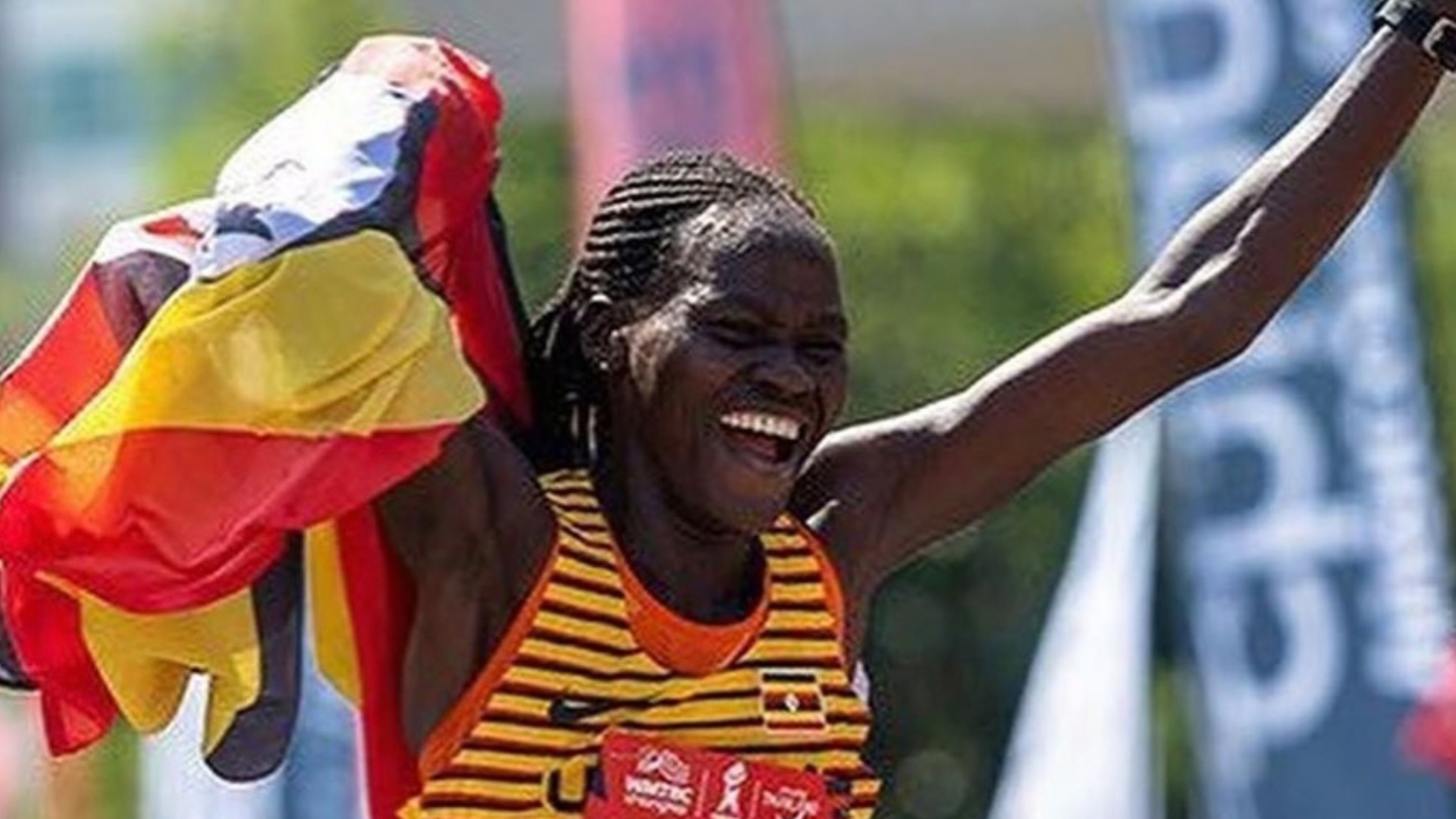
In a distant village close to the Kenyan border, thousands of mourners in Uganda attended a military funeral in honour of Olympic athlete Rebecca Cheptegei, who died after her partner set her on fire.
According to military spokesman Brig. Felix Kulayigye, Cheptegei was a sergeant in the Ugandan army and deserved a “gun salute that befits her rank”. This explains why military officers were heavily involved in the funeral. Moreover, athletes, family members, and others gave their eulogies in front of thousands in a sports field in the Bukwo district.
Cause of her death
On September 3, Dickson Ndiema attacked her at her home in Trans-Nzoia County, western Kenya, dousing her in gasoline, causing 80 per cent of her body to be burned. The couple fought over a plot of land the athlete had purchased in Kenya, according to a report submitted by the local chief.
The horrifying gasoline attack startled many people and bolstered concerns for the safety of female runners who are being exploited and abused in the East African nation.
Following a public march by dozens of campaigners demanding a stop to physical abuse against female athletes in the western Kenyan town of Eldoret, Cheptegei’s body was returned to Uganda in a solemn procession.
Cheptegei is the fourth athlete in Kenya to have died at the hands of her partner in a troubling trend of violence against women in recent years. This year, there have been multiple marches in response to Kenya’s high incidence of violence against women.
In a tragic turn of events, Ugandan marathon runner Rebecca Cheptegei, who recently competed in the Paris Olympics, is fighting for her life after suffering severe burns in an alleged domestic dispute.
The incident, which took place on Sunday afternoon at her home in Kenya’s Trans Nzoia County, has left over 75% of her body burned, according to local media reports.
Domestic dispute leads to fire
According to a report published by Reuters, Cheptegei, 33, is currently in critical condition at a hospital in Eldoret, Kenya. The attack, described as a domestic dispute by police, also resulted in injuries to her Kenyan partner, Dickson Ndiema Marangach, who is believed to have doused her with petrol before the fire broke out.
Police commander Jeremiah Ole Kosiom stated that Marangach was also burnt in the incident. He reportedly broke into Cheptegei’s home while she was at church, leading to the violent confrontation.
Cheptegei’s parents are en route from Uganda to be by her side. The athlete, who finished 44th in the women’s marathon at the 2024 Olympics, had purchased a home and land in Kenya to utilize the area’s renowned training facilities.
This incident is a stark reminder of the ongoing issue of domestic violence, particularly within the Kenyan athletic community.
In 2021, Kenyan runner Agnes Tirop was found stabbed to death in her home, a case that sparked national outrage and led to the establishment of Tirop’s Angels, a foundation aimed at combating gender-based violence.
Domestic violence among women in sports
According to a 2023 UNESCO report, a staggering 736 million women worldwide have faced the harrowing experience of physical or sexual violence in their lives. This grim statistic casts a long shadow over the world of sports, where the risk of violence against women and girls is unacceptably high.
The playing field is far from level. Nearly 21% of professional women athletes have endured the trauma of sexual abuse as children in sport, a figure that is almost double that of their male counterparts. The specter of violence looms large, with police reports of domestic violence spiking during major sporting events like the World Cup, in some communities by more than a third.
The digital arena is no safer. During the 2020 Tokyo Olympic Games, women athletes were the targets of 87% of all abusive Twitter posts. From the grassroots to the professional leagues, women and girls in sports—be they athletes, coaches, reporters, therapists, referees, or fans—are subjected to a relentless barrage of violence and abuse.
In the face of this crisis, sports organizations must rise to the challenge. They must provide robust support services for survivors, ensuring access to confidential reporting mechanisms that offer protection from retaliation. These measures are not just about mitigating the risk of violence and abuse; they are about rebuilding trust by creating a culture where perpetrators are held accountable and removed from positions of power.
Together, the landscape of sports can be transformed, turning it into a sanctuary where women and girls can thrive, free from the fear of violence.
As the community rallies around Cheptegei during this difficult time, the tragic event serves as a call to action to address the pervasive issue of domestic assault and to support initiatives like Tirop’s Angels in their efforts to provide support and protection for victims.
Paris will establish a sports complex in honour of Ugandan Olympian Rebecca Cheptegei, announced Paris mayor Anne Hidalgo, after the athlete was burnt to death by her boyfriend.
The marathon runner, who participated in the Paris Games last month, passed away on Thursday (September 5), four days after being doused in gasoline and set ablaze by her lover in Kenya.
The 33-year-old athlete, who placed 44th in her first Olympic Games, was attacked on Sunday and more than 75% of her body was burned, according to media from Kenya and Uganda.
Mayor Hidalgo told reporters: “She dazzled us here in Paris. We saw her. Her beauty, her strength, her freedom, and it was in all likelihood her beauty, strength and freedom which were intolerable for the person who committed this murder.”
She added: “Paris will not forget her. We’ll dedicate a sports venue to her so that her memory and her story remains among us and helps carry the message of equality, which is a message carried by the Olympic and Paralympic Games.”
Since October 2021, Cheptegei is the third well-known athlete to pass away in Kenya. Uganda’s Athletes Commission Chair Ganzi Semu Mugula remarked: “This is a critical moment— not just to mourn the loss of a remarkable Olympian, but to commit ourselves to creating a society that respects and protects the dignity of every individual.”
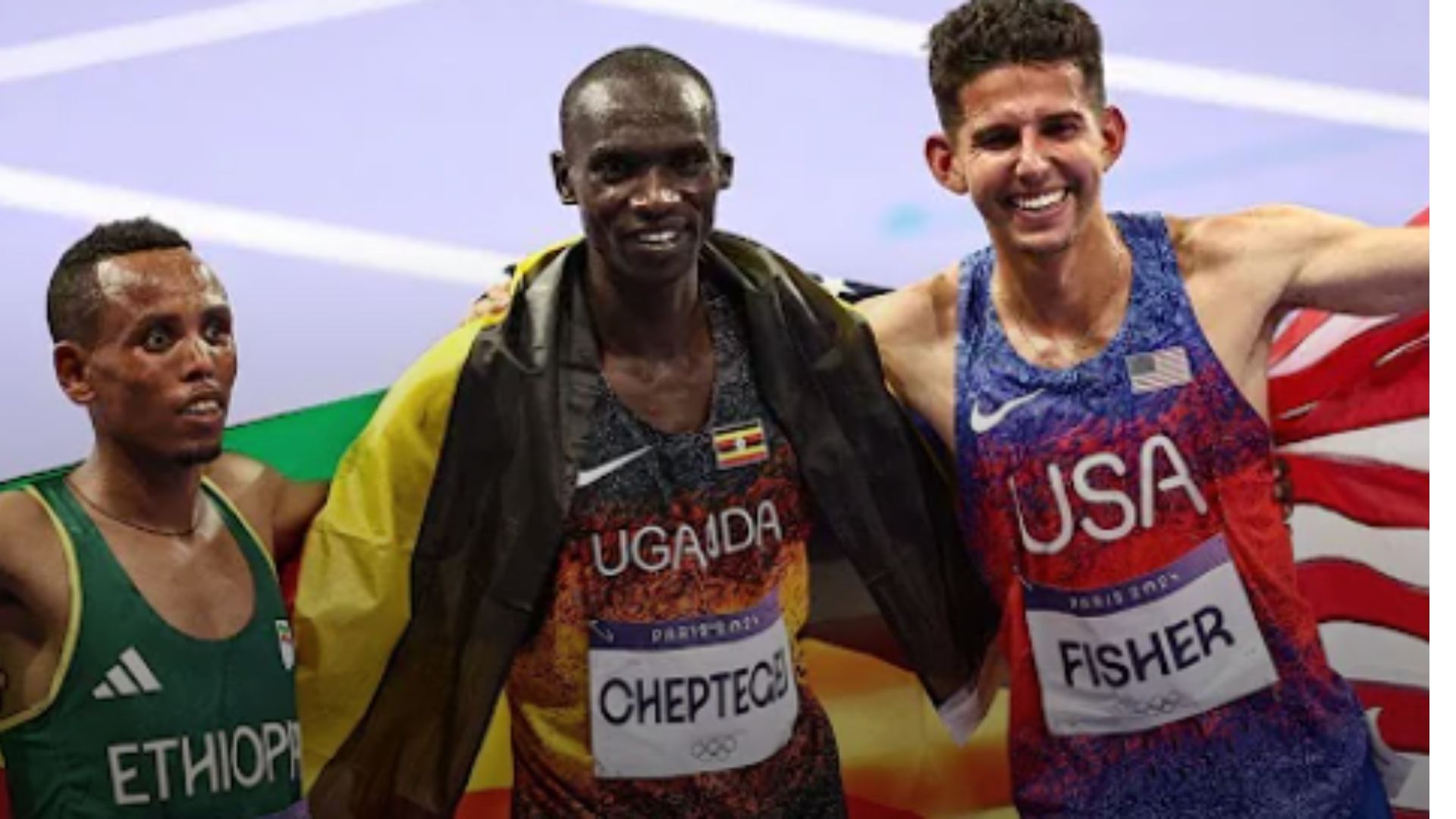
Joshua Cheptegi, the reigning world champion and world record holder for the 10,000 metres, is now the Olympic champion, too, winning the race in Paris in record time.
The 27-year Ugandan ran the 10,000 metres in 26:43.14 minutes in a new Olympic record, knocking 18 seconds off the previous record set by the Ethiopian Kenenisa Bekele at the 2008 Beijing Games
The race at the Stade de France in Paris on Friday (August 2) was the fastest 10,000-metre run in Olympic history.
The field was unprecedentedly quick — the first 13 finishers all broke the previous Olympic record of 27:01.17 seconds as advances in shoe and track technology continued to accelerate race times.
Cheptegei, who won the 10,000-metre silver and 5,000-metre gold inTokyo, finished first with a devastating burst of speed in the last 600 metres.
“I can’t describe the feeling. I’ve wanted this for a long time. When I took silver in Tokyo 2020, I was disappointed. I just wanted to win the 10,000 metres,” Cheptegei said after the race.
🥇 5,000 metres, Tokyo 2020
🥈 10,000 metres, Tokyo 2020
🥇 10,000 metres, Paris 2024
Joshua Cheptegei has now won more Olympic medals than any other Ugandan athlete in history 🇺🇬 pic.twitter.com/6v5WGewKsm
Cheptegei, world champion in 2019, 2022 and 2023, was surprisingly beaten to the gold by the Ethiopian Selemon Barega in Tokyo and was desperate for revenge.
Now, with the Olympic gold under his belt, the world champion and world record holder is going out a winner.
This his last race on the track, he said; he will be going next for something longer: the marathon.
Cheptegei, world champion in 2019, 2022 and 2023, was surprisingly beaten to the gold by Ethiopian Selemon Barega in Tokyo and was desperate for revenge.
Barega, the Tokyo gold medal winner, didn’t reach the podium in Paris, finishing seventh in the race with a time of 26:44.48.
Ethiopia’s Berihu Aregawi took the silver medal, just 0.3 seconds behind Cheptegei, after he and his Ethiopian teammates held the lead for much of the race.
“We had a team strategy to push the pace and we showed great teamwork. I am very sad we did not achieve the gold medal as a team,” Aregawi said.
But he was thrilled he took the silver after finishing fourth in Tokyo. “I was running for my country and I want to dedicate this silver medal to my country,” he said.
Grant Fisher of the United States took the bronze medal, 0.02 seconds behind Aregawi.
“It means so much. You’ve got to be tough to win a medal. I made it today and it feels incredible,” Grant said after the race.
“The biggest stadium I’ve ever been in was Tokyo and that one was dead silent,” he added, referring to the Games in 2021, when pandemic restrictions did not allow for typical crowds.
“This was so, so different. From the first lap, the crowd was screaming. I couldn’t hear anything the entire race. The 10,000m doesn’t get a lot of love sometimes, but that crowd made it feel like we were the best show in town. It was super fun. It was a fast, fast pace. I felt like I was in a good position the whole way and just gave it everything with a lap to go.”
A pack of 13 athletes ran the last two-thirds of the race together, and remarkably, all of them finished in under 27 minutes.
Cheptegei stayed behind the leaders for much of the race but accelerated, coming around the final bend on the penultimate lap, and did not let up.
“My collection for this run is really complete. I’m so excited,” he told reporters.
“Barely 16 years ago when I was watching the great Kenenisa Bekele win in Beijing, it was something that grew in my heart.
“I said, ‘one day I want to be Olympic champion’. It is the most special day. I can’t describe the feeling. I’ve wanted this for a long time. When I took silver in Tokyo I was so disappointed. I just wanted to win the 10,000 metres.”
Ruth Chepngetich breaks women’s marathon world record
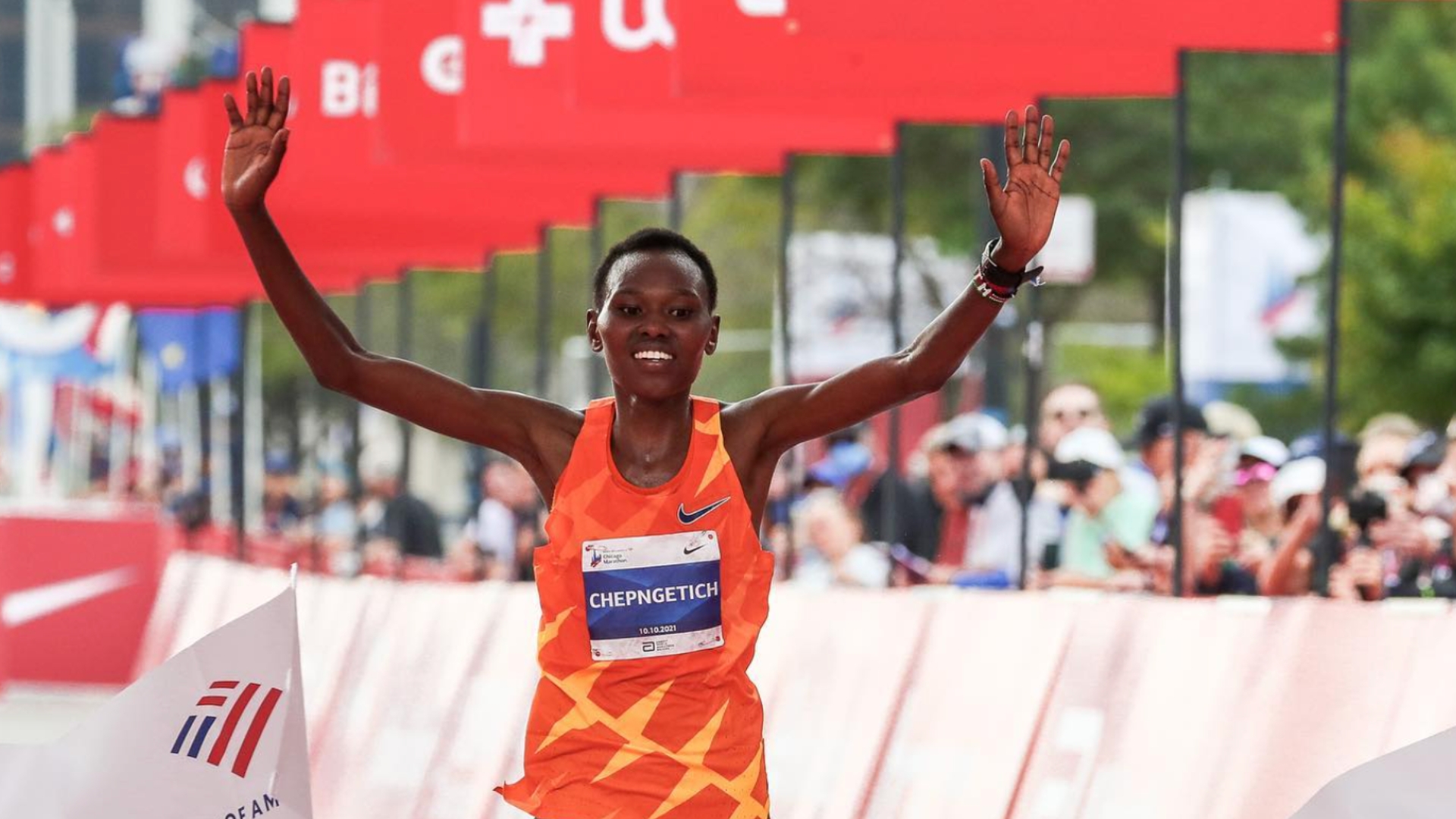
Ruth Chepngetich of Kenya recently set a world record for women’s marathon time in Chicago, finishing with a performance record of 2:09:56. She makes history as the first woman to break the 2:10 barrier.
The athlete cut over two minutes off the previous world record of 2:11:53 set by Tigist Assefa of Ethiopia last September 2023. According to World Athletics, her new world record is still pending due to the customary confirmation process.
On her victory, Chepngetich stated: “I feel so great. I’m very proud of myself. This is my dream… I fought a lot, thinking about the world record. The world record has come back to Kenya, and I dedicate this world record to Kelvin Kiptum.” He is her compatriot who set the men’s world record in Chicago last year, but unfortunately died in a road accident last February.
Her prior best record was 14 seconds short of the world record in Chicago last 2022, but this year, she erased any recollection of that letdown with a world record time so fast that only nine competitors in the men’s race could beat it.
Highlights of the race
Ethiopia’s Autumn Asefa Kebede was the only one who managed to stay within the distance of Chepngetich by the 10-kilometre mark. By that time, Chepngetich outpaced her other rivals.
Kebede placed second with a performance record of 2:12:32, eight minutes behind Chepngetich. Irine Cheptai of Kenta took third place, 20 seconds behind.
Marathon running is a demanding endeavor, requiring a great deal of physical, mental, and emotional endurance. It requires months of preparation as well as a great deal of strength, stamina, and self-discipline.
Imagine, then, that you were poised to win the marathon, but a stray dog got in your way, and you ultimately came in last.
Unfathomable frustration results. But Kimutai Ngeno experienced this at the Buenos Aires Marathon.
Kenyan runner, Ngeno completed his second marathon
On Sunday, September 24, Ngeno completed his second marathon of the year—the Buenos Aires Marathon—and something that no one could have anticipated unexpectedly occurred.
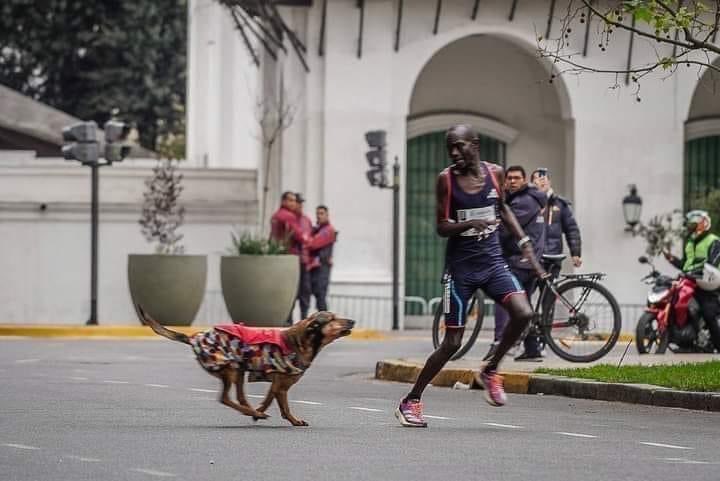
He had been in the lead up until the halfway point, recording a time of 1:03.21. Additionally, he reportedly continued to do so between kilometre 25 and km 38 when a dog suddenly appeared.
The dog chased Ngeno in the race, causing him to lose his concentration. Fortunately, some onlookers stepped in and chased down the dog, according to Sports and Lifestyle Africa.
However, despite returning to the race, Ngeno had ultimately fallen behind his rivals, Cornelius Kibet Kiplagat and Paul Kipngetich Tanui, who clinched gold and silver medals in the race, respectively.
Ngeno could have placed first and claimed the Ksh 1 million cash prize had it not been for the dog.
Samson Cherargei, a senator representing Nandi County, has commented on the marathon mishap that robbed the 29-year-old Kenyan runner of his victory. He criticized CS Ababu of Sports and Athletics Kenya in his X account for doing nothing to bring this matter to the attention of the individuals in charge of the marathon.
“Marathoner Robert kimutai Ngeno was attacked by a dog in Argentina during marathon event last Sunday where he secured third position.
UNFORTUNATELY the incompetent CS Ababu of sports and lethargic Athletics kenya has NOT found it wise to protest and call for investigations by Argentina authorities!. The athlete was robbed of his dignity and subjected to untold ridicule.
Blessed morning.”
Marathoner Robert kimutai Ngeno was attacked by a dog in Argentina during marathon event last Sunday where he secured third position.
UNFORTUNATELY the incompetent CS Ababu of sports and lethargic Athletics kenya has NOT found it wise to protest and call for investigations by… pic.twitter.com/DnR9Td1oP1