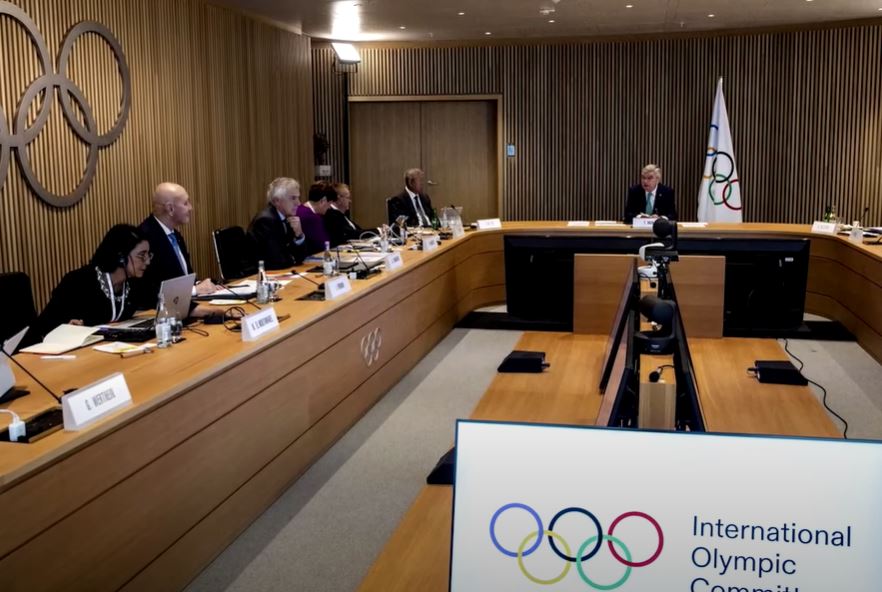
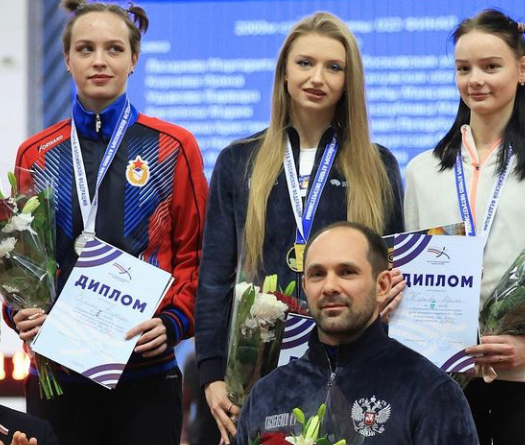
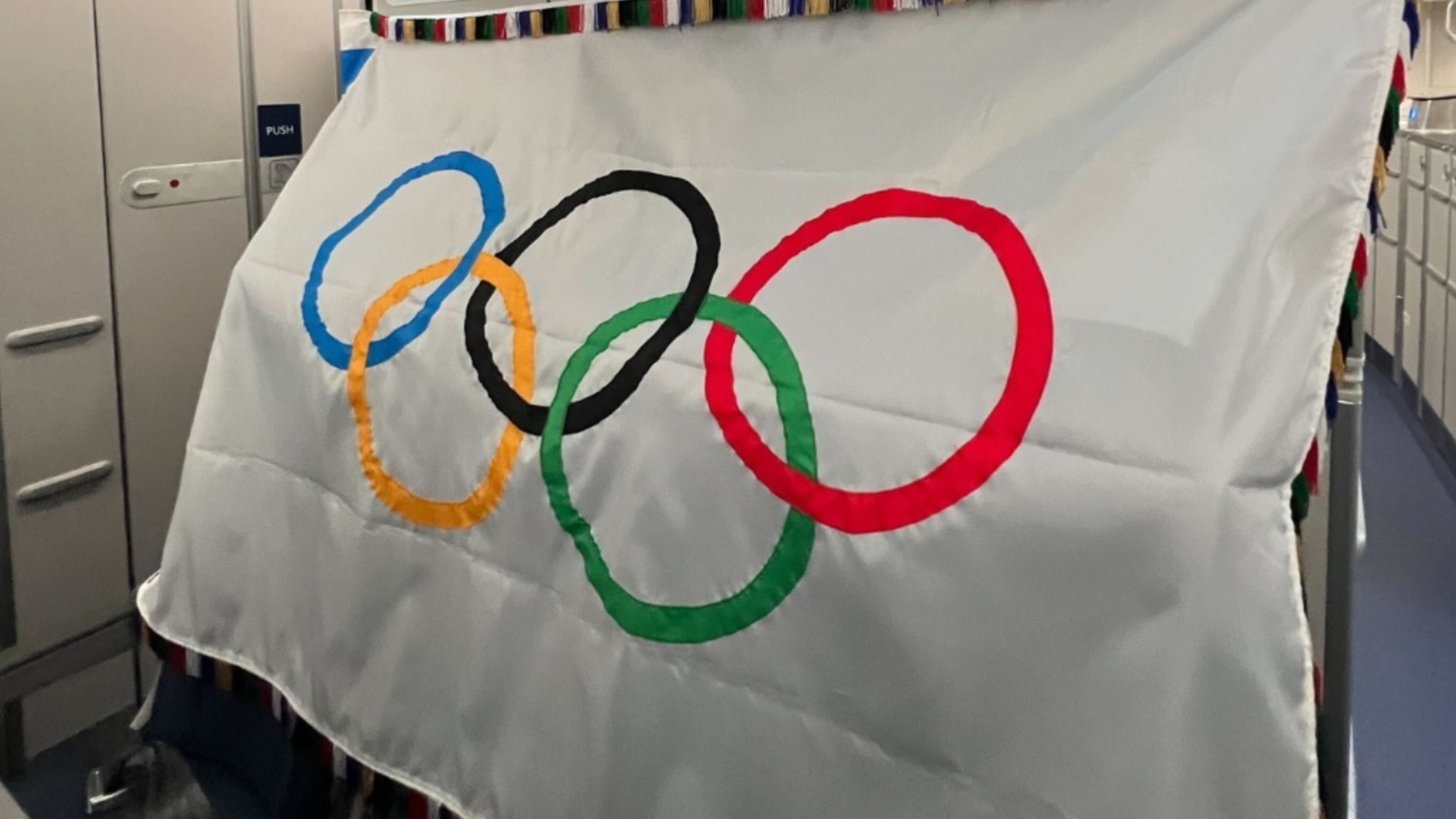
Russian and Belarusian athletes have been banned from participating in the upcoming Hangzhou Asian Games, according to a statement from the International Olympic Committee (IOC) and the Olympic Council of Asia (OCA).
Following the two countries’ invasion of Ukraine, they are now facing international sanctions, including but not limited to their athletes not being able to participate in the Olympics. This decision was supported by 35 ministers from different countries, including Ukrainian President Volodymyr Zelenskyy who relayed the sad news that 228 athletes and coaches died as a result of the war started by Russia.
“If there’s an Olympics sport with killings and missile strikes, you know which national team would take the first place,” he told the ministers. “Terror and Olympism are two opposites, they cannot be combined.”
This decision was also supported by Lucy Frazer, the British sports minister, who made her position clear on her X (formerly Twitter) account:
“I made the UK’s position very clear: As long as Putin continues his barbaric war, Russia and Belarus must not be represented at the Olympics,” she wrote.
But, last July, news broke that up to 500 Russian and Belarusian athletes may be allowed to compete in the Asian Games, with the aim of helping them qualify for the 2024 Paris Olympic Games. The athletes, however, would have to first adhere to the conditions that the OCA and OIC will set, one is that they will compete under a neutral flag, and another is that any national symbols will be not be allowed. Lastly, the athletes would also be ineligible to claim any medals in the competitions.
Nonetheless as the decision to retract their participation came to light, the Asian Games will, after all, proceed without them. Without going into further detail, the OCA stated that the IOC had made the decision and that it had stated that the idea was “not feasible due to technical reasons.”
In a brief statement, the continental body (OCA) told The Indian Express that there won’t be any Russian or Belarusian athletes at the Asian Games, and that it was the decision of the IOC not that of the OCA:
“No Russian and Belarusian athletes (at the Asian Games) and it is IOC’s decision, not OCA.”
In addition, the IOC also released their own statement:
“The concept of the participation of athletes with Russian and Belarusian passports at the Asian Games 2023 was explored as discussed at the Olympic Summit in December 2022, but was not feasible due to technical reasons.”
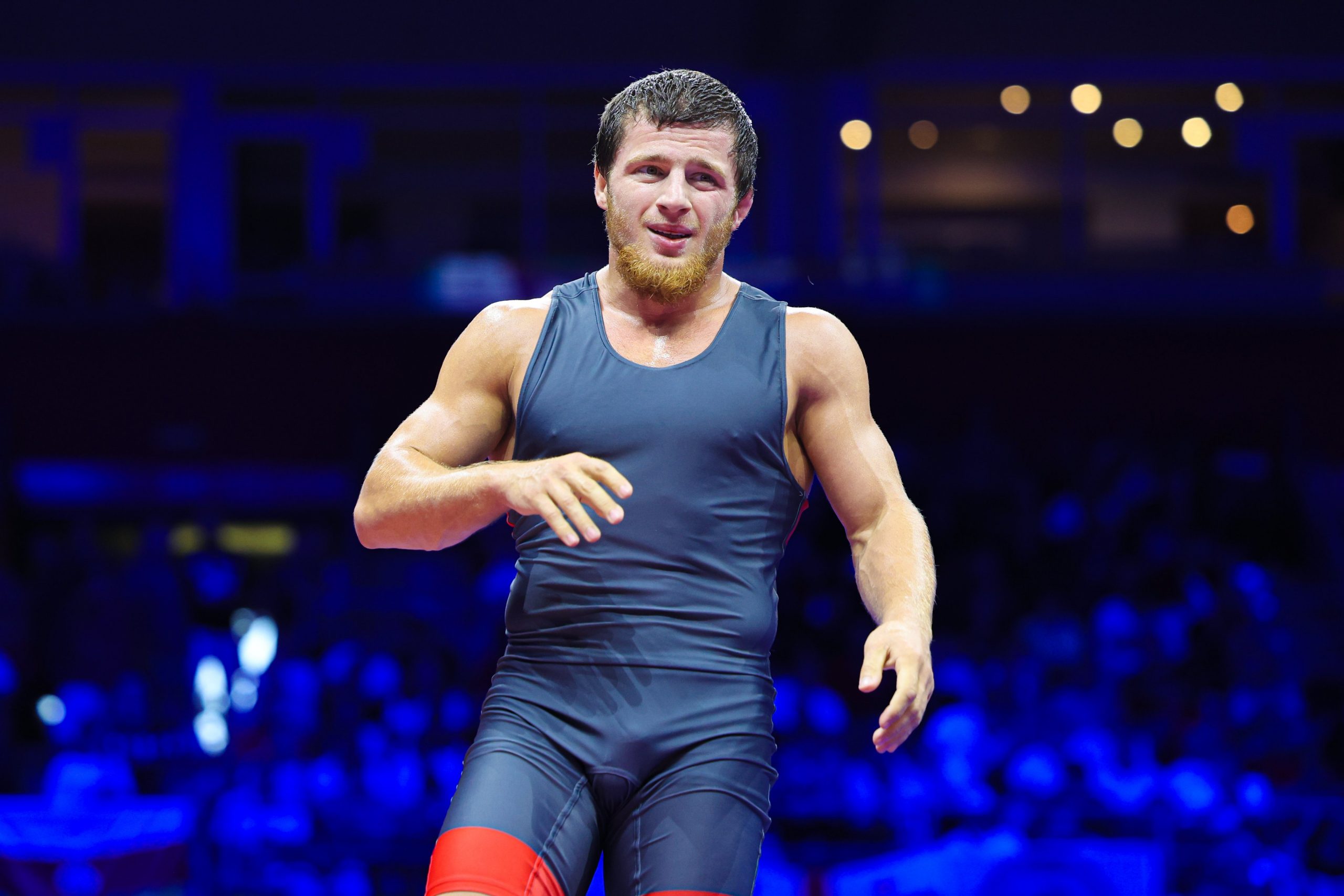
The Russian and Belarusian wrestlers at the 2023 World Wrestling Championships competed as “individual neutral athletes” at the Stark Arena in Belgrade, Serbia.
2023 World Wrestling Championships
Following the International Olympic Committee’s (IOC) ruling, Russian and Belarusian athletes, who were not allowed to compete under their national flag or wear their national insignia, competed at the World Wrestling Championships under the designation of “individual neutral athletes.”
Despite these limitations, the estranged wrestlers continued to participate in the World Wrestling Championships that took place from September 16 to 24, 2023, intent on making their dreams a reality. The athletes competed in three distinct disciplines: men’s freestyle, women’s freestyle, and men’s Greco-Roman.
To date, the ‘individual neutral athletes’ have won six medals at the event, the most noteworthy of which are the gold medals won by two Russian athletes in the men’s freestyle event. Akmed Usmanov and Zaurbek Sidakov who both placed first in the 79 kg and 74 kg weight divisions, respectively.
On the other hand, Abasgadzhi Magomedov clinched silver in the men’s freestyle at 61 kg, while Shamil Mamedov got bronze in the 65 kg weight division. In addition, Vanesa Kaladzinskaya, the only woman and Belarusian who snared a medal, also placed second and took home the silver in the women’s wrestling 53 kg weight class.
And, finally, Aues Gonibov won in the Greco-Roman 82 kg wrestling discipline, taking home the bronze medal.
Wrestlers’ Crisis
Ever since Vladimir Putin invaded Ukraine, the two countries, Russia and Belarus, have been largely sidelined in the sports world. The two countries are now suffering international sanctions, with their athletes taking the most hit.
The decision to impose sanctions was endorsed by 35 representatives of various nations, including Ukraine’s President, Volodymyr Zelenskyy, who reported the tragic deaths of 228 athletes and their coaches due to the war initiated by Russia.
“If there’s an Olympics sport with killings and missile strikes, you know which national team would take the first place,” he told the ministers. “Terror and Olympism are two opposites, they cannot be combined.”
For the Russian and Belarusian athletes and wrestlers, this was considered a huge blow to their careers. They were exiled from competitions because they were part of the nation that instigated a war.
Around 67 Russian athletes changed their citizenship just so they could compete freely in the international arena.
The athletes’ participation was also blocked at the upcoming Hangzhou Asian Games, another Olympic-qualifying event. In a brief statement to The Indian Express, the IOC prohibited their participation in the event due to “technical reasons.”
“The concept of the participation of athletes with Russian and Belarusian passports at the Asian Games 2023 was explored as discussed at the Olympic Summit in December 2022, but was not feasible due to technical reasons.”
The Russian and Belarusian athletes are now facing a crisis as the European Gymnastics just voted against their participation in the upcoming competitions.
FIG uplifts ban
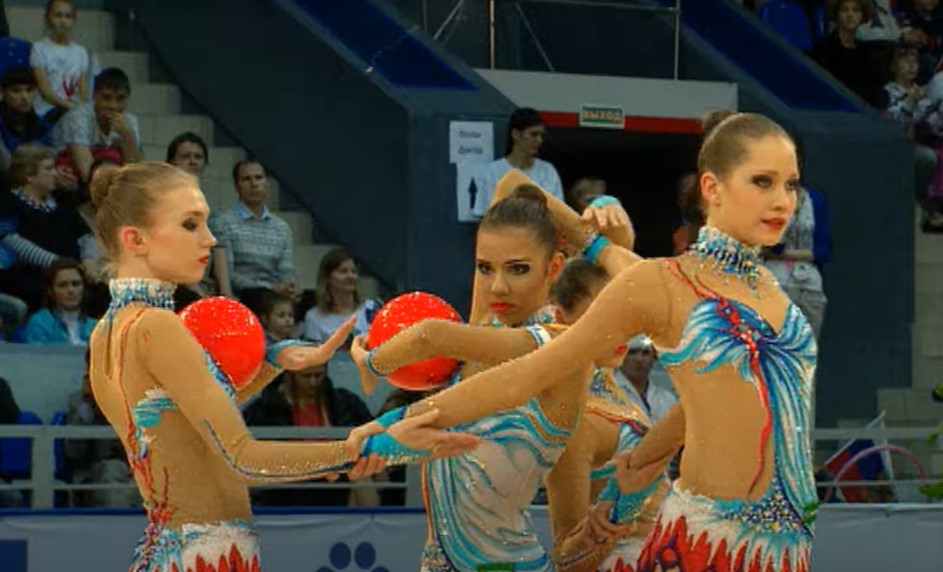
After Russia and Belarus invaded Ukraine in 2022, the International Gymnastics Federation (FIG) barred their gymnasts from competing in any international competitions/Olympic-qualifying events, slimming their chances to qualify for the Summer Olympics in Paris next year.
But this decision was reversed in July of this year, as reported by Jonathan Crane of DW.
NEW: The International Gymnastics Federation (FIG) has decided to lift its ban on Russian and Belarusian gymnasts.
They'll be allowed to return to competition as neutrals from January 1, if they adhere to the FIG's as yet unpublished "Ad-hoc Rules" used to determine neutrality.
Following the International Olympic Committee’s (IOC) recommendations, the FIG decided to withdraw the suspension and allow the Russian and Belarusian gymnasts to compete starting January 1st, so long as they complied with its “ad hoc rules.”
Gymnasts were thus allowed to take part in Olympic qualifying events as long as they joined the competitions as “individual neutral athletes,” did not actively support the war, or had no direct military affiliation.
Although this is the case, the FIG added that the IOC will ultimately have the last word regarding their eligibility for the Olympics.
The president of the FIG, Morinari Watanabe, also reaffirmed his belief that athletes who are not engaged in the conflict ought to be granted equal opportunities to compete.
European Gymnastics opposes FIG’s decision
A few months after this declaration, however, the General Assembly of European Gymnastics chose not to accept FIG’s ruling and voiced their disapproval of permitting the aforementioned athletes to participate in the official European gymnastics tournaments next year.
The likelihood of their gymnastics team qualifying for the Olympics is now doubtful due to this vote.
With the Russian invasion of Ukraine in 2022, qualified athletes from Belarus and Russia who will compete in the 2024 Paris Olympics will play independently and without representing their national anthems or flags.
The International Olympic Committee (IOC) announced that athletes from the said countries will not be included in the opening ceremony parade happening in July, and will take place on the Seine River instead of a stadium. An estimated 300,000 spectators will be present at the event.
Russian and Belarusian athletes will compete as individual neutral athletes (AINs) and there will be a created flag and anthem without lyrics for them, which will be coming from the IOC.
Tough for Russians and Belarusians?
The Olympic body stated: “They will not participate in the parade of delegations during the opening ceremony, since they are individual athletes.” However, aside from team parades, they would still be given the chance to experience other parts of the opening ceremony.
“This decision is the logical consequence of the fact that the athletes with Russian and Belarusian passports are not selected as delegations but as individual athletes,” Paris 2024 Games organizers admitted.
The IOC declared that they are anticipating 36 Russian and 22 Belarusian athletes playing in the 2024 Paris Olympics.
According to the news source Ria Novosti, Russian athletes who were not allowed to compete in the 2024 Summer Olympics in Paris have received cash compensation.
The Russian Olympic Committee’s (ROC) Director General, Vladimir Sengleev, claims that athletes who were refused neutral status and were unable to compete in foreign contests to earn a spot at the Games were compensated. A total of 200 million roubles ($2.09 million) was given to 245 athletes so that their efforts would be supported even though they were unable to compete.
Sengleev said, “The last payment was made on June 23, the day of the All-Russian Olympic Games.”
Bans and boycotts against Belarusian and Russian athletes in Paris 2024
Athletes from Belarus and Russia have particular difficulties when competing at the Paris Games because of the ongoing conflict between their countries and Russia.
They are required to compete as neutral athletes and are only permitted to take part under strict guidelines. This strategy seeks to strike a balance between the athletes’ chances to display their abilities and the global community’s views on fair play and sportsmanship.
By preserving the values of impartiality and honesty at the forefront of international athletic competitions, this choice highlights a fine line between sports and geopolitical unrest.
Keeping the inclusive spirit alive while handling intricate international relations with tact and respect is the goal of the organizers, who permit these athletes to compete under neutral status.
Invoking “humiliating conditions” set by the International Olympic Committee (IOC), many Russian sports federations, including judo and wrestling, have chosen not to participate in the Games.
Their choice highlights the continued hostilities and reflects their displeasure with the conditions established by the IOC. This action is indicative of a major shift, indicating discontent in the athletic community. The Paris Games are scheduled for July 26–August 11, 2024.
Olympic outcasts: 13 countries banned at least once from Games
Israel risked becoming the 14th country to be barred from the Olympics. But Palestinians and their supporters’ demands to ban Israel because of the war in Gaza were opposed by the International Olympic Committee (IOC) and President Macon of France. Both Israel and Palestine were represented at the Paris Olympics.
Israel sent 88 athletes and the Palestine Olympic Committee eight. The adversaries shared the Olympic stage, as did China and Taiwan, called “Chinese Taipei” at the Olympics, though for three long decades, Beijing refused to participate in the Games with Taipei.
Thirteen countries have so far been barred at least once from the Games in the modern Olympics’ 128-year history. Russia and Belarus were the latest to be barred after Russia broke the Olympic truce.
Olympic truce
The Olympic truce harks back to ancient Greece when the Greek states, often at war with each other, maintained peace during the Games so people could take part in the event. Nowadays, the Olympic Truce starts one week before the opening ceremony of the Olympic Games and ends one week after the closing ceremony of the Paralympic Games. Russia broke the Olympic truce when it invaded Ukraine on February 24, 2022, four days after the end of the Beijing Winter Olympics.
Russia and Belarus were officially barred from the Paris Games, but their athletes were allowed to take part as individuals. They were not allowed to compete under their national flags but as individual neutral athletes. A distinction was drawn between the countries and the regimes responsible for the invasion of Ukraine and the people who had no say in the matter. Thirty-two individual neutral athletes competed in 10 sports and won five medals, including a gold, according to Wikipedia.
Tokyo Olympics
Russians could not compete under the Russian flag at the Tokyo Olympics also. Russian athletes in Tokyo represented the Russian Olympic Committee (ROC), not Russia. Russia was banned from international sport by the World Anti-Doping Agency because of a doping scandal. That was why the Russian athletes were allowed to represent their national Olympic body but not their country at the Tokyo Games.
Russia, once an Olympic powerhouse, has become a pariah at the Games just as China, formerly an Olympic outcast by choice, has become a superpower.
Before we look at the rise of China, let’s go further back in Olympic history.
The first modern Olympic Games were held in Athens in 1896.
Held every four years, the quadrennial Games were staged five times – in Athens (1896), Paris (1900), St Louis, USA (1904), London (1908) and Stockholm (1912) – before war broke out. There were no Games during the First World War (1914-1918).
The Games resumed after the war in 1920 when the Summer Olympics were held in Antwerp, Belgium.
Earliest bans
The first Olympic ban was imposed in Antwerp when Germany, Austria, Hungary, Bulgaria and Turkey were barred from the Games. They were the countries that lost the war in which Britain, France and America triumphed.
Germany was not invited to take part in the 1924 Paris Olympics either as it continued to have problems with the host nation, France.
However, Germany was allowed to host the Olympics in 1936 when the Summer Games were held in Berlin and the Winter Games in Bavaria.
There were no Olympic Games during the Second World War (1940-1945) when Germany, fought against Russia, France, Britain and America again, this time allied with Italy and Japan.
Post-war bans
London held the first Olympic Games after the Second World War in 1948. Germany and Japan, which lost the war, were not allowed to take part. Italy, which changed sides during the conflict, was allowed to compete. Bulgaria was also not invited to London having sided with Germany during the conflict.
South Africa was the next country to face an Olympic ban. It was banned from the 1964 Tokyo Olympics because the country was racially segregated under its apartheid regime. For the same reason, South Africa was not allowed to compete in the Games in Mexico City (1968), Munich (1972), Montreal (1976), Moscow (1980), Los Angeles (1984), and Seoul (1988). The ban was lifted only in 1992 when South Africa competed in the Barcelona Olympics after being shunned for 28 years.
In 1972, Zimbabwe, then known as Rhodesia, was banned from the Munich Olympics for the same reason as South Africa. Rhodesia was also racially segregated at the time by the whites who ruled the country then.
New millennium bans
Afghanistan was the first country to be banned in the new millennium. It was banned from 2000 Melbourne Olympics because the Taliban regime discriminated against women. Although the Taliban are now back in power and continue to discriminate against women. Afghanistan was allowed to participate in the Paris Olympics. However, the IOC barred Taliban officials from the Games.
In 2016, Kuwait received the same treatment as Russia and Belarus today. The IOC suspended the Kuwait Olympic Committee in 2015 in a dispute over government interference in the country’s sports affairs. As a result, Kuwaiti athletes participated in the 2016 Rio de Janeiro Olympics as independent Olympic athletes under the Olympic flag.
North Korea was barred from the 2022 Beijing Winter Olympics. It was banned as punishment for not sending athletes to the 2020 Tokyo Olympics, citing concerns about Covid-19. The IOC president Thomas Bach North Korea had violated the Olympic charter by failing to fulfil its obligation to send athletes to the Games.
Other countries have also boycotted or abstained from the Games over the years.
Boycotts and non-participation
The United States boycotted the 1980 Moscow Olympics in protest against the Russian invasion of Afghanistan. Russia boycotted the 1984 Los Angeles Games in retaliation.
China did not participate in the Games for a long time. Beijing competed in the 1952 Helsinki Olympics but stayed away subsequently, refusing to take part in the Games with Taiwan. China participated in the 1984 Los Angeles Olympics after a three-decade-long absence only after an IOC agreement that Taiwan would henceforth compete in the Games as Chinese Taipei. Taiwan’s official name is Republic of China; it does not have diplomatic relations with Beijing.
While China ended second in the medal standings, second only to the United States, Taiwan’s 60 athletes returned home with seven medals, including two golds.
Israel’s 88 athletes also won seven medals, including one gold.
This was Israel’s biggest medal haul in any Olympics, said the Jerusalem Post newspaper, expressing satisfaction with the team results and noting there were “no major incidents of antisemitism”. “Although there were isolated instances, such as a few protest signs at soccer matches, scattered Palestinian flags during events featuring Israeli athletes, and occasional booing, these occurrences were infrequent and not as widespread as anticipated,” it added.
Not allowed to take part in Olympic Games
Afghanistan (in 2000)
Austria (in 1920)
Belarus (in 2024)
Bulgaria (in 1920, 1948)
Germany (in 1920, 1924, 1948)
Hungary (in1920)
Japan (in 1948)
Kuwait (in 2016)
North Korea (at 2022 Beijing Winter Games)
Russia (in 2020, 2024)
South Africa (in 1964, 1968, 1972, 1976, 1980, 1984, 1988)
Turkey (in 1920)
Zimbabwe (in 1972)