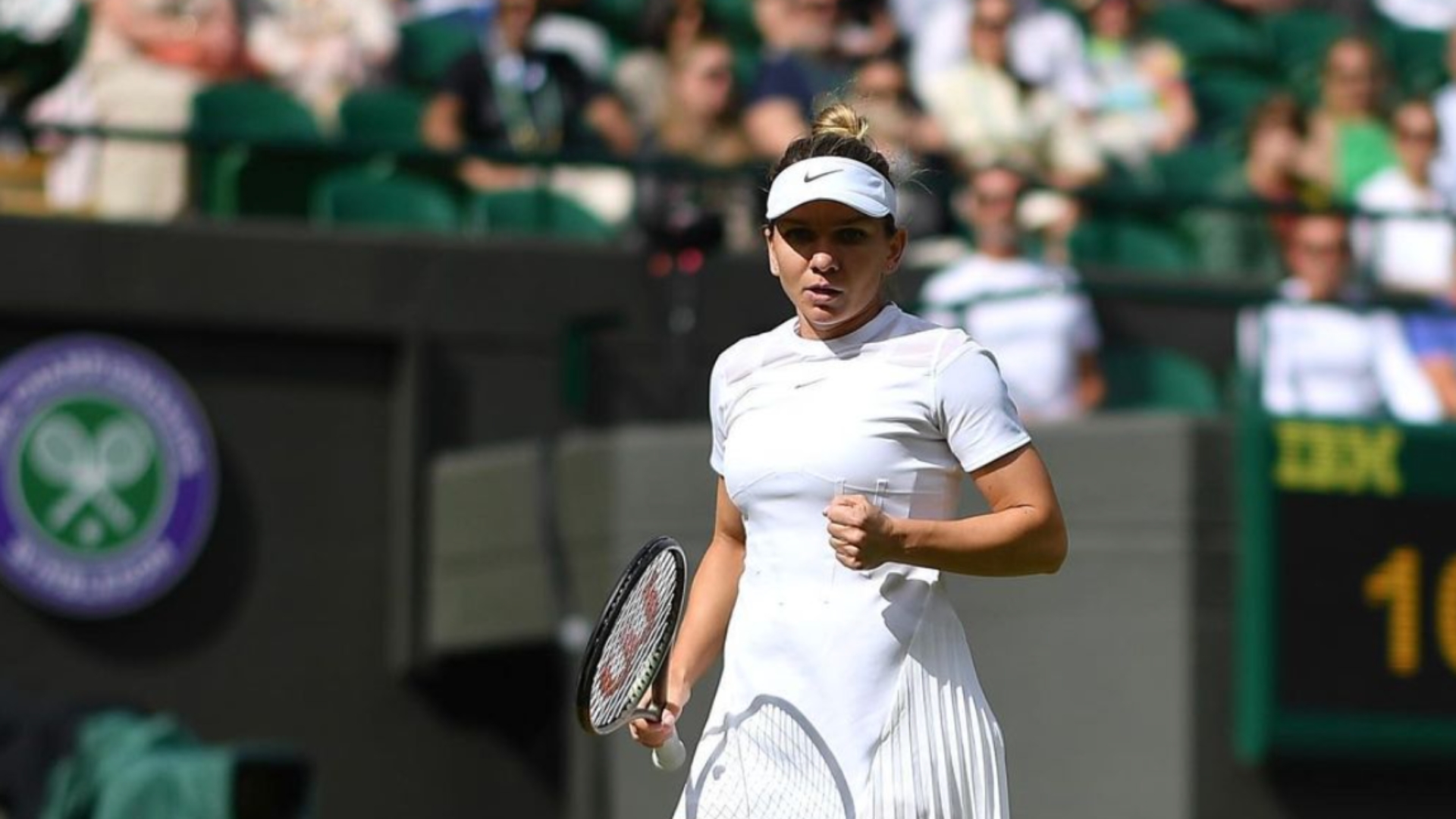
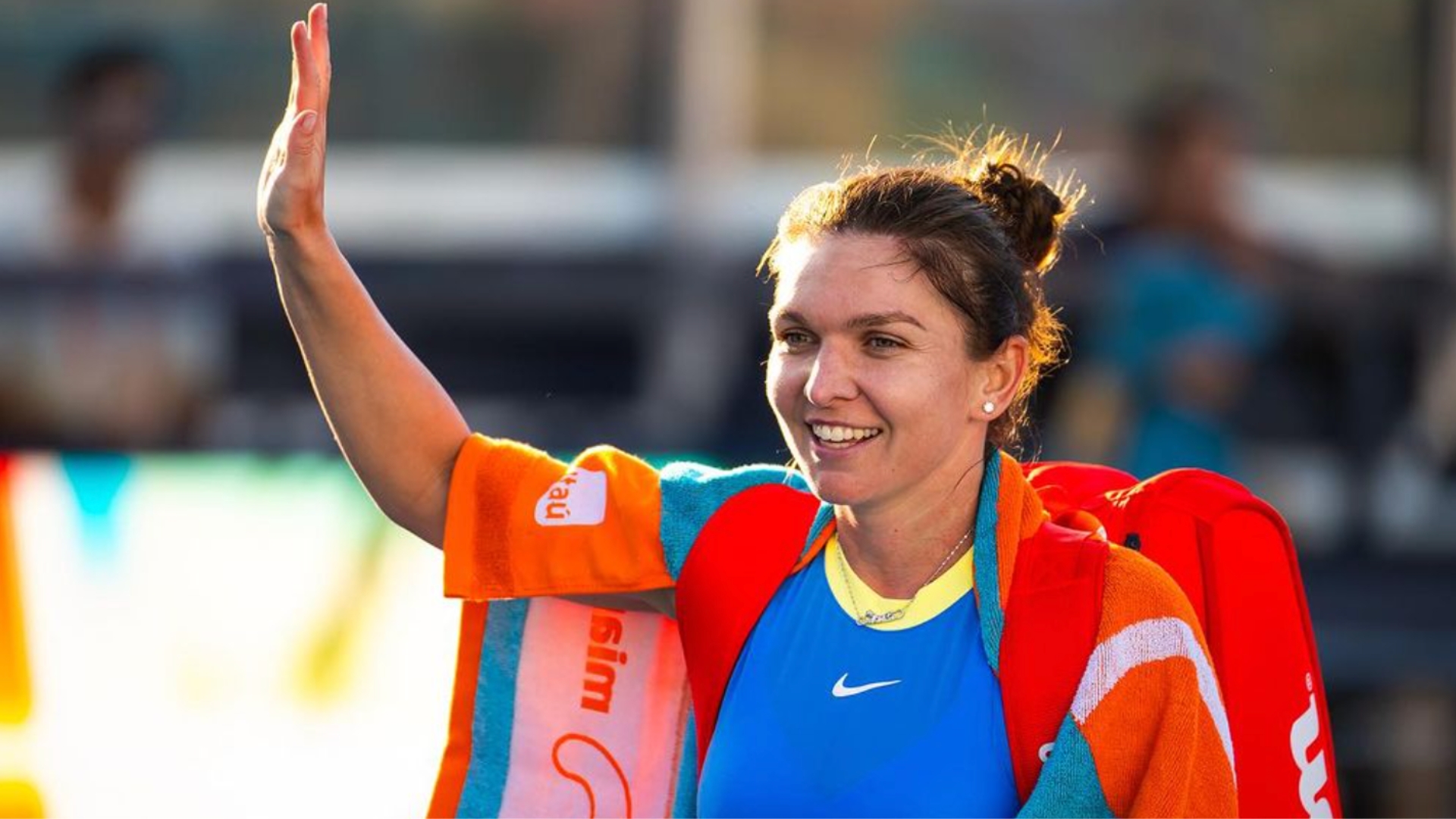
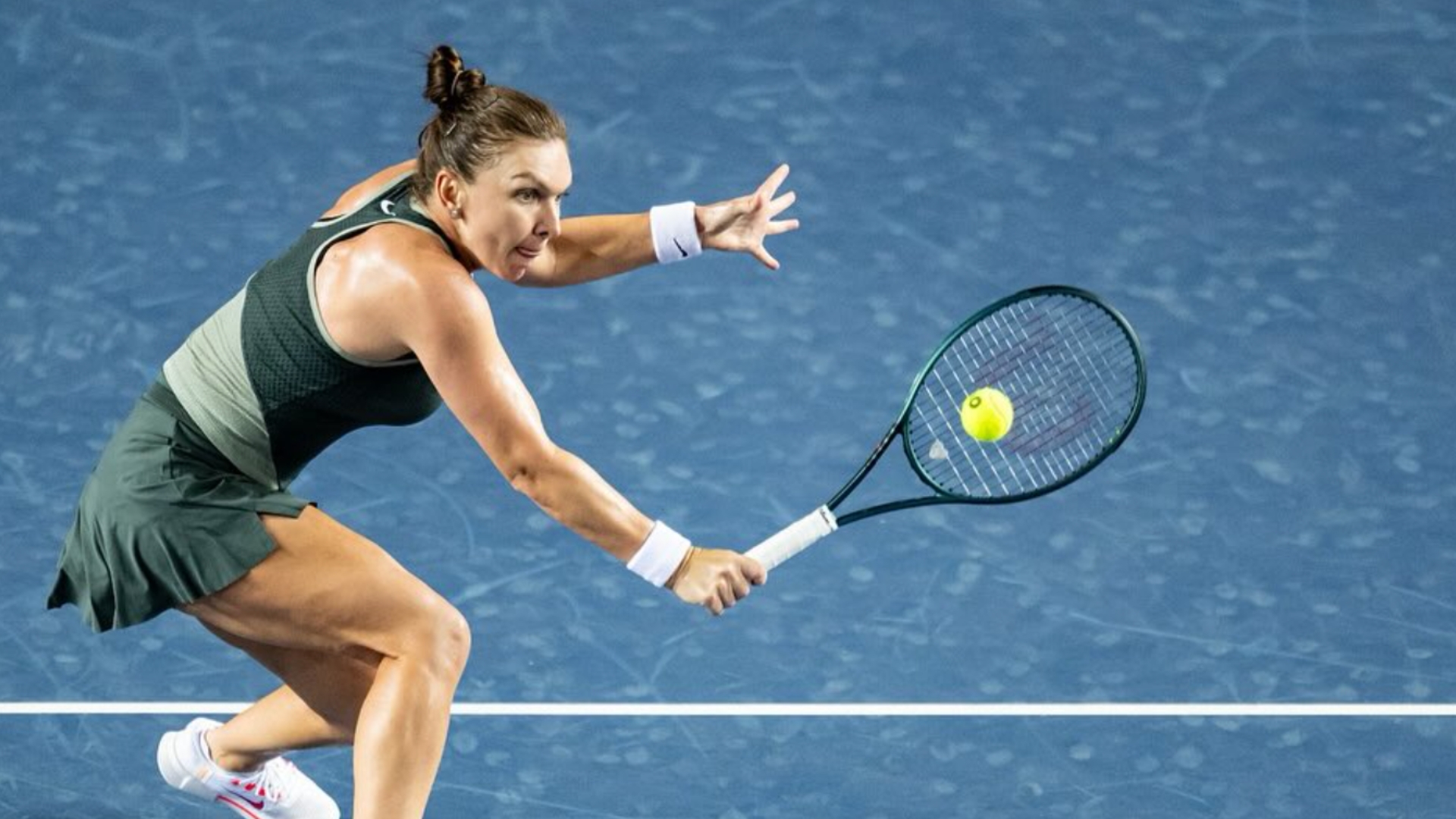
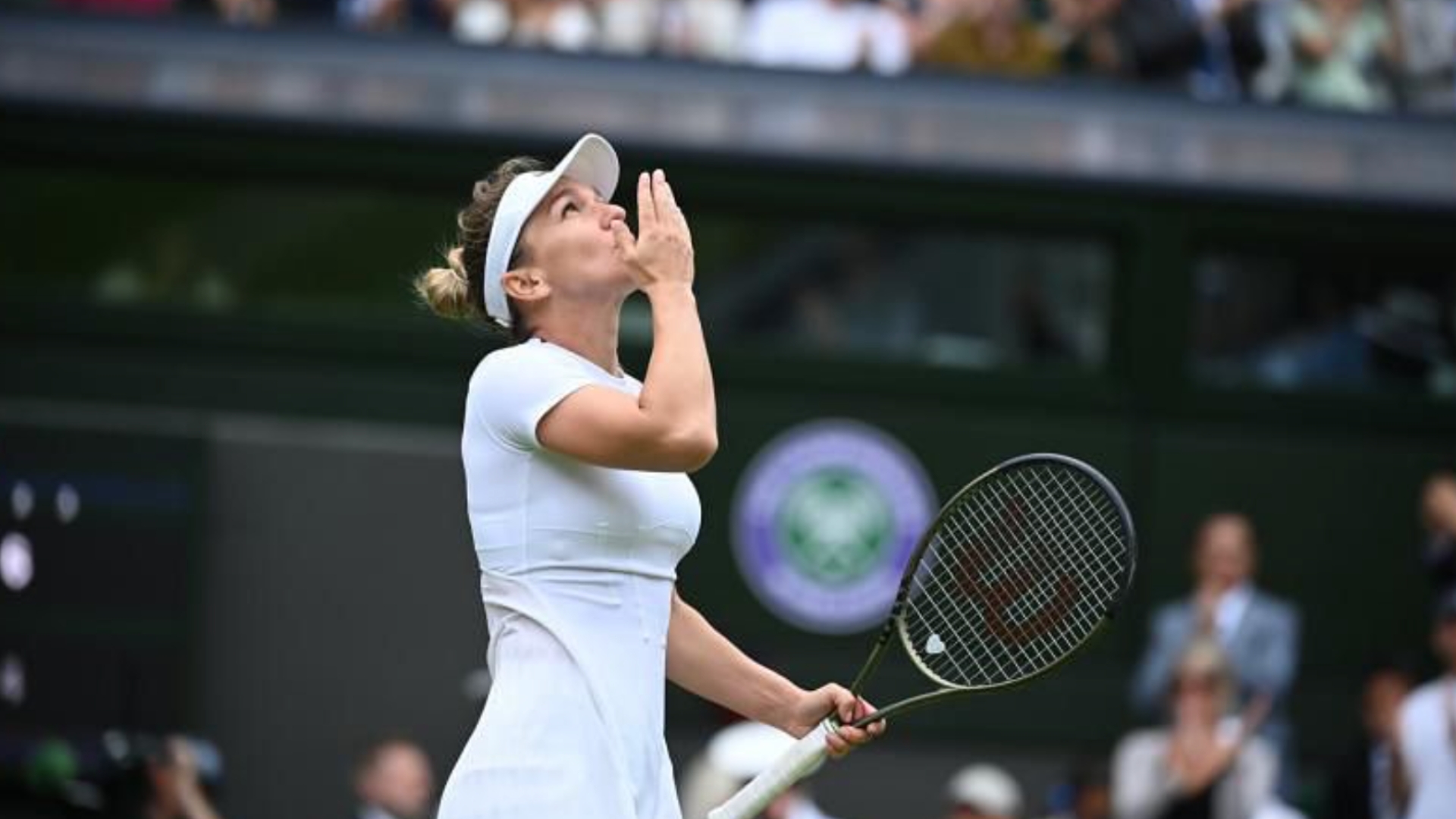
Simona Halep has once again returned to the court to practice for the upcoming Miami Open which will happen on March 17-31. This will be her very first appearance since winning an appeal against a doping suspension.
The former Romanian best player had a four-year doping ban, which was decreased to nine months by the top court for global sport, allowing her to resume competition as soon as possible.
Halep declared in her Instagram: “Feels like I never left.”
Halep denied charges against her
In October 2022, Former Winbledon and French Open champions were suspended after being positive for obtaining roxadustat, an illegal substance that increases the formation of red blood cells, at the U.S. Open.
Furthermore, she was charged with a doping offense because of irregularities in her athlete biological passport (ABP), which is designed to check the blood parameters of athletes over time to reveal possible doping activities.
Halep had denied all of the accusations against her and would take the possibility of retiring if the four-year ban was upheld.
At her most recent game at the Miami Open, Simona Halep lost to Paula Badosa in three sets after being suspended from playing due to doping. This was her first match since her four-year suspension was cut short to nine months.
Halep, a two-time grand slam champion from Romania and who also held a top spot in the world rankings, started the game smoothly as she breezed through the first set in just 38 minutes as if she had never been away. However, the determination and perseverance of Badosa, who formerly ranked 2nd in the world, led her to victory with 1-6, 6-4, and 6-3.
A roxadustat effect on Halep?
Badosa started with a momentum that Halep immediately answered. Regardless of her enthusiasm, Badosa still won in less than two hours.
Now, Badosa is scheduled to compete against Aryna Sabalenka. But, due to the death of her partner Konstantin Koltsv, there might be uncertainty regarding her participation in the game.
In other news, Halep wascharged with a doping offense because of irregularities in her athlete biological passport (ABP), which is designed to check the blood parameters of athletes over time to reveal possible doping activities. She was also suspended after being positive for obtaining roxadustat, an illegal substance that increases the formation of red blood cells, at the U.S. Open.
In response to Simona Halep’s case, the WTA is considering creating special rankings specifically for players coming off of drug bans. With a wildcard into the Miami Open, Halep made her comeback following a nine-month suspension. A balanced approach to competitive fairness while preserving women’s tennis integrity can be seen in this proposed rule modification.
Athletes banned for doping violations have a new set of challenges upon their comeback, whereas those recuperating from significant injuries or on maternity leave return to protected rankings. They frequently have to start the difficult process of starting over in their careers because they do not have the safety net of protected rankings.
This disparity exposes a serious weakness in the athlete support structure, putting athletes suspended due to drug offenses at a clear disadvantage. It is imperative to address this discrepancy to promote equity and guarantee that every athlete is afforded equal opportunities to regain their standing in their respective sports.
WTA said; “We think it is appropriate to take this rule into consideration, so we have started the process of reviewing it,” an article from sportstar.com mentioned.
A WTA Affair
Simona Halep, the former winner of the Wimbledon and French Opens, was suspended in October 2022 after testing positive for the prohibited substance roxadustat, which is known to increase the formation of red blood cells, at the U.S. Open. The 32-year-old’s career was further clouded by allegations of anomalies in her athlete biological passport, which further heightened the doping scandal.
Halep, who had fiercely denied the charges made against her, was saved when the Court of Arbitration for Sport in Lausanne stepped in and cut her punishment short—she had already served the whole nine months. Though everyone was excited to see her back on the court, her homecoming was greeted with an unanticipated obstacle as she had to face Paula Badosa in the Miami opening round.
Halep’s fortitude and tenacity in the face of hardship are evident despite the setback, laying the groundwork for an inspiring story of overcoming hardship and succeeding in the face of difficulty.
After losing in straight sets in her most recent WTA Tour comeback, former world number one Simona Halep admitted that she must practise being patient.
The 33-year-old athlete was just participating in her second highest-level match since being cleared to go back to competition after a doping ban. Following the reduction of her four-year ban to nine months, the two-time Grand Slam champion made her competitive comeback at the Miami Open last March.
At the Hong Kong Tennis Open, Halep lost to Yung Yae of China 6-3, 6-3. It was her first tour-level outing since Miami due to a knee injury.
She said: “My level was not bad at all but the opponent played really well and had confidence… I’m not happy with the way I played but it was much better than the previous match.”
Halep rebuilding her career
In order to restore her career, Halep, who is currently ranked 883rd in the world, is depending on receiving tournament wildcards to compete.
Asked about her future plans, she said: “It depends on the wildcards, but I just want to work harder because I need a stronger body to perform at this level… I will take it slow. I have to give myself patience and try to get better day by day.”
The former 2018 French Open champion and 2019 Wimbledon champion has been insisting that she is innocent despite being accused of two different doping offences. The Court of Arbitration for Sport partially sustained her argument, concluding that Halep had not purposely taken roxadustat, an anti-anaemia medication that increases the body’s synthesis of red blood cells. In addition, CAS dropped a second case related to anomalies in her athlete’s biological passport.
Former world number one Simona Halep has been given a wildcard opportunity to compete in the Australian Open qualifying competition.
The athlete, a two-time Grand Slam champion, was involved in a high-profile doping case and was initially suspended for four years. However, the CAS eventually lowered the suspension to nine months.
She then made her comeback into competitive tennis in March, but she did not play much in the 2024 season. In her most recent match, she suffered a first-round defeat at the WTA 250 tournament in Hong Kong last October.
The athlete said: “The thought of returning to Australia after three years is exciting and I’m very grateful to the tournament for this opportunity. I have been working hard to get ready for the 2025 season.”
She added: “The Australian Open has provided me with some of the best moments in my career, so I can’t wait to be back in Melbourne and playing in front of the Aussie fans.”
Halep’s doping history
Halep tested positive for a prohibited drug called Roxadustat a few months after losing in the first round of the US Open. She was then banned from playing for four years.
The International Tennis Integrity Agency (ITIA) accused her of a second doping offence due to anomalies in her Athlete Biological Passport. In September 2023, she was given a four-year penalty retroactive to the first offence.
After a legal struggle in which Halep has repeatedly denied doping, CAS decided to shorten her term to nine months. She will be competing in her first Grand Slam event after her suspension at the Australian Open.
Doping allegations really aren’t rare in the sports community anymore. So many athletes have received punishment and have fallen from grace because of it. Their previous achievements were revoked, and their remaining potential was left untapped because of one wrong decision.
The latest athlete to be caught up in doping allegations is none other than the two-time grand slam champion, Simona Halep. The Romanian tennis player, however, continues to challenge the allegations in her latest X post, entitled “My fight continues”.
Halep’s Doping Case
At the 2022 U.S. Open, the 31-year old tennis star was eliminated in the first round of the tournament after losing to Ukraine’s Daria Snigur. But what’s more devastating than her loss, was the news that she tested positive for the AAF, a standard test for the presence of a prohibited substance in a person’s urine. She tested positive for an illegal substance known as “Roxadustat”.
In May of this year, the ITIA found some discrepancies in her ABA (Athlete Biological Report) that were said to be the effects of doping and subsequently filed a second charge against her.
The tribunal ruled on September 11, 2023, that the player had committed an intentional anti-doping rule violation pursuant to Article 2 of the Tennis Anti-Doping Programme (TADP).
Although Halep had argued that she had taken a ‘contaminated supplement’, they said that even if this was the case, the results shouldn’t have produced such a substantial volume of Roxadustat.
Halep has since been provisionally banned for four years. This was made official last October 2022.
So, what is a Roxadustat?
Roxadustat is a medicine for the treatment of anaemia associated with chronic renal disease.
This medicine helps your body make more red blood cells. It does this by making sure your body absorbs iron better and makes more red blood cells, it also helps your body produce more erythropoietin and lowers your hepcidin levels.
So, why are athletes not allowed to ingest this? As mentioned above, this increases red blood cell production, meaning that it also increases the oxygen that’s available to one’s body. And, this can be especially beneficial for athletes due to its ability to improve endurance.
She posted in her X account a recount of what she has gone through in the past year and how she was unfairly charged by the ITIA.
She said that she believes in a clean sport and has undergone 200 blood and urine tests that all came out clean until August 29, 2022.
She also explained that she had altered her nutritional supplements at that time, in accordance with the advice of her team and physiotherapist. However, it has since been discovered that the supplement she was taking was contaminated with the illicit drug Roxadustat, which is why her AAF tests showed a positive result.
She proceeded to blast the ITIA’s experts, claiming they only filed charges for discrepancies in her athlete passport after they knew who she was.
“This group ignored the fact no prohibited substance has ever been found in my blood or urine samples with the sole exception of one August 29 positive for roxadustat, which was present at an extremely low level and which, when considering my negative test three days prior, could only have been caused by accidental exposure to roxadustat.”
Patrick Mouratoglou also released a statement regarding Halep’s four-year ban in his X account, in which he supported the tennis champion.
“I do not believe that the ITIA looked for the truth in Simona’s case, and I do not believe that they treated her in a way that is acceptable. I hope that the WTA, ATP, and PTPA will do their best to change a system that is destroying the careers of innocent players.”