China has made a spectacular ascent in Olympic history, having won its first medals at the 1984 Los Angeles Games not long after it was allowed to rejoin the IOC in 1979.
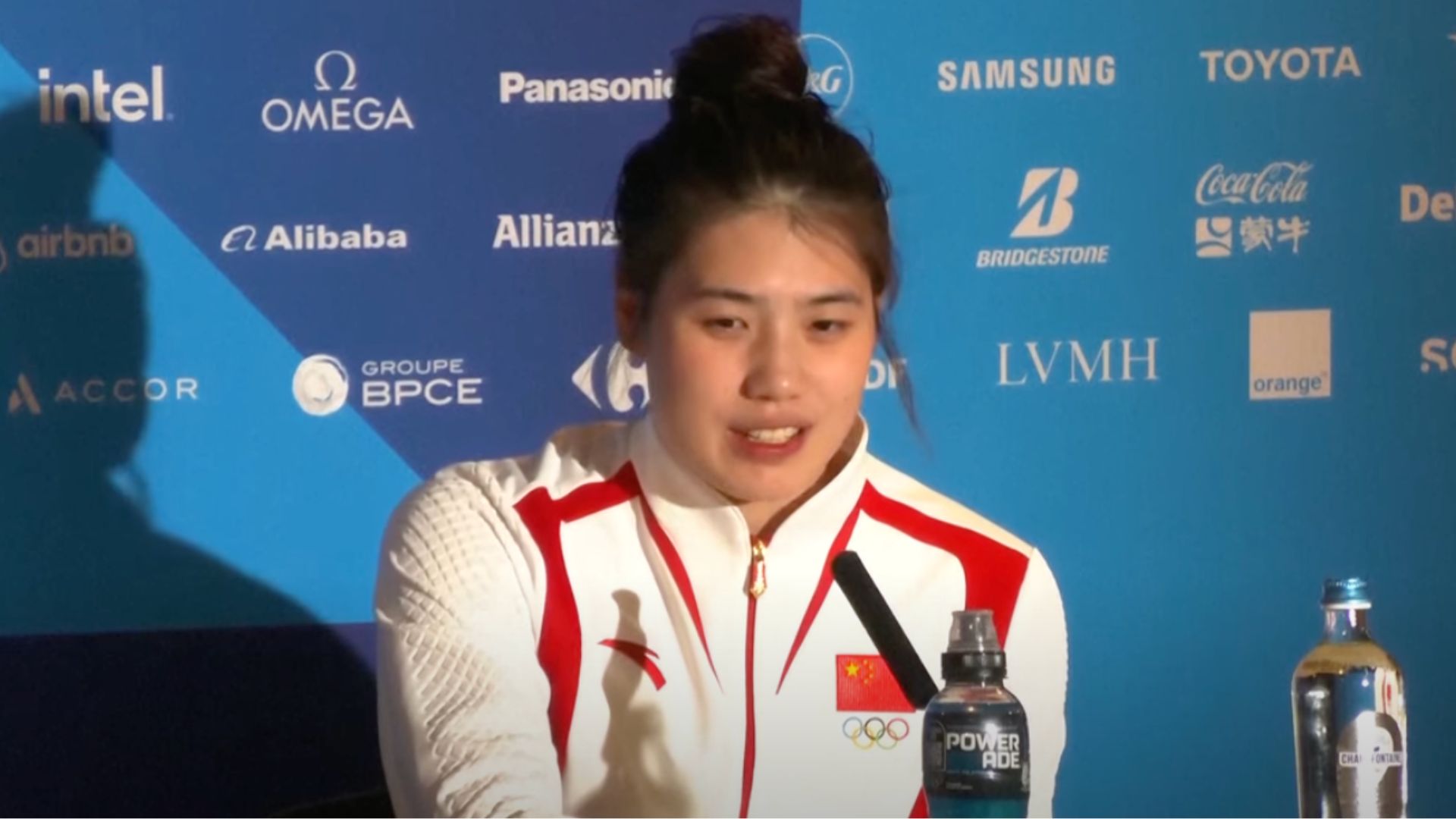
China has dominated the Olympic Games in the new millennium finishing in the top three every time since the 2000 Sydney Games. It has superstars like the swimmer Zhang Yufei (see picture), who won gold in the 200-metre butterfly in the Tokyo Olympics and bronze in the 100-metre and 200-metre butterfly at the Paris Olympics besides helping China finish third in the 4×100-metre freestyle and 4×100-metre medley in Paris.
No other Global South country can match China’s Olympic achievements since the Soviet Union’s heyday of domination.
The Soviet Union dominated nine games since their Olympic debut in 1952, winning six and placing second in the others. Even after the dissolution of the Soviet Union, twelve former republics competed as the Unified Team in 1992, winning in Barcelona.
China’s sporting achievements are no accident, as their national system (不国体制 [jŐguó tŐzhì]) was originally based on Soviet tactics.
The athletic schools
The General Administration of Sports oversees 2,196 schools in 2022, all of which are committed to developing the next wave of athletes.
These provincial and municipal establishments offer specialist sports instruction in addition to general education. They provide about 4,000 exceptional players annually to elite sports teams, and they have a significant impact on how sports excellence will develop in the future.
The director of Tsinghua University’s Sports Industry Development Center, Wang Xueli, stated; “As the children grow up, they start participating in competitions of different ages, and if they manage to be among the best, they move on to the next level of competition”
The priorities of Chinese sports policy
The three main objectives of the nation’s sports programmes are increasing sports’ economic impact, integrating sports training into the larger educational system, and strengthening sports’ role in social development.
Wang Xueli draws attention to the State Council’s July 2021 Nationwide Physical Fitness Plan, which outlines some inclusive sports regulations. About 38.5% of the population is expected to regularly exercise as part of this plan, which is a 1.3 percentage point increase over the previous five-year plan. This is a significant milestone.
Government largesse made China an athletic powerhouse while collegiate sports keeps America a sporting superpower. The two countries, two systems, clashed at the 2024 Paris Olympics, and while both landed the same quantity of gold, the Americans were awash with more silver and bronze.
Yes, the Americans went home with a bigger haul in a virtual repeat of the Tokyo Olympics, where they won one more gold than the Chinese (39-38) and racked up a bigger medal tally (113-89).
Medal tally
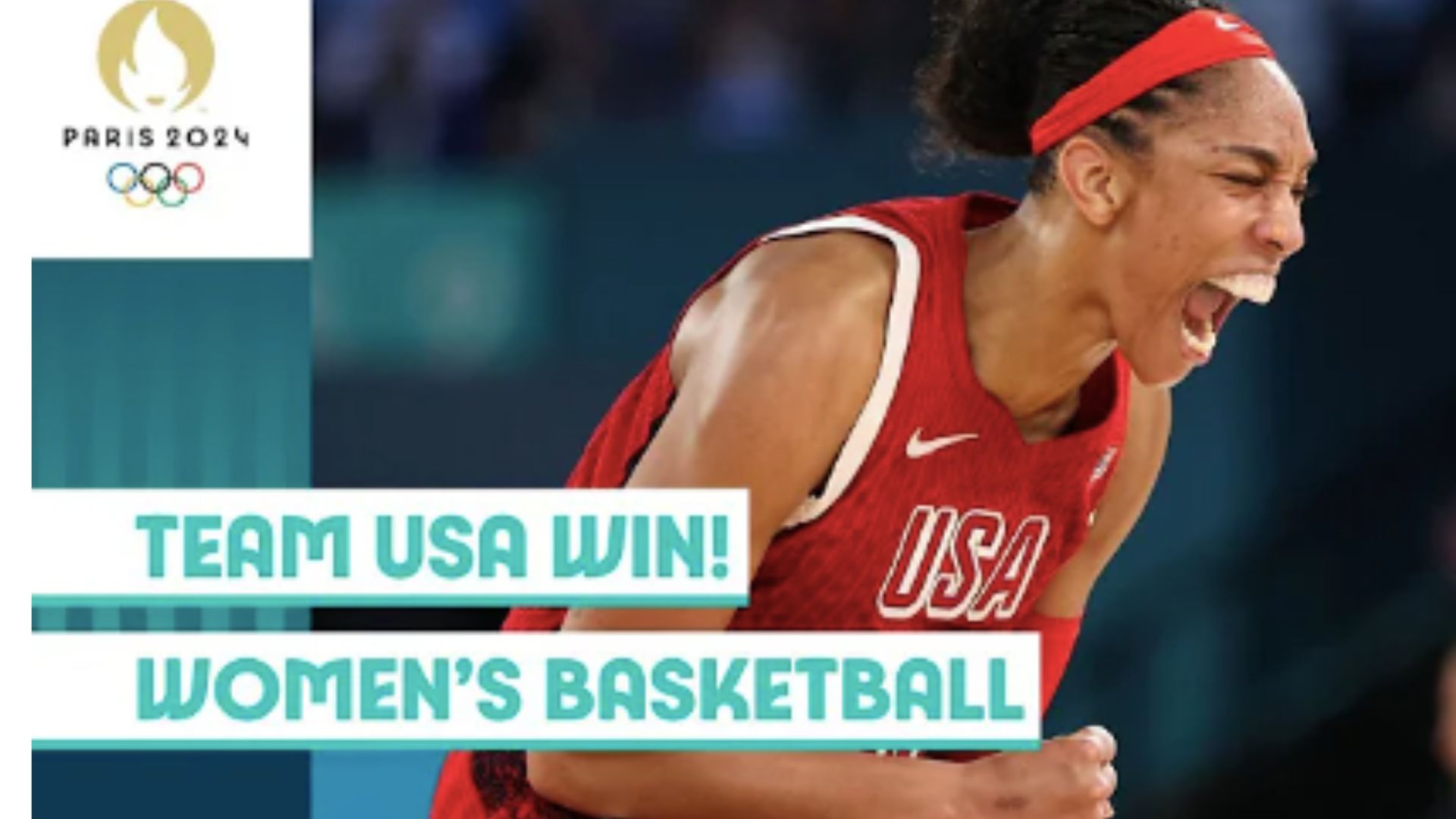
China was leading in the gold haul in Paris until the final day when weightlifter Li Wenwen won the 40th gold medal for China with her victory in the women’s +81 kg. But the Americans caught up to China with two last-day golds — with Jennifer Valente’s victory in women’s cycling and a one-point win over France (67-66) in the women’s basketball final.
So, though China and the USA won 40 gold medals each, the Americans topped the standings for their superior medal tally—44 silver, 42 bronze, 126 medals in all—compared to the Chinese—27 silver, 24 bronze, 91 in all.
“China’s Olympic delegation at Paris 2024 achieved its best overseas performance since it comprehensively participated in a Summer Olympics abroad in 1984, said Zhou Jinqiang, deputy head of the delegation at a press conference held on Sunday,” reported China Daily.
“China’s sports delegation, consisting of 404 athletes competing in 232 events across 30 sports, clinched 40 gold, 27 silver and 24 bronze medals. The haul of gold medals surpassed the 39 golds won at the London Olympics, and a total of 60 athletes claimed golds, marking a new record for overseas Olympic participation, Zhou said.”
At Beijing 2008, China won 48 gold medals and 100 overall.
“You have won glory for our country and people, and we extend warm congratulations and heartfelt compliments to you,” read a message jointly sent by the Central Committee of the Communist Party of China (CPC) and the State Council, China’s cabinet.
“Your outstanding achievements and performances have further ignited the patriotism of Chinese people both at home and abroad, uplifted the national spirit, and united the people towards progress,” added the message.
As the message shows, the Olympics are not just a sporting event but a means to boost Chinese morale and burnish the Chinese image abroad.
China’s billion-dollar sports budget
Karishma Vaswani wrote on Bloomberg: “China has long invested heavily to push its athletes to triumph against the West, as a way of highlighting the merits of the Communist Party. These Olympic Games are no different, but for one key aspect: Citizens are openly questioning why Beijing is spending so much money on a sporting event when many at home are facing bleak economic prospects.”
“China’s budget for sports this year stands at more than $1 billion,” she added. “Compare that to Australia, which also does pretty well in Olympic competitions, but last year only had around a quarter of that at its disposal. American athletes don’t get money from the government, instead they rely on a mix of private sponsorships, philanthropy, broadcast revenue and endorsements.”
The American way delivers great results, too, as the Paris Olympics showed.
How many Americans won medals?
The Washington Post noted: “The Americans won 126 medals, and because of team sports and relays, more than 40 per cent of the team’s delegation of nearly 600 athletes received at least one. Forty-four American athletes won multiple medals and 110 won at least one gold, with that large number stemming from the country’s success in team events.”
The Americans won team events like basketball, women’s gymnastics, men’s 4x400m relay, women’s 4x100m relay, women’s 4x400m relay, women’s 4x100m medley relay, men’s 4x100m freestyle relay, and mixed 4x100m medley relay.
The Chinese won team events such as the men’s 4x100m medley relay, group all-around rhythmic gymnastics, women’s synchronized diving, men’s synchronized diving, men’s artistic gymnastics, men’s and women’s canoe double, men’s doubles, women’s doubles and mixed doubles in badminton. As China Daily noted, 27 of the 40 gold medals won by China came from its six traditionally strong sports — diving, table tennis, badminton, gymnastics, shooting and weightlifting.
The US sporting world is very different. Athletes like sprinter Noah Lyles and basketballer Stephen Curry are celebrities. Their fame and fortune are hard-earned, honed by intensive training and the toughest competition.
US college sports system
As Britain’s two-time Olympic champion and World Athletics president Sebastian Coe, a legendary middle-distance runner, said, “U.S. track and field has a lot to owe to the college system.”
The New York Times says American Olympic officials “know that the American college sports system, which every year sustains and trains thousands of students in Olympic sports — both Americans and international students — is their golden goose.”
Indeed, American colleges and universities train not only American athletes. Top international athletes, too, like the swimmer Leon Marchand of France and the sprinter Julien Alfred of Saint Lucia, have been trained in America. Marchand was a member of the Arizona State University swim team, Alfred trained at the University of Texas.
The overwhelming majority of Olympic medals come from sports that have a presence on college campuses, says the Times.
No amount of government largesse, like the billions reportedly spent by China, has yet reduced the US college-trained athletes to also-rans. In fact, as the Paris Olympics showed, the latter still have an edge.
Chinese tennis has made great strides in reaching the highest levels of the sport in the twenty years since its Olympic debut in Athens in 2004. The Wimbledon Championships this year serve as evidence of this rapid improvement. Chinese athletes commemorate an incredible campaign at this year’s Wimbledon, when the nation’s next-generation players sent notice they are a growing power.
Athletes who introduced China to the world
The desire to compete was ignited by retired athletes Li Ting and Sun Tiantian, who unexpectedly won an Olympic gold in the women’s doubles.
After that, China became interested in tennis after its most well-known athlete, Li Na, won their first individual Grand Slam championship in 2011 at the French Open and again in 2014 at the Australian Open. Over the past ten years, there has been an exponential growth in the number of Chinese tennis players entering the elite ranks, courts being developed, and international events being held in China as a result of her heroics.
Now, 11 Chinese athletes competed in the men’s and women’s main draws at the All-England Club this year at Wimbledon, the most ever for the nation at any of the four major tennis tournaments.
Chinese athletes’ achievements today
China features six players ranked in the top 100 on the Women’s Tennis Association Tour, led by world No. 7 Zheng Qinwen. In the women’s top 100, the only countries with more players than China are the US, Russia, and the Czech Republic (13, 12, and 8, respectively).
China’s current generation benefited from early exposure to professional tennis and more access to international competitions, thanks to the legacy of their predecessors.
“I am really proud of how far the game has come in China. Sometimes I envy the current generation very much for the advantages they have now,” said retired star Zheng Jie, who won the 2006 Wimbledon women’s doubles with Yan Zi.
“I think players now know better, and earlier, about what it is like to live, breathe and play as a pro than what we did in the beginning… When we started, we had no clue at all about being a professional tennis player, a very limited number of high-level tournaments to play at home, and did not know how to develop our game in the right way,” she added.
In recent games, Wang Xinyu, ranked 36th in the world, was one of the stars of the women’s draw as she battled her way into the fourth round, marking her finest major performance to date and the farthest any Chinese woman has gone in the Wimbledon singles tournament.
“The chances of competing against the more established international opponents and measuring my game against them were a great lesson,” Wang expressed.
Another remarkable Chinese tennis player, Zheng Qinwen, a finalist at this year’s Australian Open, and winner of the WTA’s Most Improved Player of the Year award in 2023, admitted: “Now after 15 years, we know more about the world, we know how everybody is playing, and we try a lot of different coaches to really improve our games. So all of us are starting to have more knowledge about tennis.”
China’s most decorated Olympic swimmer Zhang Yufei with three Paris Olympics medals already in her bag didn’t mince words when an Australian reporter questioned the legitimacy of her male compatriot Pan Zhanle’s new world record. Pan’s success was the result of the hard work, she said. Why are questions raised about the Chinese and not those from Western countries, she asked.
Zhang was among the 23 Chinese swimmers allowed to compete in the Tokyo Games three years ago despite testing positive for a banned substance, the New York Times and German broadcaster ARD reported in April. The Chinese said they tested positive because they inadvertently ate contaminated hotel food. Since then they have undergone intensive drug tests to be eligible for the Games.
Medals for Zhang Yufei
Zhang, called the “butterfly queen’ in China, won bronze in the 200-metre butterfly in Paris on Thursday (August 1) despite suffering from fever and dysmenorrhea (painful periods or menstrual cramps), reported China’s Global Times. She had also won bronze in the 100-metre butterfly and the 4×100m-metre women’s freestyle relay, where China finished third behind Australia and the United States.
The 26-year-old said she was impressed with herself for being able to take part in the 200-metre butterfly despite her physical condition.
“I think this is probably one of the most difficult races I’ve had at these Olympics. I’m much better now, but when I was swimming my hands were a little bit numb because right now I am on my period and I was also in pain during the race,” she told the Xinhua News Agency.
Zhang is now the most decorated Olympic swimmer from China with seven medals from Tokyo and Paris. “I hope to use my performance to gain recognition for Chinese athletes, showing that we are not just a flash in the pan but can be as enduring as foreign athletes,” she said.
The Chinese swimming team has won one gold, two silvers and four bronzes in Paris – the gold won by Pan Zhanle, who broke the men’s 100-metre freestyle world record, on Wednesday (July 31).
Pan, 19, won the 100-metre men’s freestyle in 46.60 seconds, shaving 0.40 seconds off the mark he set at the world championships in Doha, Qatar, in February.
Some found Pan’s achievements “unbelievable”, said an Australian reporter at a press conference.
Zhang on Pan
Zhang replied that Pan’s success was the result of hard work and should not be viewed with scepticism.
“Pan had consistently swum under 47 seconds prior to achieving his new world record, indicating a stable and continuous improvement rather than a sudden leap in performance. Pan’s achievements were legitimate and attained under stringent anti-doping protocols,” said Zhang.
“Why are Chinese athletes questioned when they achieve fast times, yet no one doubted Michael Phelps when he won seven or eight gold medals? Similarly, Katie Ledecky has dominated long-distance swimming from 2012 to 2024, winning gold in every event, yet no one questioned her performances?” she added.
Chinese swimmers have undergone frequent doping tests, especially during the week leading up to the Paris Olympics, the Global Times reported.
Zhang told the Xinhua News Agency earlier that in the two months leading up to the Paris Olympics, every Chinese swimmer was tested 20 to 30 times, averaging three to four tests per person per week.
After winning the 100-metre freestyle on Wednesday, Pan said:”Last year, I underwent 29 tests, and not once did I test positive. This year, from May to July, I had 21 tests, and again, not a single positive result.”
Pan was not one of the swimmers named in the New York Times investigation.
Chinese Olympic champion Zhang Yufei has appealed to people to “look at the Chinese swimming team through an unbiased lens in response to the unfair treatment and criticism that Chinese swimmers are facing”, reports China’s Global Times.
Zhang, who was one of 23 Chinese athletes who tested positive for a banned substance before the Tokyo Olympics, said on Saturday (July 27) that she and her teammates had been wrongly accused of doping and insisted that China would never allow any athlete to use performance-enhancing drugs, reports the New York Times.
China claims the athletes inadvertently ate contaminated hotel food, a claim reiterated by Zhang.
“I don’t think any athlete, Chinese or non-Chinese, would want to destroy the work they built up every day over the years on doping,” Zhang said in Paris on Saturday (July 27) in the first public comments by a member of the Chinese swimming team at the centre of the doping scandal, reported the Times.
Zhang wins two medals
Zhang, who won gold in the 200-metre butterfly at the 2020 Tokyo Olympics, claimed two medals in Paris on Saturday. She picked up bronze in the 100-metre butterfly—an event in which she won silver in Tokyo—and helped China finish third in the 4×100-metre women’s freestyle relay.
Zhang, Yang Junxuan, Cheng Yujie and Wu Qingfeng clocked a time of 3 minutes 30.30 seconds in the 4×100-metre, setting a new Asian record.
Australia, nevertheless, won the women’s relay, keeping the crown they won in Tokyo, the team made up of Emma McKeon, Mollie O’Callaghan, Meg Harris and Shayna Jack.
The United States came second, with Simone Manuel, Gretchen Walsh, Torri Huske and Kate Douglass making up the team.
Chinese men finish fourth
The Chinese women fared better than the men who, after a strong start, finished fourth in the 4×100-metre freestyle relay. The United States won gold, with Jack Alexy, Chris Guiliano, Hunter Armstrong and Caeleb Dressel on the team. Australia took silver and Italy bronze.
Pan Zhanle gave China a head start, chalking up 46.92 seconds in his leadoff split in the men’s relay, breaking the Olympic record for the men’s 100-metre freestyle. But the United States rallied and won the race in 3:09.28, retaining the crown they had won in the 2016 Rio de Janeiro Games and defended in Tokyo.
“My performance was not good enough. If I had created a greater advantage, we could have reached the podium,” said Pan, the world record holder in the 100-metre freestyle.
China’s Zhang Yufei said on Sunday that she was satisfied with her bronze medal in the women’s 100m butterfly at the Paris Olympics, her second podium finish in the event. #Paris2024pic.twitter.com/IDZAFQ2UYM
Zhang, meanwhile, faced the Americans Torri Husk and Grethen Walsh also in the 200-metre butterfly. Huske won the race, and Walsh finished second, pushing Zhang to third place.
Seen weeping after the award ceremony, Zhang said, “Perhaps I’ve pushed myself too hard.” She added, “I did feel a lot of pressure, but I also believe in my own abilities and look forward to competing against strong opponents next time.”
Her hometown fans consoled her. The hashtag “#YufeiDon’tCry” surged to the top of Weibo’s trending list. “Don’t cry, Yufei! We’re so proud of you. You’re really, really good,” one Weibo user commented.
China concern over large number of drug tests
China is worked up over the intensive drug testing of Chinese athletes following doping allegations.
Zhang told the Xinhua News Agency that in the two months before the Paris Olympics, every athlete on the Chinese swimming team was tested 20 to 30 times, averaging three to four tests per person per week.
Some suspect the tests are affecting the athletes.
“Something must have gone awry with the athletes’ pre-competition training. Personally, I believe that seven doping tests in one day might have disrupted our Chinese swimming team,” highly decorated Olympic diver Gao Min wrote on Weibo.
Zhang appeals for understanding
Zhang appealed for understanding in an Olympic poolside interview after advancing to the semi-finals of the 100-metre butterfly.
“Before last year, and before the scandal broke out, I got along really well with competitors from other countries. Now at this Olympics, I’m really worried that my good friends will look at me differently, that they would be unwilling to compete with me or watch me compete,” she said.
“I’m even more worried that the French public would think that Chinese athletes do not deserve to compete at this stage, so I feel very misunderstood.”
Olympic outcasts: 13 countries banned at least once from Games
Israel risked becoming the 14th country to be barred from the Olympics. But Palestinians and their supporters’ demands to ban Israel because of the war in Gaza were opposed by the International Olympic Committee (IOC) and President Macon of France. Both Israel and Palestine were represented at the Paris Olympics.
Israel sent 88 athletes and the Palestine Olympic Committee eight. The adversaries shared the Olympic stage, as did China and Taiwan, called “Chinese Taipei” at the Olympics, though for three long decades, Beijing refused to participate in the Games with Taipei.
Thirteen countries have so far been barred at least once from the Games in the modern Olympics’ 128-year history. Russia and Belarus were the latest to be barred after Russia broke the Olympic truce.
Olympic truce
The Olympic truce harks back to ancient Greece when the Greek states, often at war with each other, maintained peace during the Games so people could take part in the event. Nowadays, the Olympic Truce starts one week before the opening ceremony of the Olympic Games and ends one week after the closing ceremony of the Paralympic Games. Russia broke the Olympic truce when it invaded Ukraine on February 24, 2022, four days after the end of the Beijing Winter Olympics.
Russia and Belarus were officially barred from the Paris Games, but their athletes were allowed to take part as individuals. They were not allowed to compete under their national flags but as individual neutral athletes. A distinction was drawn between the countries and the regimes responsible for the invasion of Ukraine and the people who had no say in the matter. Thirty-two individual neutral athletes competed in 10 sports and won five medals, including a gold, according to Wikipedia.
Tokyo Olympics
Russians could not compete under the Russian flag at the Tokyo Olympics also. Russian athletes in Tokyo represented the Russian Olympic Committee (ROC), not Russia. Russia was banned from international sport by the World Anti-Doping Agency because of a doping scandal. That was why the Russian athletes were allowed to represent their national Olympic body but not their country at the Tokyo Games.
Russia, once an Olympic powerhouse, has become a pariah at the Games just as China, formerly an Olympic outcast by choice, has become a superpower.
Before we look at the rise of China, let’s go further back in Olympic history.
The first modern Olympic Games were held in Athens in 1896.
Held every four years, the quadrennial Games were staged five times – in Athens (1896), Paris (1900), St Louis, USA (1904), London (1908) and Stockholm (1912) – before war broke out. There were no Games during the First World War (1914-1918).
The Games resumed after the war in 1920 when the Summer Olympics were held in Antwerp, Belgium.
Earliest bans
The first Olympic ban was imposed in Antwerp when Germany, Austria, Hungary, Bulgaria and Turkey were barred from the Games. They were the countries that lost the war in which Britain, France and America triumphed.
Germany was not invited to take part in the 1924 Paris Olympics either as it continued to have problems with the host nation, France.
However, Germany was allowed to host the Olympics in 1936 when the Summer Games were held in Berlin and the Winter Games in Bavaria.
There were no Olympic Games during the Second World War (1940-1945) when Germany, fought against Russia, France, Britain and America again, this time allied with Italy and Japan.
Post-war bans
London held the first Olympic Games after the Second World War in 1948. Germany and Japan, which lost the war, were not allowed to take part. Italy, which changed sides during the conflict, was allowed to compete. Bulgaria was also not invited to London having sided with Germany during the conflict.
South Africa was the next country to face an Olympic ban. It was banned from the 1964 Tokyo Olympics because the country was racially segregated under its apartheid regime. For the same reason, South Africa was not allowed to compete in the Games in Mexico City (1968), Munich (1972), Montreal (1976), Moscow (1980), Los Angeles (1984), and Seoul (1988). The ban was lifted only in 1992 when South Africa competed in the Barcelona Olympics after being shunned for 28 years.
In 1972, Zimbabwe, then known as Rhodesia, was banned from the Munich Olympics for the same reason as South Africa. Rhodesia was also racially segregated at the time by the whites who ruled the country then.
New millennium bans
Afghanistan was the first country to be banned in the new millennium. It was banned from 2000 Melbourne Olympics because the Taliban regime discriminated against women. Although the Taliban are now back in power and continue to discriminate against women. Afghanistan was allowed to participate in the Paris Olympics. However, the IOC barred Taliban officials from the Games.
In 2016, Kuwait received the same treatment as Russia and Belarus today. The IOC suspended the Kuwait Olympic Committee in 2015 in a dispute over government interference in the country’s sports affairs. As a result, Kuwaiti athletes participated in the 2016 Rio de Janeiro Olympics as independent Olympic athletes under the Olympic flag.
North Korea was barred from the 2022 Beijing Winter Olympics. It was banned as punishment for not sending athletes to the 2020 Tokyo Olympics, citing concerns about Covid-19. The IOC president Thomas Bach North Korea had violated the Olympic charter by failing to fulfil its obligation to send athletes to the Games.
Other countries have also boycotted or abstained from the Games over the years.
Boycotts and non-participation
The United States boycotted the 1980 Moscow Olympics in protest against the Russian invasion of Afghanistan. Russia boycotted the 1984 Los Angeles Games in retaliation.
China did not participate in the Games for a long time. Beijing competed in the 1952 Helsinki Olympics but stayed away subsequently, refusing to take part in the Games with Taiwan. China participated in the 1984 Los Angeles Olympics after a three-decade-long absence only after an IOC agreement that Taiwan would henceforth compete in the Games as Chinese Taipei. Taiwan’s official name is Republic of China; it does not have diplomatic relations with Beijing.
While China ended second in the medal standings, second only to the United States, Taiwan’s 60 athletes returned home with seven medals, including two golds.
Israel’s 88 athletes also won seven medals, including one gold.
This was Israel’s biggest medal haul in any Olympics, said the Jerusalem Post newspaper, expressing satisfaction with the team results and noting there were “no major incidents of antisemitism”. “Although there were isolated instances, such as a few protest signs at soccer matches, scattered Palestinian flags during events featuring Israeli athletes, and occasional booing, these occurrences were infrequent and not as widespread as anticipated,” it added.
Not allowed to take part in Olympic Games
Afghanistan (in 2000)
Austria (in 1920)
Belarus (in 2024)
Bulgaria (in 1920, 1948)
Germany (in 1920, 1924, 1948)
Hungary (in1920)
Japan (in 1948)
Kuwait (in 2016)
North Korea (at 2022 Beijing Winter Games)
Russia (in 2020, 2024)
South Africa (in 1964, 1968, 1972, 1976, 1980, 1984, 1988)
Turkey (in 1920)
Zimbabwe (in 1972)