Olympics is a multi-sport international event that is conducted once every four years. It consists of sports like tennis, badminton, archery, swimming, and athletics. Some of these events have been introduced recently like skating, skateboarding, etc. However, cricket was also in talks to be reintroduced as an Olympic game. Initially, it was first played in the year 1896, Summer Olympics in Athens.
Later on in the year 1904, Summer Olympics the cricket event for that year was canceled due to some reasons by the officials. There were many issues that arose because of which the decision to abort the sport in the Olympics was finally taken. So here let’s take a look at the reasons Why the sport cricket was removed from the Olympics.
Cricket in Summer Olympics
Two of the most powerful governing bodies, the Board of Control for Cricket In India and the England and Wales Cricket Board have long been opposed to the return of the sport. They have been unwilling or reluctant to return to the Olympics. It was noticed that in case the sport is re-introduced then there will be a category for women’s cricket as well.
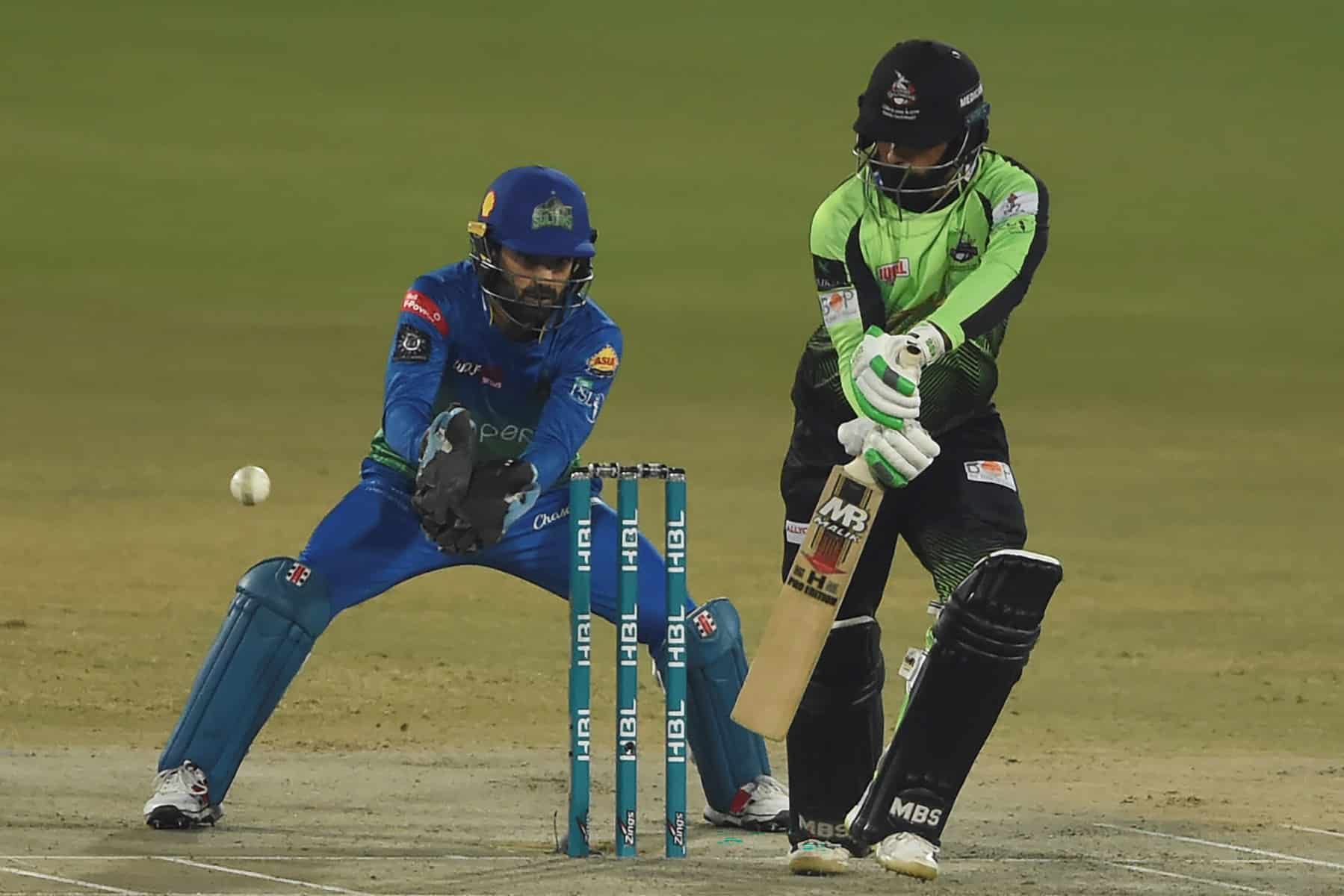
It was also realized the format would have eight teams, which will be split into two groups before two semi-finals and two medal matches. This will be similar to that of Twenty20 cricket, which is the shortest of the three formats of the game. The main issue that was faced while arranging the game was the facilities.
1904-the year Cricket Was removed from Olympics
According to my sources, the reasons cricket was not included after the 1904 Olympics include lack of consistent participation and lack of attention towards it. A few reasons why it was annulled as a sport in the Games is that it requires logistic arrangement. Cricket grounds need to be specifically made; you can’t hold any other sport in a cricket venue unless the entire tournament is over
Another reason is that it takes quite a long time to finish, cricket is a lengthy sport that consists of 50 overs. which nearly takes 4-5 hours. Even the shorter version of the series, T20 takes 3 hours to finish. And so, it also causes so much of expenses.
In what ways Cricket reflect and revels Commonwealth legacy like no other sports
Cricket has been one of the constant sports in the Commonwealth Games and this summer the game is back for the very first-time. It used to be a game for gentlemen but has evolved over the years to include women in this sport. Women athletes will participate in a total of eight teams and will go against each other as they are going to compete for the gold medal.
In the Commonwealth, cricket has been always part of our sporting heritage, and some have dubbed it as the remnant of the British Empire. Also, it is said there is no other sport like cricket that reflects the part of British history and legacy.
In some ways, Cricket reflects the culture and heritage of the member states in the Commonwealth, where Britain has a unique position etched in our minds and hearts.
Dr.Prashant Kidambi of Leicester University said “If you are a batter, you don’t question the umpire’s judgment” an expert in Indian colonial history.
“It is one of the best ways to think about the relationship, the same way as the British saw it between the settler and colonized”
When the empire started growing slowly cricket started becoming famous in some of the particular regions or the parts of the empire and people like Lord Harris started to believe the sign of success in British civilization”
From the very beginning, cricket was played by some rules to instil obedience and discipline and now it has become one of the most visible and vibrant ways to demonstrate the Indian nationality identity.
“Cricket has a power that has set an example for everyone that how to be inclusive,” said England International Isa Guha
“All the players and the other member that has been connected has might gone through some uncomfortable situation that would have involved cricket and we all need to look at that and get ourselves better.”
We can see how the world is becoming more polarized so the commonwealth has decided where countries can come together and they will participate in the game some might win and some might not, but participation in common exercise is valuable.
Commonwealth Games Women’s Cricket Competition 2022 Schedule: Fixtures, Dates, Timings & Teams List
With a lot of discussion regarding the cricket sport to enter the Commonwealth Games, makers had made it official that Commonwealth Games 2022 will be featuring Cricket Competition for Women. The organizers confirmed the dates where the women’s cricket competition will begin, from July 29 and the final will be played on August 7, 2022.
It is confirmed that the first match will feature Women Australia against Women India in the early session on July 29. Meanwhile, the schedule will follow Pakistan against Barbados. So take a look at the entire fixture, details of the game here, Commonwealth Games Women’s Cricket Competition 2022 Schedule: Fixtures, Dates, Timings & Teams List.
Commonwealth Games Women’s Cricket Competition 2022 Schedule
As we know that the makers have already given a waiver for Women playing cricket in the Games for this year 2022. Here is the entire schedule for all the teams participating. The time mentioned in the table is below is according to the GMT and IST both. Take a look. The finals of the tournament will be held on the 7th of August 2022 at Edgbaston, Birmingham.
Date
Match Details
Time
29 July 2022
Australia Vs India 1st Match, Group A, Edgbaston, Birmingham
Barbados vs Pakistan 2nd Match, Group A (D/N), Edgbaston, Birmingham
11:00 AM 4:30 PM
6:00 PM 11:30 PM
30th July
New Zealand vs South Africa 3rd Match, Group B, Edgbaston, Birmingham
England Vs Sri Lanka 4th Match, Group B, (D/N),Edgbaston, Birmingham
4:30 PM
11:30 PM
31st July 2022
India vs Pakistan 5th Match, Group A, Edgbaston, Birmingham
Australia vs Barbados 6th Match, Group A (D/N), Edgbaston, Birmingham
11:00 AM 4:30 PM
11:30 PM
2nd August 2022
England vs South Africa 7th Match, Group A, Edgbaston, Birmingham
New Zealand vs Sri Lanka 8th Match, Group B (D/N), Edgbaston, Birmingham
4:30 PM
11:30 PM
3rd August 2022
Australia vs Pakistan 9th Match, Group A, Edgbaston, Birmingham
India vs Barbados 10th Match, Group A (D/N), Edgbaston, Birmingham
4:30 PM
11:30 PM
4th August 2022
South Africa vs Sri Lanka 11th Match, Group B, Edgbaston, Birmingham
England vs New Zealand 12th Match, Group B(D/N), Edgbaston, Birmingham
4:30 PM
11:30 PM
6th August 2022
TBD 1st semi-finals, Edgbaston, Birmingham
TBD 2nd Semi- finalists, Edgbaston, Birmingham
4:30 PM
11:30 PM
7th August 2022
TBA 3rd place Playoffs, Edgbaston, Birmingham
TBA Finals, Edgbaston, Birmingham
3:30 PM
10:30 PM
What are the Teams? Common Wealth Games Women’s Cricket Competition
Here is the entire list of teams and the players that will be playing for their respective nations. There are eight teams that will be participating in the competition, and these eight teams are divided into 2 groups of 4 each, Group A and Group B. Take a look at it here.
India
Pakistan
England
New Zealand
Barbados
South Africa
Australia
Sri Lanka
The squads for the teams haven’t been disclosed by the managers yet. Once the official news regarding the playing squad for Women’s Cricket Competition Commonwealth Games 2022 is announced we will update you. Till then stay tuned and keep reading the articles on this website.
Olympic outcasts: 13 countries banned at least once from Games
Israel risked becoming the 14th country to be barred from the Olympics. But Palestinians and their supporters’ demands to ban Israel because of the war in Gaza were opposed by the International Olympic Committee (IOC) and President Macon of France. Both Israel and Palestine were represented at the Paris Olympics.
Israel sent 88 athletes and the Palestine Olympic Committee eight. The adversaries shared the Olympic stage, as did China and Taiwan, called “Chinese Taipei” at the Olympics, though for three long decades, Beijing refused to participate in the Games with Taipei.
Thirteen countries have so far been barred at least once from the Games in the modern Olympics’ 128-year history. Russia and Belarus were the latest to be barred after Russia broke the Olympic truce.
Olympic truce
The Olympic truce harks back to ancient Greece when the Greek states, often at war with each other, maintained peace during the Games so people could take part in the event. Nowadays, the Olympic Truce starts one week before the opening ceremony of the Olympic Games and ends one week after the closing ceremony of the Paralympic Games. Russia broke the Olympic truce when it invaded Ukraine on February 24, 2022, four days after the end of the Beijing Winter Olympics.
Russia and Belarus were officially barred from the Paris Games, but their athletes were allowed to take part as individuals. They were not allowed to compete under their national flags but as individual neutral athletes. A distinction was drawn between the countries and the regimes responsible for the invasion of Ukraine and the people who had no say in the matter. Thirty-two individual neutral athletes competed in 10 sports and won five medals, including a gold, according to Wikipedia.
Tokyo Olympics
Russians could not compete under the Russian flag at the Tokyo Olympics also. Russian athletes in Tokyo represented the Russian Olympic Committee (ROC), not Russia. Russia was banned from international sport by the World Anti-Doping Agency because of a doping scandal. That was why the Russian athletes were allowed to represent their national Olympic body but not their country at the Tokyo Games.
Russia, once an Olympic powerhouse, has become a pariah at the Games just as China, formerly an Olympic outcast by choice, has become a superpower.
Before we look at the rise of China, let’s go further back in Olympic history.
The first modern Olympic Games were held in Athens in 1896.
Held every four years, the quadrennial Games were staged five times – in Athens (1896), Paris (1900), St Louis, USA (1904), London (1908) and Stockholm (1912) – before war broke out. There were no Games during the First World War (1914-1918).
The Games resumed after the war in 1920 when the Summer Olympics were held in Antwerp, Belgium.
Earliest bans
The first Olympic ban was imposed in Antwerp when Germany, Austria, Hungary, Bulgaria and Turkey were barred from the Games. They were the countries that lost the war in which Britain, France and America triumphed.
Germany was not invited to take part in the 1924 Paris Olympics either as it continued to have problems with the host nation, France.
However, Germany was allowed to host the Olympics in 1936 when the Summer Games were held in Berlin and the Winter Games in Bavaria.
There were no Olympic Games during the Second World War (1940-1945) when Germany, fought against Russia, France, Britain and America again, this time allied with Italy and Japan.
Post-war bans
London held the first Olympic Games after the Second World War in 1948. Germany and Japan, which lost the war, were not allowed to take part. Italy, which changed sides during the conflict, was allowed to compete. Bulgaria was also not invited to London having sided with Germany during the conflict.
South Africa was the next country to face an Olympic ban. It was banned from the 1964 Tokyo Olympics because the country was racially segregated under its apartheid regime. For the same reason, South Africa was not allowed to compete in the Games in Mexico City (1968), Munich (1972), Montreal (1976), Moscow (1980), Los Angeles (1984), and Seoul (1988). The ban was lifted only in 1992 when South Africa competed in the Barcelona Olympics after being shunned for 28 years.
In 1972, Zimbabwe, then known as Rhodesia, was banned from the Munich Olympics for the same reason as South Africa. Rhodesia was also racially segregated at the time by the whites who ruled the country then.
New millennium bans
Afghanistan was the first country to be banned in the new millennium. It was banned from 2000 Melbourne Olympics because the Taliban regime discriminated against women. Although the Taliban are now back in power and continue to discriminate against women. Afghanistan was allowed to participate in the Paris Olympics. However, the IOC barred Taliban officials from the Games.
In 2016, Kuwait received the same treatment as Russia and Belarus today. The IOC suspended the Kuwait Olympic Committee in 2015 in a dispute over government interference in the country’s sports affairs. As a result, Kuwaiti athletes participated in the 2016 Rio de Janeiro Olympics as independent Olympic athletes under the Olympic flag.
North Korea was barred from the 2022 Beijing Winter Olympics. It was banned as punishment for not sending athletes to the 2020 Tokyo Olympics, citing concerns about Covid-19. The IOC president Thomas Bach North Korea had violated the Olympic charter by failing to fulfil its obligation to send athletes to the Games.
Other countries have also boycotted or abstained from the Games over the years.
Boycotts and non-participation
The United States boycotted the 1980 Moscow Olympics in protest against the Russian invasion of Afghanistan. Russia boycotted the 1984 Los Angeles Games in retaliation.
China did not participate in the Games for a long time. Beijing competed in the 1952 Helsinki Olympics but stayed away subsequently, refusing to take part in the Games with Taiwan. China participated in the 1984 Los Angeles Olympics after a three-decade-long absence only after an IOC agreement that Taiwan would henceforth compete in the Games as Chinese Taipei. Taiwan’s official name is Republic of China; it does not have diplomatic relations with Beijing.
While China ended second in the medal standings, second only to the United States, Taiwan’s 60 athletes returned home with seven medals, including two golds.
Israel’s 88 athletes also won seven medals, including one gold.
This was Israel’s biggest medal haul in any Olympics, said the Jerusalem Post newspaper, expressing satisfaction with the team results and noting there were “no major incidents of antisemitism”. “Although there were isolated instances, such as a few protest signs at soccer matches, scattered Palestinian flags during events featuring Israeli athletes, and occasional booing, these occurrences were infrequent and not as widespread as anticipated,” it added.
Not allowed to take part in Olympic Games
Afghanistan (in 2000)
Austria (in 1920)
Belarus (in 2024)
Bulgaria (in 1920, 1948)
Germany (in 1920, 1924, 1948)
Hungary (in1920)
Japan (in 1948)
Kuwait (in 2016)
North Korea (at 2022 Beijing Winter Games)
Russia (in 2020, 2024)
South Africa (in 1964, 1968, 1972, 1976, 1980, 1984, 1988)
Turkey (in 1920)
Zimbabwe (in 1972)
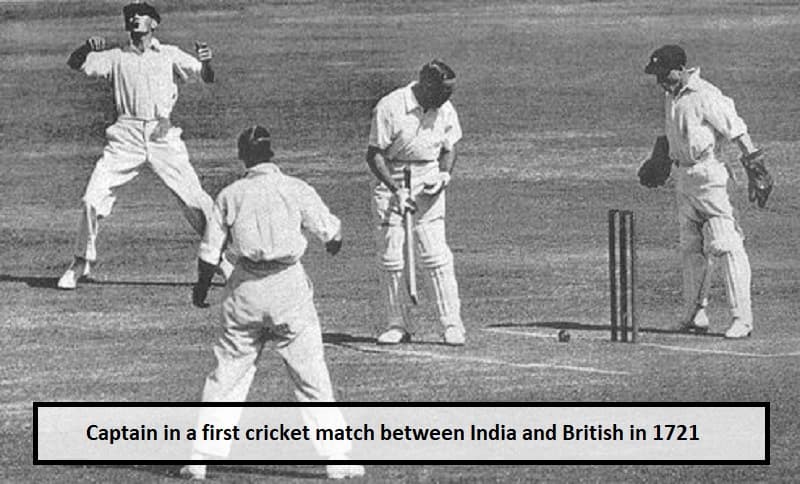
Captain in a first cricket match between India and British in 1721
The cricket game was introduced by British men in the 18th century. The first cricket club was introduced in the year 1792. Where in the first cricket match was played in the year 1721 when the British sailors had visited India and the era of the British colonial empire had begun. Many believed that the sport had been traveled to India and slowly got acceptance in the Parsee community.
India’s Men Cricket team which is generally referred to as Team India had gotten its Test status recognized in the year 1931. The first test match was played by the Indian team in the year 1932 at the legendary cricket ground Lord’s. It was led by CK Nayudu, as the captain of the 1932 cricket Team, since he was the best batsman to be considered at that time. So let’s take a look at the History of the Indian Cricket team and the captains since the birth of the sport.
First Test Series as Hosts
In the year 1933, India had hosted the first-ever test series. The England team visited them where they played 2 matches, one in Bombay and one match in Calcutta. England had won both the matches. The Indian Cricket team continued to make efforts and improve their form. They soon won their first test match against England in 1952. They had also won the test series later in the same year against Pakistan.
Later when the India Cricket team started getting their momentum since their first win, the era of Sunil Gavaskar and Vishvanath had begun. The 1971 test series under the captaincy of Ajit Wadekar which was held in England had won the series against West Indies.
One day Series and The recognition of ICC World Cup
A call on having a strong board to conduct the international cricket leagues and other tournaments was Taken in the year 1971. At that time India was led by the brilliant batsman, Sunil Gavaskar. In the same year, the idea of One-Day international matches was also introduced.
In the year 1983, the Indian cricket team was headed by the all-rounder Kapil Dev. And as we know the year was known to be the year of the Indian team as they had their first ICC World Cup.
Rivalries
Over the years, Indians had gained a lot of experience and achieved many wins. In this due course of time, the team had also made rival teams. England and Pakistan are the arch-rivals of India. Since the inception of cricket in India in 1721, India was seen as a potential target by all its competitors. Nevertheless, India was not afraid to face and had given them tough luck in all their matches.
American football refered as the most aggressive of all time where two teams play against each other one having the ball move forward and attacks the goal and the other teams tries to defend the goal. The shape of the ball is bit oval than the regular balls. So what will be the reason for not letting play American football in Olympics. Take a look at stats and information about American football leagues and championship.
The biggest American football championship is The National Football League (NFL) and the National Collegiate Athletic Association are the popular football league in United State. American footbal has over 410 Million popularity all over the world and are also played in other countries as USA mainly France, England, New Zealand, South Africa.
Why Americans football is not in Olympics?
So here American football is loved by more than 410 million fans all over the world but why is not played in Olympics. American football aslo have many nation who can enter the league with the strongest teams. So the main reason of American football not played in the Olympic is because the game is not compatible upto now to work in a competative level league. Atleast 7 days rest is been needed for the same team to recover and play the next match with full potential.
Second main reason is the high risk of injury and dominance of a particular nation in the Olympic. As United States is been the strongest team in national American football leagues so it will utterly show a dominance of one country. The game agressive nature can affects the player and high levels of injury will be faced by profession American footballers. Stay updated on the page to get live updates on American football player. So this are the main reason for not entertaining American football in Olympics.