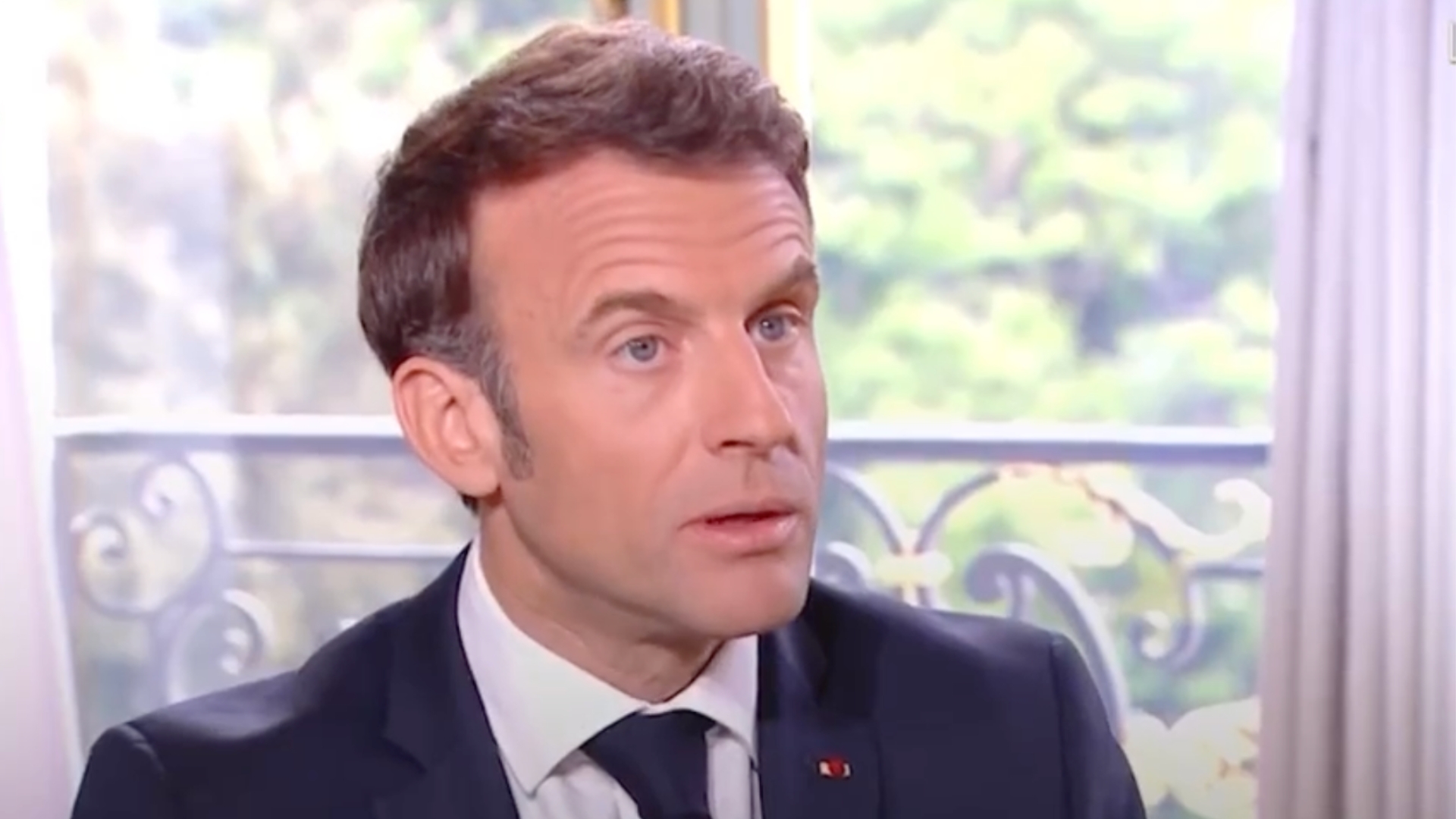
French President Emmanuel Macron made wild claims that Russia is engaging in a disinformation effort to sabotage the 2024 Paris Olympics. At the opening of a new Olympic swimming facility, reporters questioned him on whether he believed Russia had attempted to influence the Games.
The French President boldly stated: “Without a doubt… Every day (Russia) is putting out stories saying that we are unable to do this or that, so (the Games) would be at risk.”
According to the French government, Russia has increased its propaganda efforts against France lately by disseminating rumors and false information on social media through fake accounts.
These activities came after President Macron adopted a more assertive stance about the conflict in Ukraine, abandoning his earlier denial that France would never send soldiers to support Kyiv.
Macro and terror threats
French officials think Russian intelligence was responsible for the Israeli Stars of David being daubed on Paris walls after the October 7 Hamas attack, in an attempt to build discord in the country.
The President announced that if the terrorist threat gets greater, there will be changes regarding the Paris Olympics’ opening ceremony in July.
Presently, the ceremony, scheduled July 26, requires boats in the Seine River, with over 300,000 spectators expected to watch from the quays. Experts have cautioned that there is a high risk of a terrorist strike on this occasion.
“We will be ready… We are preparing several scenarios. If the threat were to evolve, if we considered that circumstances made it necessary, we have back-up scenarios,” President Macron stated.
The opening ceremony of the Paris Olympics may be moved from the Seine River if the security risk is too great, according to French President Emmanuel Macron.
Instead of covering the entire intended stretch of the river, Mr. Macron suggested that it may be “limited to the Trocadéro,” which is the area across the Seine from the Eiffel Tower. It may even be moved to the Stade de France, he continued, returning it to an usual ritual.
It is planned to be the first opening ceremony to take place outside of a stadium. On about 160 barges, almost 10,000 athletes are anticipated to ride a 6 km stretch of the Seine River. The number of spectators from riverbanks who were originally expected to attend the ceremony—roughly 600,000—has been reduced to 300,000.
Macron’s Idea
More so, it has already been announced that, contrary to initial plans, tourists will not be allowed free entry to attend the ceremony. Rather than through open registration, tickets will be distributed only by invitation.
“This opening ceremony… is a world first. We can do it and we are going to do it,” Mr Macron stated. However, he revealed for the first time that backup plans also existed.
“There are plan Bs and plan Cs… We are preparing them in parallel, we will analyse this in real-time,” the President added.
Following the threats made by the Islamic State group (IS) to the Champions League quarter-final football matches in Paris, Madrid, and London, security worries have increased. Concerns have also been raised about how the conflicts in Gaza and Ukraine can heighten the threat to national security, with French officials raising the possibility of a drone strike.
Mr. Macron added that he will do whatever he can to reach an agreement on an Olympic truce.
“We want to work towards an Olympic truce and I think it is an occasion for me to engage with a lot of our partners,” he said.
The Olympic competition is scheduled from July 26 to August 11. The Paralympic Games will take place from August 28 to September 8 afterwards.
The grand opening ceremony happening on July 26, Friday, along the Seine River presented an unusual security challenge. Organizers are hoping that these security measures won’t detract from the festive atmosphere as Paris finalizes preparations for the Summer Olympics.
For the first time, the opening ceremony for the Games will not take place in a stadium. Thousands of athletes and entertainers will be transported by dozens of boats in a 6-kilometer (3.7-mile) floating procession down the Seine, exhibiting the history and splendor of the French city.
The president of the Paris 2024 organizing committee, Tony Estanguet, said: “There’s a balance to be found between top security, which is absolutely the priority… It’s part of the objective to guarantee the security and to propose a fantastic celebration of the Games… But to have this kind of unique celebration, you also need to have a very, very strong security plan. And that’s the case.”
What to expect at the opening ceremony
More than 300,000 viewers, including members of France’s elite special intervention forces with counterterrorism training, are expected to line both banks of the river to witness the ceremony, which will also be attended by 45,000 police officers. An anti-drone system will be installed along with sharpshooters stationed atop buildings along the route.
France is already at its highest degree of security due to the wars in Gaza and the Ukraine as well as domestic security issues. The environment of the last Summer Olympics in Tokyo in 2021, when the competition was staged in empty venues and a year later than planned because of the COVID-19 epidemic, was very different from the Paris Olympics expected to be attended by masses.
Thomas Bach, the International Olympic Committee president, has expressed “full confidence” in the French police despite thousands of spectators being delayed by arson attacks on train networks only hours before the commencement of the 2024 Paris Olympics.
A number of high-speed rail lines in Paris have been severely damaged by fires, and an estimated 800,000 passengers affected. The rail company SNCF reported the attack “aimed at paralyzing the network”. Additionally, Eurostar has cancelled several services and recommended customers not travel.
However, IOC president Bach declared that he does not have any concerns, given his confidence in French authorities. He said: “All the measures are being taken. The French authorities are assisted by 180 other intelligence services around the world… We have good reason to have full confidence.”
The extent of the damage
The SNCF reported that the arson attacks damaged signal boxes, impacting lines connecting Paris to cities in the north, east, and southwest of the nation. They announced that there will be more inconveniences over the weekend.
Eurostar, which operates trains from London to Paris, advised people not to travel.
The executive director of the Olympic Games, Christophe Dubi, said that there has been a quick response from the organizers. He stated: “The organizers, including authorities and SNCF, have to prepare for different scenarios… What I see here is a quick reaction and that gives me a lot of confidence…I have to feel for all those impacted by these delays, but I have confidence that organizers are really well prepared for any situation and this is definitely one.”
Moreover, the organizers said: “Paris 2024 has taken note of incidents affecting the Atlantic, North and East lines of the SNCF rail network… We are working closely with our partner, the rail operator SNCF, to assess the situation.”
The incidents are now subjects of a criminal investigation by the prosecutor’s office in Paris.
Over the course of 18 days of competition in the French city and other locations, the Paris 2024 Olympic Games will include 3,800 hours of live events and award 329 gold medals in 32 different sports.
The Paris 2024 Olympics will officially begin on July 26, with an opening ceremony. Rather than being held in a stadium, the grand opening ceremony will be held along the Seine River for this year’s Games.
However, the official start of sporting events will be on July 24, days prior to the opening ceremony, with events in football, rugby sevens, handball, and archery.
What’s new for Paris 2024
Breaking is the only new sport scheduled for the 2024 Olympics. This dance form had its start in the 1970s in the Bronx in New York, but it has since developed into a competitive sport. This sport will not be seen in Paris until the latter part of the Games; the men’s event is scheduled for August 10 and the women’s for August 9. There will be 32 competitors in total—16 males and 16 women—who will fight for the medals.
Furthermore, karate and baseball/softball were eliminated from the Olympics this year, despite their inclusion in Tokyo three years ago.
Additionally, Kayak Cross will make its premiere. It’s similar to canoe slalom, but instead of racing against the clock, each heat sets four participants against one another.
The sailing competition now includes two new kite events: kiteboarding and windsurfer-iQFoil. Moreover, men will compete in artistic swimming for the first time in Olympic history, and a team acrobatic routine round will make its debut.
Olympic prize money
The World Athletics has declared that it will be the inaugural international federation to present cash prizes during the Olympic Games. The international governing body announced that a total reward fund of $2.4 million (£1.9 million) has been made available for the Olympics in Paris this summer. The gold medal winners will receive $50,000 (£39,400).
Russian and Belarusian athletes
Athletes from Belarus and Russia may compete as Individual Neutral Athletes, or AIN.The International Olympic Committee has announced that they will not be participating in the opening ceremony of the 2024 Summer Olympics as well.
Dates to remember
Opening ceremony: July 26, River Seine
Archery: July 25 to August 4, Invalides
Artistic gymnastics: July 25 to August 4, Bercy Arena
Artistic swimming: August 5-10, Bercy Arena
Athletics: August 1-11, Stade de France (track & field), Trocadero (race walks), Invalides (marathons)
Badminton: July 27 to August 5, La Chapelle Arena
3×3 Basketball: July 30 to August 5, La Concorde
Basketball: July 27 to August 11, Pierre Mauroy Stadium (group phase) & Bercy Arena (finals)
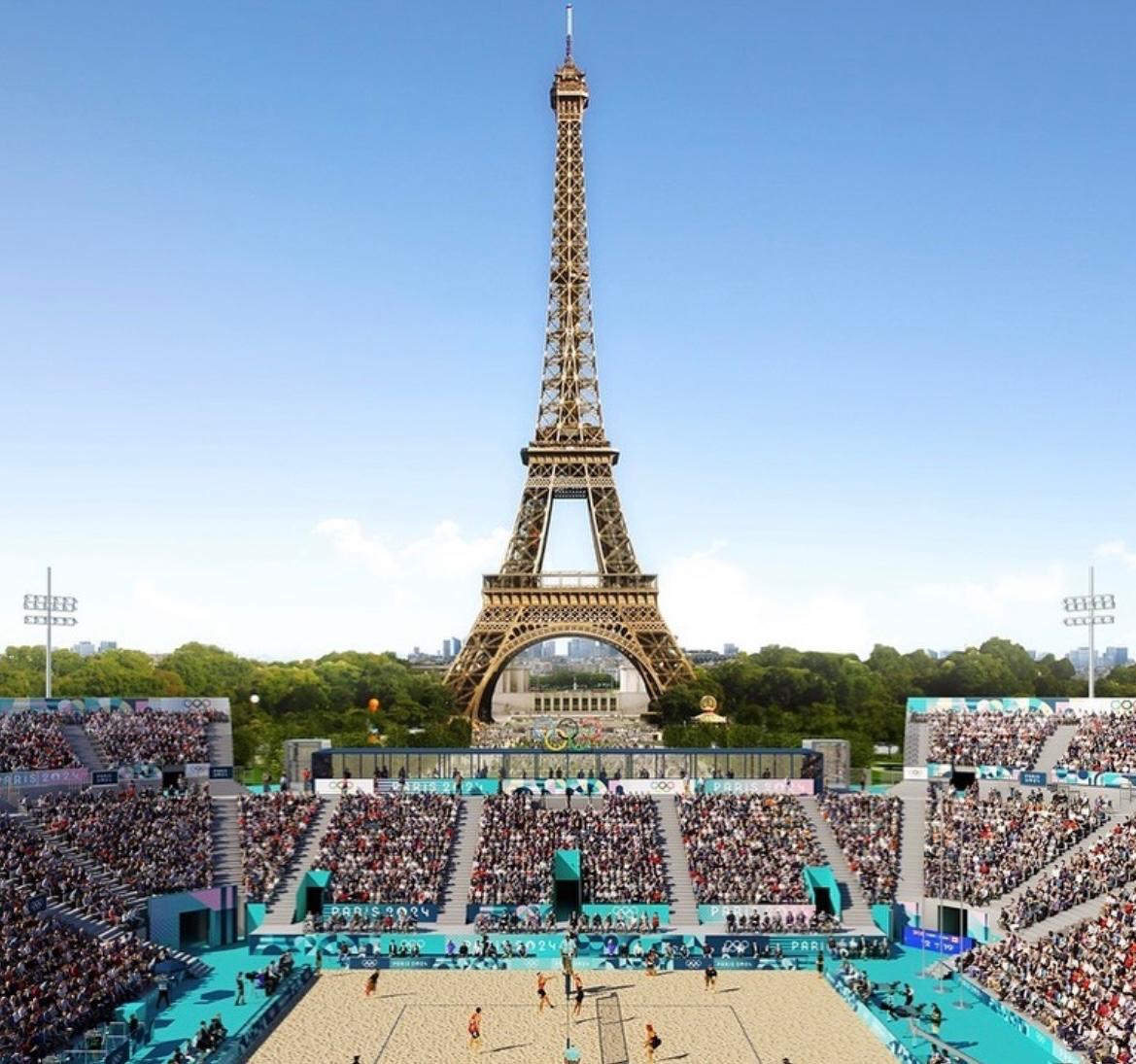
Beach volleyball: July 27 to August 10, Eiffel Tower Stadium
Boxing: July 27 to August 10, North Paris Arena & Roland-Garros Stadium
Breaking: August 9-10, La Concorde
Canoe slalom: July 27 to August 5, Vaires-sur-Marne Nautical Stadium – White water
Canoe sprint: August 6-10, Vaires-sur-Marne Nautical Stadium – Flat water
Cycling BMX: July 30 to August 2, La Concorde (freestyle), BMX Stadium (racing)
Cycling mountain bike: July 28-29, Elancourt Hill
Cycling road: July 27 to August 4, Pont Alexandre III (time trials), Trocadero (road races)
Cycling track: August 5-11, National Velodrome
Diving: July 27 to August 10, Aquatics Centre
Equestrian: July 27 to August 6, Chateau de Versailles
Fencing: July 27 to August 4, Grand Palais
Football: July 24 to August 10, Bordeaux Stadium, Geoffroy-Guichard Stadium, La Beaujoire Stadium, Lyon Stadium, Marseille Stadium, Nice Stadium & Parc de Princes (finals)
Golf: August 1-10, Le Golf National
Handball: July 25 to August 11, South Paris Arena (group stage), Pierre Mauroy Stadium (knockout phase)
Hockey: July 27 to August 9, Yves-du-Manoir Stadium
Judo: July 27 to August 3, Champ-de-Mars Arena
Marathon swimming: August 8-9, Pont Alexandre III
Modern pentathlon: August 8-11, North Paris Arena (ranking round), Chateau de Versailles
Rhythmic gymnastics: August 8-10, La Chapelle Arena
Rowing: July 27 to August 3, Vaires-sur-Marne Nautical Stadium – Flat water
Rugby sevens: July 24-30, Stade de France
Sailing: July 28 to August 8, Marseille Marina
Shooting: July 27 to August 5, Chateauroux Shooting Centre
Skateboarding: July 27 to August 7, La Concorde
Sport climbing: August 5-10, Le Bourget Climbing Venue
Surfing: July 27 to August 4, Teahupo’o, Tahiti
Swimming: July 27 to August 4, Paris La Defense Arena
Table tennis: July 27 to August 10, South Paris Arena
Taekwondo: August 7-10, Grand Palais
Tennis: July 27 to August 4, Roland Garros
Trampoline gymnastics: August 2, Bercy Arena
Triathlon: July 30 to August 5, Pont Alexandre III
Volleyball: July 27 to August 11, South Paris Arena
Water polo: July 27 to August 11, Aquatics Centre, Paris La Defense Arena
With the Russian invasion of Ukraine in 2022, qualified athletes from Belarus and Russia who will compete in the 2024 Paris Olympics will play independently and without representing their national anthems or flags.
The International Olympic Committee (IOC) announced that athletes from the said countries will not be included in the opening ceremony parade happening in July, and will take place on the Seine River instead of a stadium. An estimated 300,000 spectators will be present at the event.
Russian and Belarusian athletes will compete as individual neutral athletes (AINs) and there will be a created flag and anthem without lyrics for them, which will be coming from the IOC.
Tough for Russians and Belarusians?
The Olympic body stated: “They will not participate in the parade of delegations during the opening ceremony, since they are individual athletes.” However, aside from team parades, they would still be given the chance to experience other parts of the opening ceremony.
“This decision is the logical consequence of the fact that the athletes with Russian and Belarusian passports are not selected as delegations but as individual athletes,” Paris 2024 Games organizers admitted.
The IOC declared that they are anticipating 36 Russian and 22 Belarusian athletes playing in the 2024 Paris Olympics.