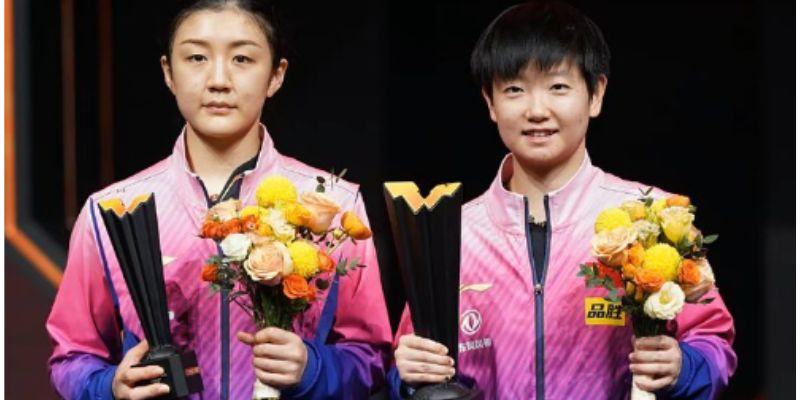
After winning an amazing 6 kg of gold and $525,000 (RM2.32 million) in prize money in table tennis, China’s rising star Chen Meng is expected to be the highest-paid among the Chinese athletes who competed in the 2024 Summer Olympics in Paris.
With gold in the women’s singles and women’s team events, she had an incredible performance that earned her this substantial reward. According to China Business Daily, the majority of her bonus comes from real estate mogul Guo Bin, who is married to gold medallist Wang Nan from the 2004 Athens Olympics.
Guo Bin created news ahead of the women’s singles championship match when she promised the victor 6 kg of gold. Chen, 30, stepped up to the plate and won gold in the women’s singles and women’s team competitions at the last two Olympics, defeating her fellow countrywoman, Sun Yingsha.
Chen outperformed the top-seeded Sun in the 2024 Paris Olympics despite being the second seed competing. Her victory caps off an incredible career that included second-place finishes in the 2019 and 2023 World Championships and a victory in the 2020 Table Tennis World Cup.
Guo Bin and Wang Nan’s training centre fuels China’s historic sweep at Paris Olympics
Famous names in Chinese table tennis, Guo Bin, and Wang Nan, have made a major impact on the game by founding a top-notch training facility in Weihai City, Shandong province, which is frequently used by the national team.
China, displaying its supremacy, created history at the Paris Olympics by being the first country to win gold in all five table tennis categories: women’s singles, men’s singles, mixed doubles, men’s team, and women’s team. In the mixed doubles competition, which debuted at the Tokyo Olympics in 2020, China lost to Japan surprisingly in the championship match.
China continues to make athletes known in tennis world as it heads into the 2024 Paris Olympics
Chinese tennis has made great strides in reaching the highest levels of the sport in the twenty years since its Olympic debut in Athens in 2004. The Wimbledon Championships this year serve as evidence of this rapid improvement. Chinese athletes commemorate an incredible campaign at this year’s Wimbledon, when the nation’s next-generation players sent notice they are a growing power.
Athletes who introduced China to the world
The desire to compete was ignited by retired athletes Li Ting and Sun Tiantian, who unexpectedly won an Olympic gold in the women’s doubles.
After that, China became interested in tennis after its most well-known athlete, Li Na, won their first individual Grand Slam championship in 2011 at the French Open and again in 2014 at the Australian Open. Over the past ten years, there has been an exponential growth in the number of Chinese tennis players entering the elite ranks, courts being developed, and international events being held in China as a result of her heroics.
Now, 11 Chinese athletes competed in the men’s and women’s main draws at the All-England Club this year at Wimbledon, the most ever for the nation at any of the four major tennis tournaments.
Chinese athletes’ achievements today
China features six players ranked in the top 100 on the Women’s Tennis Association Tour, led by world No. 7 Zheng Qinwen. In the women’s top 100, the only countries with more players than China are the US, Russia, and the Czech Republic (13, 12, and 8, respectively).
China’s current generation benefited from early exposure to professional tennis and more access to international competitions, thanks to the legacy of their predecessors.
“I am really proud of how far the game has come in China. Sometimes I envy the current generation very much for the advantages they have now,” said retired star Zheng Jie, who won the 2006 Wimbledon women’s doubles with Yan Zi.
“I think players now know better, and earlier, about what it is like to live, breathe and play as a pro than what we did in the beginning… When we started, we had no clue at all about being a professional tennis player, a very limited number of high-level tournaments to play at home, and did not know how to develop our game in the right way,” she added.
In recent games, Wang Xinyu, ranked 36th in the world, was one of the stars of the women’s draw as she battled her way into the fourth round, marking her finest major performance to date and the farthest any Chinese woman has gone in the Wimbledon singles tournament.
“The chances of competing against the more established international opponents and measuring my game against them were a great lesson,” Wang expressed.
Another remarkable Chinese tennis player, Zheng Qinwen, a finalist at this year’s Australian Open, and winner of the WTA’s Most Improved Player of the Year award in 2023, admitted: “Now after 15 years, we know more about the world, we know how everybody is playing, and we try a lot of different coaches to really improve our games. So all of us are starting to have more knowledge about tennis.”
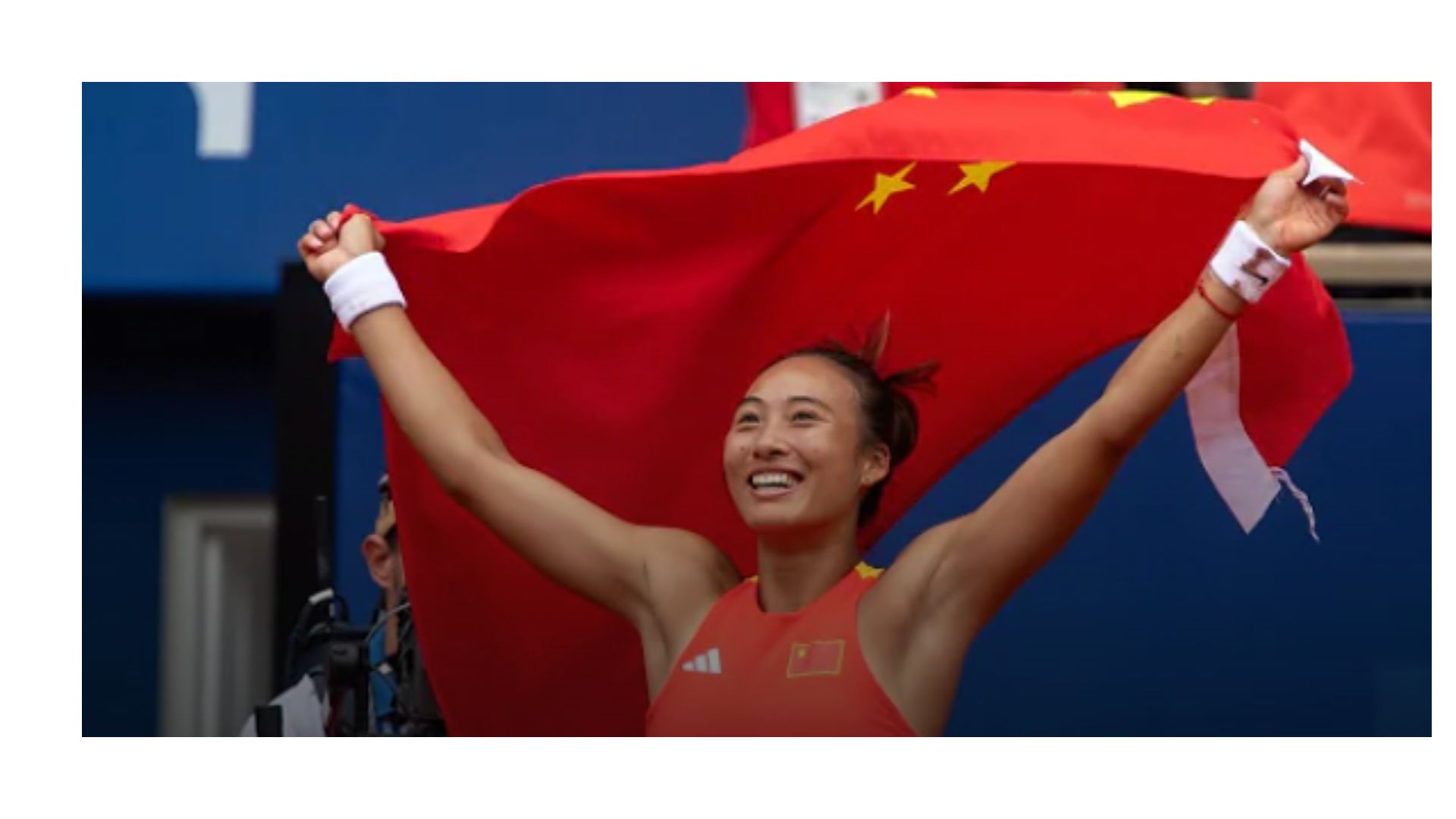
Olympic debutante 21-year-old Zheng Qinwen, became the first Chinese player to win an Olympic tennis singles gold medal when she defeated Croatia’s Donna Vekic 6-2, 6-3 in a thrilling final in Paris on Saturday (August 3).
She won’t be the last Chinese Olympic tennis champion, asserted China’s Xinhua News Agency in a burst of patriotic pride.
Praising the young tennis player, Xinhua said: “At 21, the gold could perhaps be the first of many medals for her at the Olympics, or it could be her last. However, one thing is for sure: the gold, and the inspiration that it will provide to young girls and boys back in her homeland, won’t be the last for China.”
Zheng’s victory completed a memorable week for China after Wang Xinyu and Zhang Zhizhen claimed the silver medal in the mixed doubles in tennis on Friday.
Though a new face in the Summer Games, Zheng had already proved her mettle. She was a finalist in the 2024 Australian Open, where she lost to the defending Aryna Sabalenka.
In the Paris Olympic final, she seemed the stronger contender. Zheng is the world No 7, her opponent Donna Vekic, 28, is No. 21.
Zheng also caused the biggest upset in the tournament beating the favourite and world No 1 Iga Swiatek In the semi-finals.
Moreover, she had the crowd behind her. A large Chinese contingent inside Roland Garros’s Court Philippe Chatrier cheered her on.
Vekic also had a good run. She advanced to the semi-finals at Wimbledon before competing in the Paris Olympics, where she defeated the US Open champion Coco Gauff.
Zheng, however, got the better of Vekic, defeating her in straight sets with the same powerful serves and groundstrokes she used to eliminate Iga Swiatek in the semi-finals.
Serving for the match at 5-3, Zheng reached match points as Vekic drove a backhand wide. Zheng finished the match with a well-placed forehand winner before falling to her back with joy.
Poland’s Swiatek finished with the bronze medal after beating Slovakia’s Anna Karolina Schmiedlova 6-2, 6-1 on Friday. She snapped a selfie with Zheng and Vekic during the medal ceremony.
“To win a medal for Croatia was a lifelong dream,” the 28-year-old said. “I wanted gold but still so happy and so proud. She was better than me today and deserved it.”
China’s only other Olympic gold medal in tennis came in 2004 when Li Ting and Sun Tian-Tian won the women’s doubles in Athens.
Zheng’s aspirations
Zheng said she wanted to be a role model. “I always want to become one of the Asians that can inspire young kids and make them love tennis more, because tennis is such a great sport, especially for girls. You need to fight. You need to have strength. You need to be fast,” said Zheng, who signed several autographs for members of the crowd after the match. “After this gold medal, I feel, finally, I can play tennis more relaxed.”
She still has to match her idol, though. Zheng looks up to Li Na, the only Chinese player to win Grand Slam singles titles — at the 2011 French Open and 2014 Australian Open .
“I have always been jealous of history-makers like Li Na,” Zheng said. “No matter what, she’s always the first, because she’s the first Asian player to win a Grand Slam. And I now become the first Asian player to win Olympic gold. I made history, as well. However, I still have a long way to go, because winning a Grand Slam is always my dream.”
She also spoke about her parents, who introduced her to tennis when she was seven years old. Her mother left her her job when she was 12 to make sure she ate and slept properly. Her father always pushed her hard, making her practise even on the Chinese New Year, when “everybody rests. But me? There’s no day of rest.”
“My success is not only my success. A lot of that is coming from my parents,” Zheng said. “They teach me how to be disciplined. They teach me how to stay focused on your dream. They always believed in me.”
“This Olympic journey has not been easy,” she said. “But there is a strength holding me. I never give up.”
Zheng said, “I felt like I represented all of Chinese tennis, knowing the Chinese people were cheering for me. Winning the gold made all the hard work and struggles worthwhile,” reported Xinhua.
Paris Olympics: China’s billions vs US college sports
Government largesse made China an athletic powerhouse while collegiate sports keeps America a sporting superpower. The two countries, two systems, clashed at the 2024 Paris Olympics, and while both landed the same quantity of gold, the Americans were awash with more silver and bronze.
Yes, the Americans went home with a bigger haul in a virtual repeat of the Tokyo Olympics, where they won one more gold than the Chinese (39-38) and racked up a bigger medal tally (113-89).
Medal tally
China was leading in the gold haul in Paris until the final day when weightlifter Li Wenwen won the 40th gold medal for China with her victory in the women’s +81 kg. But the Americans caught up to China with two last-day golds — with Jennifer Valente’s victory in women’s cycling and a one-point win over France (67-66) in the women’s basketball final.
So, though China and the USA won 40 gold medals each, the Americans topped the standings for their superior medal tally—44 silver, 42 bronze, 126 medals in all—compared to the Chinese—27 silver, 24 bronze, 91 in all.
“China’s Olympic delegation at Paris 2024 achieved its best overseas performance since it comprehensively participated in a Summer Olympics abroad in 1984, said Zhou Jinqiang, deputy head of the delegation at a press conference held on Sunday,” reported China Daily.
“China’s sports delegation, consisting of 404 athletes competing in 232 events across 30 sports, clinched 40 gold, 27 silver and 24 bronze medals. The haul of gold medals surpassed the 39 golds won at the London Olympics, and a total of 60 athletes claimed golds, marking a new record for overseas Olympic participation, Zhou said.”
At Beijing 2008, China won 48 gold medals and 100 overall.
“You have won glory for our country and people, and we extend warm congratulations and heartfelt compliments to you,” read a message jointly sent by the Central Committee of the Communist Party of China (CPC) and the State Council, China’s cabinet.
“Your outstanding achievements and performances have further ignited the patriotism of Chinese people both at home and abroad, uplifted the national spirit, and united the people towards progress,” added the message.
As the message shows, the Olympics are not just a sporting event but a means to boost Chinese morale and burnish the Chinese image abroad.
China’s billion-dollar sports budget
Karishma Vaswani wrote on Bloomberg: “China has long invested heavily to push its athletes to triumph against the West, as a way of highlighting the merits of the Communist Party. These Olympic Games are no different, but for one key aspect: Citizens are openly questioning why Beijing is spending so much money on a sporting event when many at home are facing bleak economic prospects.”
“China’s budget for sports this year stands at more than $1 billion,” she added. “Compare that to Australia, which also does pretty well in Olympic competitions, but last year only had around a quarter of that at its disposal. American athletes don’t get money from the government, instead they rely on a mix of private sponsorships, philanthropy, broadcast revenue and endorsements.”
The American way delivers great results, too, as the Paris Olympics showed.
How many Americans won medals?
The Washington Post noted: “The Americans won 126 medals, and because of team sports and relays, more than 40 per cent of the team’s delegation of nearly 600 athletes received at least one. Forty-four American athletes won multiple medals and 110 won at least one gold, with that large number stemming from the country’s success in team events.”
The Americans won team events like basketball, women’s gymnastics, men’s 4x400m relay, women’s 4x100m relay, women’s 4x400m relay, women’s 4x100m medley relay, men’s 4x100m freestyle relay, and mixed 4x100m medley relay.
The Chinese won team events such as the men’s 4x100m medley relay, group all-around rhythmic gymnastics, women’s synchronized diving, men’s synchronized diving, men’s artistic gymnastics, men’s and women’s canoe double, men’s doubles, women’s doubles and mixed doubles in badminton. As China Daily noted, 27 of the 40 gold medals won by China came from its six traditionally strong sports — diving, table tennis, badminton, gymnastics, shooting and weightlifting.
The US sporting world is very different. Athletes like sprinter Noah Lyles and basketballer Stephen Curry are celebrities. Their fame and fortune are hard-earned, honed by intensive training and the toughest competition.
US college sports system
As Britain’s two-time Olympic champion and World Athletics president Sebastian Coe, a legendary middle-distance runner, said, “U.S. track and field has a lot to owe to the college system.”
The New York Times says American Olympic officials “know that the American college sports system, which every year sustains and trains thousands of students in Olympic sports — both Americans and international students — is their golden goose.”
Indeed, American colleges and universities train not only American athletes. Top international athletes, too, like the swimmer Leon Marchand of France and the sprinter Julien Alfred of Saint Lucia, have been trained in America. Marchand was a member of the Arizona State University swim team, Alfred trained at the University of Texas.
The overwhelming majority of Olympic medals come from sports that have a presence on college campuses, says the Times.
No amount of government largesse, like the billions reportedly spent by China, has yet reduced the US college-trained athletes to also-rans. In fact, as the Paris Olympics showed, the latter still have an edge.
BEIJING: A 29-year-old woman, identified only by the surname He, has been taken into custody on suspicion of spreading defamatory comments about Chinese athletes and coaches on social media. The said arrest followed after the thrilling table tennis women’s singles final at the Paris Olympics.
Defamatory comments against Chinese athletes/coaches
The Daxing district police reported that the suspect “maliciously fabricated information and blatantly defamed others,” causing a negative ripple effect in society. The investigation into the case is ongoing, although the exact nature of the defamatory comments has not been revealed to the public.
The match in question, which took place on August 3, saw defending champion Chen Meng triumph over her teammate Sun Yingsha in a nail-biting 4-2 victory. This match was a repeat of their previous encounter at the Tokyo Olympics three years prior. The game was marked by audible cheers for Sun and boos for Chen whenever she scored, as captured in the event’s broadcast.
The crowd’s behavior sparked a wave of criticism on social media. One Weibo user expressed concern, stating, “If this kind of fan culture is allowed to permeate sports, it can ultimately undermine even the most talented athletes, like Sun Yingsha.”
In response to the online backlash, Weibo, China’s equivalent of Twitter, took action by deleting over 12,000 posts and banning more than 300 accounts for what it termed “illegal” comments.
Amidst this controversy, there was a moment of pure joy and national pride for China as swimmer Pan Zhanle shattered his own 100 meters freestyle world record. However, this triumph was slightly overshadowed by reports that two Chinese swimmers had tested positive for a banned steroid in 2022, once again bringing the issue of doping into the spotlight.
Importance of fair play
As the Olympic spirit continues to inspire and unite people around the globe, the incident serves as a reminder of the importance of fair play, both on and off the field.
The authorities’ swift action in addressing the defamatory comments underscores the commitment to maintaining the integrity of the sporting community and ensuring that athletes are respected and protected from unwarranted attacks.
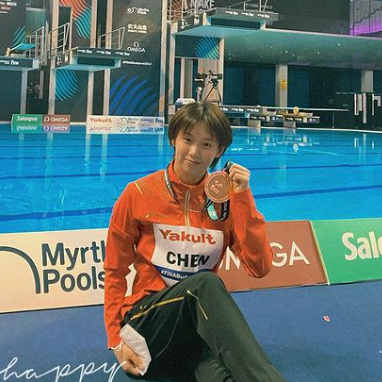
In the women’s synchronized 10m platform final at the Paris Olympics on Wednesday, Chinese divers Chen Yuxi and Quan Hongchan won gold, giving them a resounding triumph. With wins in the men’s synchronized 10m platform and women’s synchronized 3m springboard events, China has now won the third gold in diving and the seventh at the Games.
Chen and Quan’s amazing performance, which displays extraordinary technique and collaboration, maintains China’s dominance in Olympic diving.
The Chinese diving team demonstrated their superiority in the women’s synchronized 10m platform event at the 2020 Tokyo Olympics.
After outperforming their rivals by more than 13 points in the first two rounds with excellent dives, they started doing increasingly challenging dives in the third round.
Their lead grew rapidly thanks to their consistent and excellent performances; by the last round, they had a commanding 43.20-point lead over the second-place team and had won the gold medal. China’s outstanding performance, which included a gold medal from Chen and her previous diving partner, Zhang Jiaqi, solidified their place as the event’s winners.
Quan and Chen’s golden streak in synchronized 10m platform events
Quan and Chen started participating in synchronized diving competitions at the beginning of 2022, and they soon became a formidable team. Together, they have won gold medals at major events like the Asian Games, World Cup, and World Championships in the women’s synchronized 10m platform.
Notably, Quan’s victory in the 10m platform gold medal at the Tokyo Olympics was followed by her debut in the synchronized event.
Quan stated; “Obviously, I want to perform to the best of my abilities and stand atop the highest podium. I always feel like I could be doing better.”