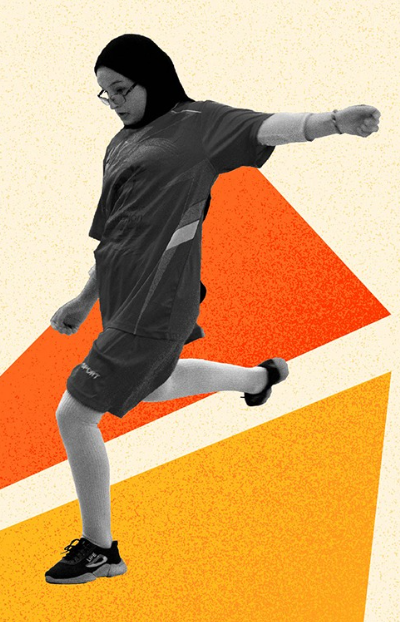
The French football and basketball federations have come under fire from UN-appointed Human Rights Council experts for barring players who wear the hijab from participation even at the amateur level.
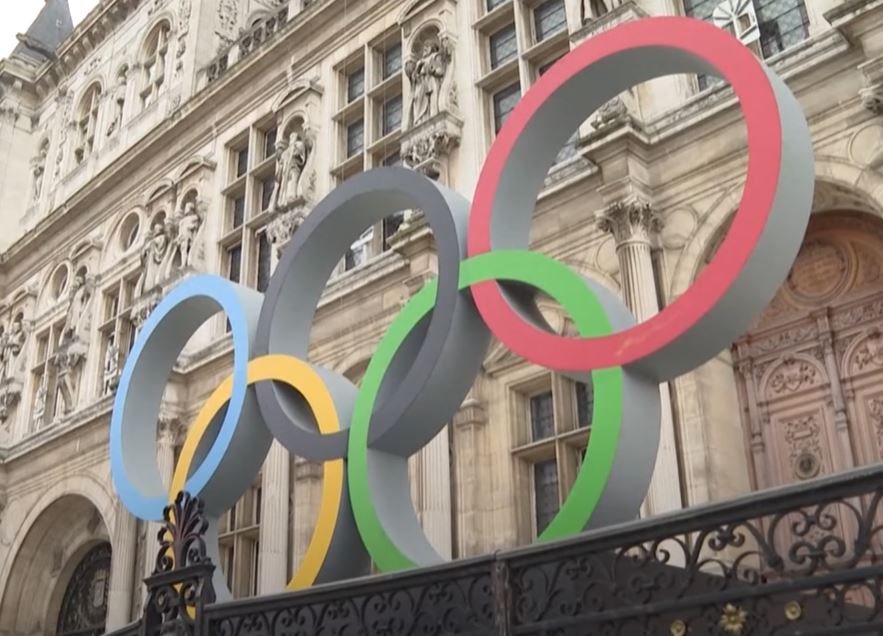
Additionally, they denounced the French government’s decision to prohibit French athletes from competing in the Paris Olympics last summer while wearing hijabs.
Experts argue that France’s hijab laws restrict people’s capacity to engage in cultural activities and violate their freedom to express their identity, religion, and beliefs. These actions not only violate individual liberties but also go against France’s stated pledges to inclusivity.
The experts stated; “The neutrality and secular nature of the State are not legitimate grounds for imposing restrictions on the rights to freedom of expression and freedom of religion or belief. Any limitations of these freedoms must be proportionate, necessary to reach one of the objectives stated in international law”
Stigmatization risks
The Senate’s proposed law to further restrict the usage of the hijab in public, as well as the French Conseil d’État’s decision to uphold the football federation’s hijab ban, has drawn criticism from independent experts.
These experts warn that such actions run the risk of portraying the hijab as a threat to public order, which could reinforce stereotypes and stigmatize Muslim women and girls.
The UN Special Rapporteur on Cultural Rights brought this important issue to the attention of the UN General Assembly in a report.
Sounkamba Sylla allowed to participate in Olympic opening ceremony despite hijab ban
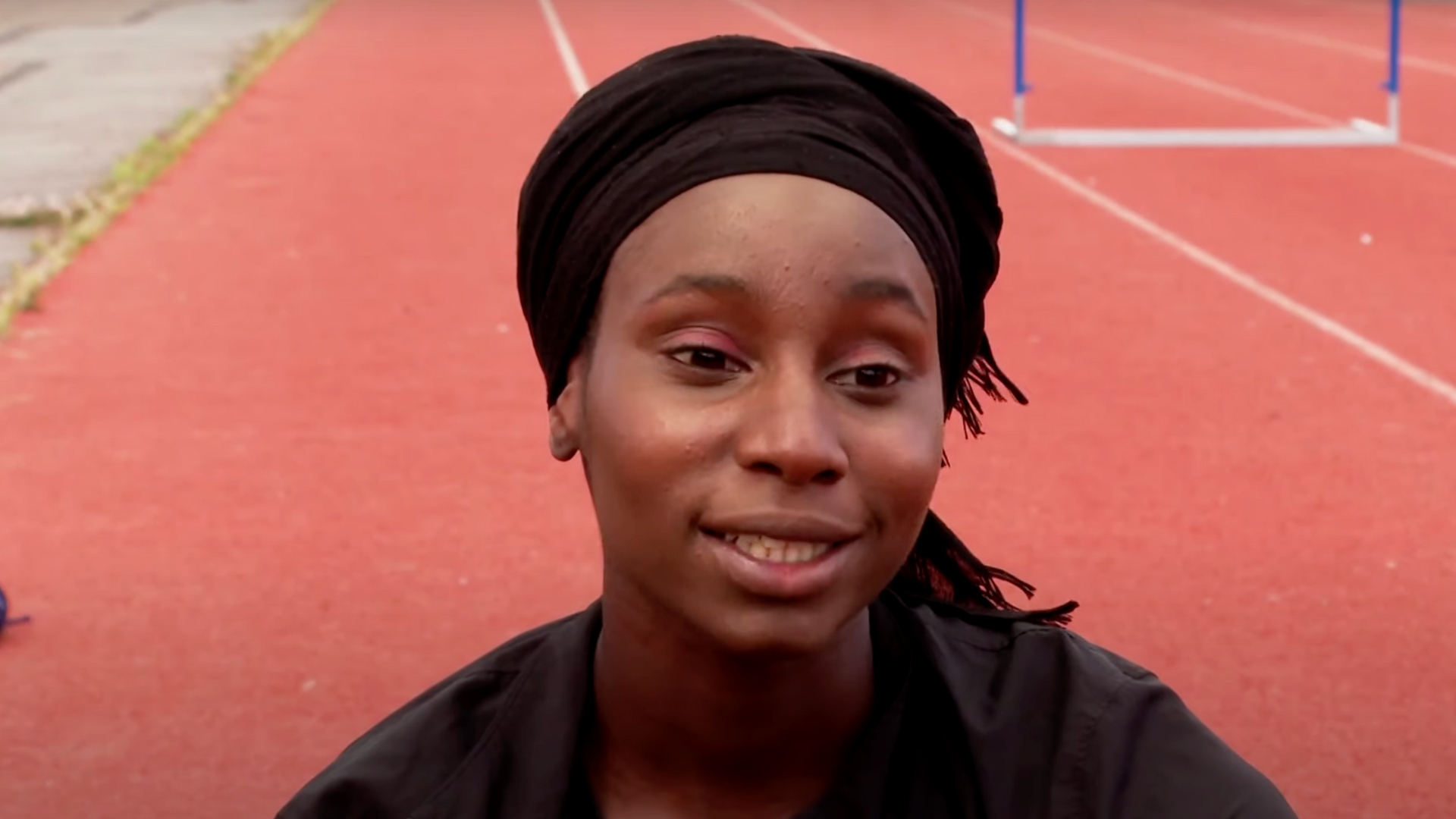
French sprinter Sounkamba Sylla, who said she would not be permitted to participate in the Olympic opening ceremony because of her headscarf, will be allowed to take part after all, according to the French sports minister.
In her statement, the athlete said: “You are selected for the Olympic Games, organized in your country, but you can’t take part in the opening ceremony because you wear a scarf on your head.”
However, French Sports Minister Amélie Oudéa-Castéra stated that a way has been discovered to let Sylla participate in the ceremony.
Oudéa-Castéra: The issue is solved
According to Oudéa-Castéra, Sylla had been informed that she would not be permitted to wear political or religious symbols and that the regulation is based on the Constitution of France. In recent years, France has implemented a number of contentious prohibitions and limitations on articles of traditionally Islamic clothing.
The French sports minister explained: “That’s the law and we need to obey the law, and she understands perfectly that when you’re an athlete representing your country, you need to be exemplary… So what we discussed with her is the fact that she can wear something, but not something that can be assimilated to a religious symbol.”
Furthermore, Oudéa-Castéra announced that Sylla and LVMH, the fashion designers for France’s opening ceremony ensembles, have devised a way for the sprinter to conceal her hair.
“That’s a win-win and we are happy. I always say when you’re benevolent, when you’re constructive, when you’re pragmatic, you can have a solid respect of your rules but while finding the right, you know, avenues, to find solutions,” the sports minister added.
After bravely donning a hijab to accept her gold medal during the 2024 Olympics’ final medal ceremony, long-distance runner Sifan Hassan from the Netherlands was showered with praise from supporters.
In the last 250 metres of the women’s marathon, the Dutch runner showed an amazing late kick that allowed her to win gold in an Olympic record time of 2 hours, 22 minutes, and 55 seconds. Three seconds later, Tigst Assefa of Ethiopia crossed the finish line to win silver, and Hellen Obiri of Kenya finished in 2:23:10 to win bronze.
Given that Hassan had already won bronze in the 5,000 and 10,000 metres at the Paris Games, her overwhelming performance is all the more amazing. She became the only athlete to medal in all three long-distance events at the same Olympic Games.
With her victory, the athlete declared: “I feel like I am dreaming… At the end I thought, ‘This is just a 100m sprint. Come on, Sifan. One more. Just feel it, like someone who sprints 200m.’”
On bravely wearing hijab in France
Hassan accepted her gold medal while wearing a bright orange tracksuit and a maroon hijab. Many supporters were moved by the display right away, pointing out that France forbade its own athletes from competing in the Olympics with head coverings.
In September last year, French Minister of Sports Amelie Oudea-Castera declared that, in accordance with the nation’s secularism principle and regulations prohibiting the showing of religious symbols at athletic events, athletes representing France at the Paris Games would not be permitted to wear the hijab.
Afterwards, the French Ministry of Sports made it clear that although competitors may not wear the headgear while competing, they could wear hijabs in public and in the Olympic village.
However, the Islamic Solidarity Sports Federation immediately expressed disapproval of the rule, stating that it contradicts the principles of equality, inclusivity, and respect for cultural diversity that the Olympics stand for.
Last May, there were allegations of discrimination by Iranian authorities against female athletes. This was in response to the success of the Iran women’s national soccer team in their April match against Myanmar, which was described as “phenomenal”.
Despite this, the female players were still not remunerated in the same manner as their male counterparts. According to Al-Monitor, the women’s soccer players were only paid around $18,000 a season, while the men were paid around $200,000 to $300,000, excluding bonuses for each win.
The report highlighted a number of accomplished female athletes who had achieved success in the international arena, representing Iran in their respective sports competitions, yet were ultimately sidelined and did not receive the recognition they deserved.
Despite the exposé, it seems Iran has remained adamant in how they treat their women athletes, as another issue recently surfaced. Former boxing champ, Mahyar Monshipour who was born in Iran before moving to France, revealed that the nation’s female boxers cannot train out in the open, and that they only do so within close quarters such as ‘flats or basements’.
IOC Discrimination?
According to insidethegames, a group of dissidents has submitted a request to the IOC to prohibit Iran from participating in the Olympic Games, or at the very least to exclude them from participating in games such as Boxing, Beach Volleyball, Gymnastics, Swimming, and Wrestling, all of which are prohibited for Iranian women to compete in under the Islamic regime.
A French lawyer, Frederic Thiriez, asserted that Iran has breached the rules of the Olympic Charter, which state that:
“The practice of sport is human right.”
“There must be no discrimination of any kind, in particular on the grounds of race, colour, sex, sexual orientation, language, religion, political or other option, national or social origin, property, birth, or other status.”
Thiriez who’s determined to punish Iraq over human rights violations, states in a Francs Jeux report that: “The law has its limits, that is why we’re counting on pressure from public opinion,”
This sentiment, however, was countered by Nina David, Amnesty International’s UK advocacy lead who says banning the Iranians would only punish the athletes. Will the IOC now discriminate against them?
“The IOC must of course ensure the Olympics aren’t in any way complicit in human rights violations, in line with their own human rights guidelines and international business standards, but banning Iranian athletes from competing at Paris 2024 would amount to punishing the athletes themselves, not the Iranian authorities,” she told City A.M.
The IOC has also released a statement regarding the controversy and said that they are monitoring the situation very closely.
“The IOC reserves the right to take any action relating to the participation of the Iranian athletes”.
The World Cup is less than a month away, but Fifa is breathing down the Tunisian Football Federation’s neck, threatening the country’s football governing body with suspension from the November World Cup finals if the Tunisian government continues to interfere in local football affairs.
The world’s football governing body has set rules that do not allow the governments or even the federation of football in member countries to meddle in the local football affairs or in clubs.
The aim is to give the clubs and the game of football a free-wheel without massive interference in the running of their affairs from governing officials.
As per FIFA rules, federations of all member nations must be free of any third-party or government involvement.
On Sunday, a Reuters report says Fifa gave the TFF a warning that the national Tunisian team’s participation at World Cup 2022 could be under threat if there is found to be government interference within the organisation.
Fifa has asked the TFF to explain a possible case of interference in the entity in a letter to the federation.
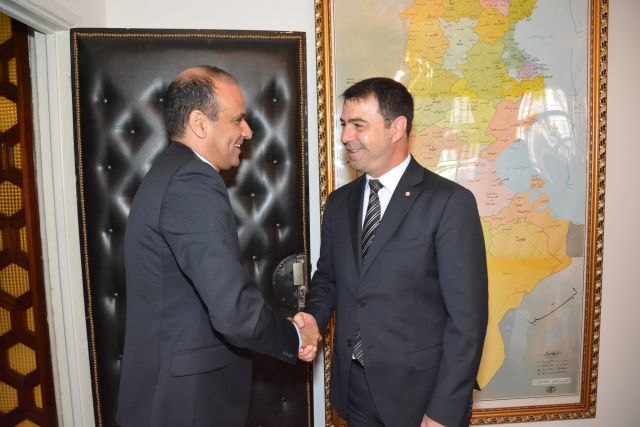
Minister of Youth and Sport Kamel Deguiche has threatened to change the leaders of the Tunisian Football Federation. A possible interference that Fifa does not accept.
“It has been brought to our attention that the state authorities seem to want to interfere in the affairs of the Tunisian Football Federation, in particular by considering the dissolution of the Federal Bureau of the FTF.
Tunisia’s Response
“In this respect, we would like to remind you that the member associations of Fifa are statutorily obliged to manage their affairs independently and without undue influence from third parties,” a letter from the Tunisian Football Federation, Wadii Jarii says.
Tunisia qualified for the World Cup and is in Group D along with world champions France, Australia and Denmark, whom they face in their November 22 opener.
Football heavyweights France, the Netherlands, Germany, and defending champions Spain prepare for fierce matchups on Friday, February 23 in the much-awaited semi-finals of the UEFA Women’s Nations League.
The venue for Spain vs. the Netherlands is Estadio de La Cartuja in Seville, and the venue for France vs. Germany is Groupama Stadium in Lyon. These elite teams will compete for a berth in the coveted finals, displaying their skill, tenacity, and championship spirit. Expect an exciting matchup.
Teams are competing not only for the coveted championship trophy but also for a bigger prize as excitement for the inaugural Women’s Nations League grows. Not only does success mean trying to win the semi-final matches, but it also means earning a place in the Women’s Nations League final and qualifying for this summer’s highly anticipated Olympic Games in Paris, 2024. The trip offers glory and an Olympic ticket for the winning teams, and the stakes are high and the competition strong.
UEFA Women’s Nations League Schedule in Full
In the fascinating realm of the Women’s Nations League, where skill and fate collide, France has already secured its place as the 2024 host country. In a surprising turn of events, should they qualify for the championship match, the two highly sought-after Paris 2024 slots will dance their way to the other finalist and the victorious third-place play-off winner. This is an exhilarating football ballet in which winning is equivalent to both glory and a golden ticket to the Paris 2024 main stage.
Date
Match
Venue
Kick-off Time
Friday, 23 Feb
Spain vs Netherlands
Estadio de La Cartuja (Seville)
21:00 CET
France vs Germany
Groupama Stadium (Lyon)
21:00 CET
Wednesday, 28 Feb
Loser of SF1 vs Loser of SF2
Estadio de La Cartuja (Seville) OR Abe Lenstra Stadium (Heerenveen)
19:00 OR 20:45
Winner of SF1 vs Winner of SF2
Estadio de La Cartuja (Seville) OR Abe Lenstra Stadium (Heerenveen)