Last May, there were allegations of discrimination by Iranian authorities against female athletes. This was in response to the success of the Iran women’s national soccer team in their April match against Myanmar, which was described as “phenomenal”.
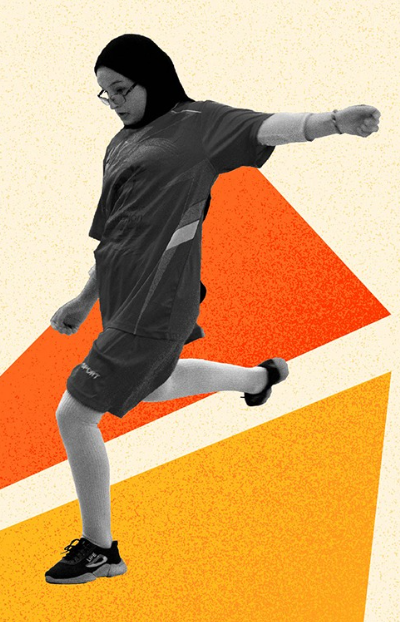
Despite this, the female players were still not remunerated in the same manner as their male counterparts. According to Al-Monitor, the women’s soccer players were only paid around $18,000 a season, while the men were paid around $200,000 to $300,000, excluding bonuses for each win.
The report highlighted a number of accomplished female athletes who had achieved success in the international arena, representing Iran in their respective sports competitions, yet were ultimately sidelined and did not receive the recognition they deserved.
Despite the exposé, it seems Iran has remained adamant in how they treat their women athletes, as another issue recently surfaced. Former boxing champ, Mahyar Monshipour who was born in Iran before moving to France, revealed that the nation’s female boxers cannot train out in the open, and that they only do so within close quarters such as ‘flats or basements’.
IOC Discrimination?
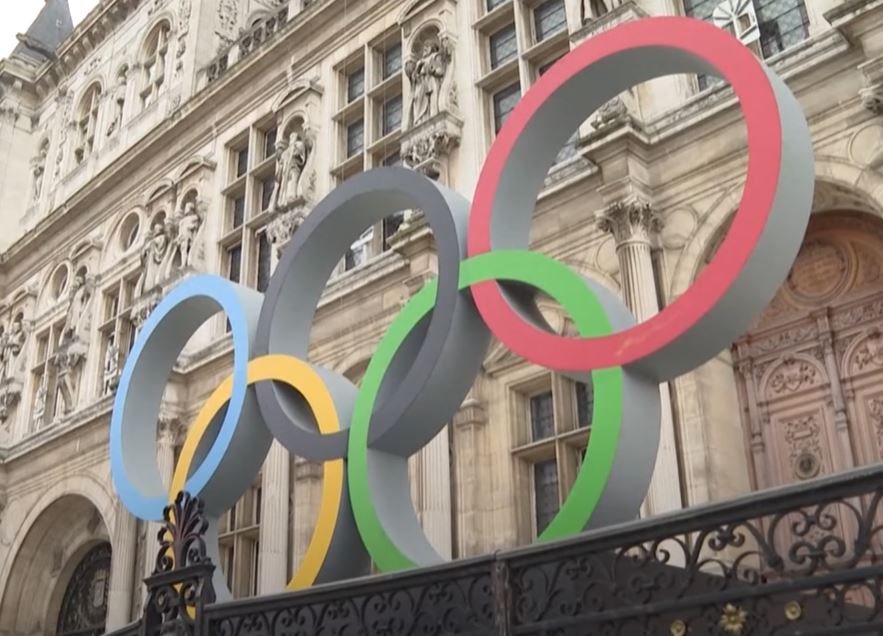
According to insidethegames, a group of dissidents has submitted a request to the IOC to prohibit Iran from participating in the Olympic Games, or at the very least to exclude them from participating in games such as Boxing, Beach Volleyball, Gymnastics, Swimming, and Wrestling, all of which are prohibited for Iranian women to compete in under the Islamic regime.
A French lawyer, Frederic Thiriez, asserted that Iran has breached the rules of the Olympic Charter, which state that:
“The practice of sport is human right.”
“There must be no discrimination of any kind, in particular on the grounds of race, colour, sex, sexual orientation, language, religion, political or other option, national or social origin, property, birth, or other status.”
Thiriez who’s determined to punish Iraq over human rights violations, states in a Francs Jeux report that: “The law has its limits, that is why we’re counting on pressure from public opinion,”
This sentiment, however, was countered by Nina David, Amnesty International’s UK advocacy lead who says banning the Iranians would only punish the athletes. Will the IOC now discriminate against them?
“The IOC must of course ensure the Olympics aren’t in any way complicit in human rights violations, in line with their own human rights guidelines and international business standards, but banning Iranian athletes from competing at Paris 2024 would amount to punishing the athletes themselves, not the Iranian authorities,” she told City A.M.
The IOC has also released a statement regarding the controversy and said that they are monitoring the situation very closely.
“The IOC reserves the right to take any action relating to the participation of the Iranian athletes”.
Most likely, Iran will play in the World Cup but we can’t stop the game of pressure and politics that is always playing in the background in the run up to the Qatar 2022 World Cup.
According to AP, Ukraine’s top soccer club, Shakhtar Donetsk, on Monday urged FIFA to remove Iran from the World Cup because of the country’s alleged military support to the Russian invasion.
We continue to believe that politics and wars should not be used as reasons to boycott any clubs or country in sports. The banning of Russia is already a heavy toll to innocent sportsmen and women.
The AP report says Shakhtar Donetsk chief executive Sergei Palkin has accused the country of “direct participation in terrorist attacks on Ukrainians.”
The role of Iran apparently came to light after Iranian made drones were allegedly used by Russian forces to attack Ukrainian cities and forces in the 9 months long war.
The Shakhtar boss is suggesting that his own country’s team should play in Qatar instead of Iran as a replacement.
He also says this will be a fair decision.
“This will be a fair decision that should draw the attention of the whole world to a regime that kills its best people and helps kill Ukrainians,” Palkin said in a statement one day before his team plays at Celtic in the Champions League.
However, removing Iran which has qualified for the World Cup could cause more troubles for Fifa.
In the political game, Iran could have more influence with the organisers for example and if Fifa were to start such a political move, who knows what Qatar could do?
Fifa has already set a precedent in bending to political meddling in sports when it barred Russia from the World Cup qualifiers.
In February, Fifa suspended Russia and its teams from all competitions, thus ejecting the country from qualifying for the 2022 World Cup.
Russia was only weeks away from playing for one of Europe’s final places in this year’s tournament in Qatar.
But this decision was before the World Cup entered its last month of waiting for the competition to start.
Yet, the middle eastern country is facing another call to be dismissed from the World Cup because of the treatment of women in sports.
A formal request has been made to FIFA to kick Iran out of the 2022 World Cup due to a violation of international women’s football guidelines.
Women have been repeatedly denied entry to football stadiums in Iran in recent months, which, while there is no formal ban on women attending football matches, is considered a violation of FIFA regulations under Article 19.
A group of Iranian football and sports figures, including FIFA referee Mohammad Reza Faghani, judo champion Vahid Sarlak, and futsal international Shiva Amini, have all signed a letter to FIFA requesting that Iran be removed from the tournament.
The head of the European Olympic Committee, Spyros Capralos, stated that the decision made by World Athletics to provide prize money to gold medallists at the upcoming Olympics in Paris is discriminatory and goes against Olympic values.
The context
World Athletics (WA) and the International Boxing Association (IBA) have announced medal payments for their respective winners. WA is awarding its 48 Olympic champions in Paris $50,000 in prize money.
Silver and bronze medallists won’t be paid in cash at these Games; instead, they will be paid at the Los Angeles Olympics in 2028, under the direction of WA, led by former Olympian and current International Olympic Committee (IOC) member Sebastian Coe.
Moreover, the IBA has declared that from July 26 to August 11, it will give money to all its medallists — $100,000 to gold, $50,000 to silver and $25,000 to bronze medal winners.
The opposition
The IOC, which views these decisions as direct meddling in its events without any previous consultation, is upset, and so are other international federations.
“We believe in the Olympic Games the athletes go there to compete for the values of the Olympic Games and their last preoccupation is to get money and bonuses,” said Capralos, an IOC member.
The member added: “I think that every country through their National Olympic Committees and governments have set bonuses for athletes winning medals… I think just giving some money to the gold winner is discriminatory and does not follow the principles of solidarity.”
Overall, 32 sports and 10,500 competitors are expected to compete in Paris.
With the IBA, Capralos stated, there was no contact at all.
“Regarding boxing there is no international boxing federation. With them (IBA) there have not been any discussions,” Capralos admitted.
The IOC withdrew recognition from the IBA last year for a number of reasons, including matters of governance and finances. Due to this, the IBA is not hosting the boxing competition at the Olympics in Paris. Moreover, the IOC has called for the establishment of a new international organization for the sport and issued a warning to athletes whose national federations supported the IBA rather than its IOC-approved replacement that they would not be permitted to compete in the 2028 Summer Olympics in Los Angeles.
The French football and basketball federations have come under fire from UN-appointed Human Rights Council experts for barring players who wear the hijab from participation even at the amateur level.
Additionally, they denounced the French government’s decision to prohibit French athletes from competing in the Paris Olympics last summer while wearing hijabs.
Experts argue that France’s hijab laws restrict people’s capacity to engage in cultural activities and violate their freedom to express their identity, religion, and beliefs. These actions not only violate individual liberties but also go against France’s stated pledges to inclusivity.
The experts stated; “The neutrality and secular nature of the State are not legitimate grounds for imposing restrictions on the rights to freedom of expression and freedom of religion or belief. Any limitations of these freedoms must be proportionate, necessary to reach one of the objectives stated in international law”
Stigmatization risks
The Senate’s proposed law to further restrict the usage of the hijab in public, as well as the French Conseil d’État’s decision to uphold the football federation’s hijab ban, has drawn criticism from independent experts.
These experts warn that such actions run the risk of portraying the hijab as a threat to public order, which could reinforce stereotypes and stigmatize Muslim women and girls.
The UN Special Rapporteur on Cultural Rights brought this important issue to the attention of the UN General Assembly in a report.
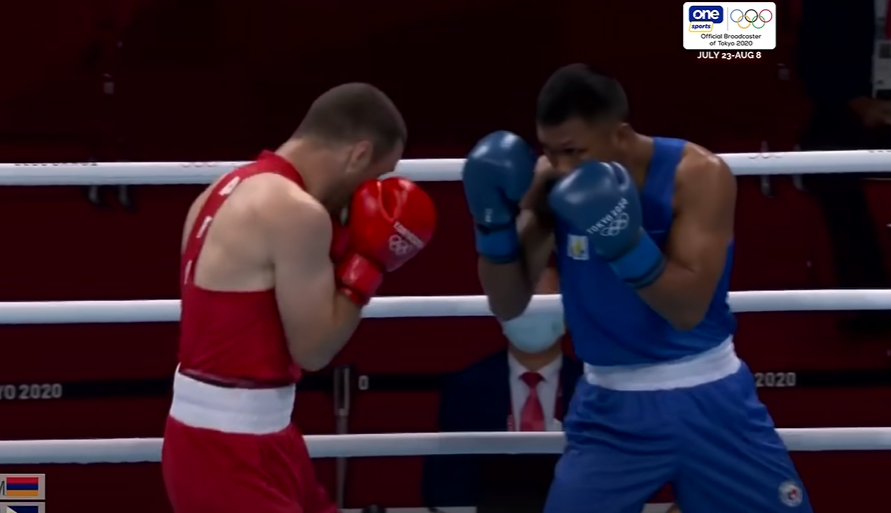
Boxing marked its Olympic debut in the 1904 St. Louis Games, becoming one of the earliest modern Olympic sports. Despite a brief absence from the 1912 Stockholm edition, it reappeared at the 1920 Antwerp Games and has remained a fixture in the prestigious event ever since.
Throughout the years, boxing has captivated and thrilled audiences, showcasing the determination of athletes who endure pain in their quest to stand victorious in the ring.
However, recent developments suggest that the physically demanding combat sport might face suspension in the 2028 LA Olympics, raising uncertainty about the sport’s future and causing concern among athletes and fans alike.
Boxing faces an uncertain long-term future as an Olympic sport after its place at the 2028 Los Angeles Games was confirmed as being "on hold" Monday by the International Olympic Committee.
Boxing has been part of every Olympics since 1920 and will feature at next year's Paris… pic.twitter.com/tjozQzHzve
Thomas Back: ‘We have a problem with its governing body’
In a statement released by Thomas Bach, President of the International Olympic Committee (IOC), last week, he said that although they wanted the sport to be included in the games’ programme, their current relationship with its governing body, the International Boxing Association (IBA), prevents them from doing so.
“We want boxing on the program. We have no problem, with boxing or boxers — we have a problem with the governing body,” Bach said to AFP, according to boxingscene.
Perhaps the bad blood between the Games chiefs and the Russian president of the IBA, Umar Kremlev, was a foreshadowing of this event. Following reports of their strained relationship, it was later announced in June that the IBA had been banned from the Olympic movement, as reported by France24.
A number of crucial facets of the IBA’s administration, including its sanctioned tournaments as well as its finances and governance, prompted the IOC to make its decision.
IOC: Boxing ‘on hold’
Ever since their falling-out incident, the IOC has not recognized any other governing body for boxing. Without an organization to support the sport, the executive board of the IOC has declared that any decision to include boxing in the Los Angeles 28 sports programme is ‘on hold’.
Casey Wasserman, the chairman of LA 2028, has also expressed her thoughts about the issue, saying that while she’d love for the combat sport to be included in the program, it is ultimately up to the IOC whether it’s going to make an appearance in the 2028 Summer Olympics or not.
“Boxing has a great history in the Olympics, has a great history in America as a lineage of boxing champions. So we’d love to see boxing on the programme,” Wasserman said in front of the Mumbai press.
“But obviously it’s a decision that’s going to be taken by the IOC’s membership, given the complexities that exist with the federation. We’re hopeful, but all we can do is wait for the answer.”
While boxing will still be a part of the next Paris Games next year, its inclusion in the Los Angeles edition in 2028 is still up in the air.
Israel risked becoming the 14th country to be barred from the Olympics. But Palestinians and their supporters’ demands to ban Israel because of the war in Gaza were opposed by the International Olympic Committee (IOC) and President Macon of France. Both Israel and Palestine were represented at the Paris Olympics.
Israel sent 88 athletes and the Palestine Olympic Committee eight. The adversaries shared the Olympic stage, as did China and Taiwan, called “Chinese Taipei” at the Olympics, though for three long decades, Beijing refused to participate in the Games with Taipei.
Thirteen countries have so far been barred at least once from the Games in the modern Olympics’ 128-year history. Russia and Belarus were the latest to be barred after Russia broke the Olympic truce.
Olympic truce
The Olympic truce harks back to ancient Greece when the Greek states, often at war with each other, maintained peace during the Games so people could take part in the event. Nowadays, the Olympic Truce starts one week before the opening ceremony of the Olympic Games and ends one week after the closing ceremony of the Paralympic Games. Russia broke the Olympic truce when it invaded Ukraine on February 24, 2022, four days after the end of the Beijing Winter Olympics.
Russia and Belarus were officially barred from the Paris Games, but their athletes were allowed to take part as individuals. They were not allowed to compete under their national flags but as individual neutral athletes. A distinction was drawn between the countries and the regimes responsible for the invasion of Ukraine and the people who had no say in the matter. Thirty-two individual neutral athletes competed in 10 sports and won five medals, including a gold, according to Wikipedia.
Tokyo Olympics
Russians could not compete under the Russian flag at the Tokyo Olympics also. Russian athletes in Tokyo represented the Russian Olympic Committee (ROC), not Russia. Russia was banned from international sport by the World Anti-Doping Agency because of a doping scandal. That was why the Russian athletes were allowed to represent their national Olympic body but not their country at the Tokyo Games.
Russia, once an Olympic powerhouse, has become a pariah at the Games just as China, formerly an Olympic outcast by choice, has become a superpower.
Before we look at the rise of China, let’s go further back in Olympic history.
The first modern Olympic Games were held in Athens in 1896.
Held every four years, the quadrennial Games were staged five times – in Athens (1896), Paris (1900), St Louis, USA (1904), London (1908) and Stockholm (1912) – before war broke out. There were no Games during the First World War (1914-1918).
The Games resumed after the war in 1920 when the Summer Olympics were held in Antwerp, Belgium.
Earliest bans
The first Olympic ban was imposed in Antwerp when Germany, Austria, Hungary, Bulgaria and Turkey were barred from the Games. They were the countries that lost the war in which Britain, France and America triumphed.
Germany was not invited to take part in the 1924 Paris Olympics either as it continued to have problems with the host nation, France.
However, Germany was allowed to host the Olympics in 1936 when the Summer Games were held in Berlin and the Winter Games in Bavaria.
There were no Olympic Games during the Second World War (1940-1945) when Germany, fought against Russia, France, Britain and America again, this time allied with Italy and Japan.
Post-war bans
London held the first Olympic Games after the Second World War in 1948. Germany and Japan, which lost the war, were not allowed to take part. Italy, which changed sides during the conflict, was allowed to compete. Bulgaria was also not invited to London having sided with Germany during the conflict.
South Africa was the next country to face an Olympic ban. It was banned from the 1964 Tokyo Olympics because the country was racially segregated under its apartheid regime. For the same reason, South Africa was not allowed to compete in the Games in Mexico City (1968), Munich (1972), Montreal (1976), Moscow (1980), Los Angeles (1984), and Seoul (1988). The ban was lifted only in 1992 when South Africa competed in the Barcelona Olympics after being shunned for 28 years.
In 1972, Zimbabwe, then known as Rhodesia, was banned from the Munich Olympics for the same reason as South Africa. Rhodesia was also racially segregated at the time by the whites who ruled the country then.
New millennium bans
Afghanistan was the first country to be banned in the new millennium. It was banned from 2000 Melbourne Olympics because the Taliban regime discriminated against women. Although the Taliban are now back in power and continue to discriminate against women. Afghanistan was allowed to participate in the Paris Olympics. However, the IOC barred Taliban officials from the Games.
In 2016, Kuwait received the same treatment as Russia and Belarus today. The IOC suspended the Kuwait Olympic Committee in 2015 in a dispute over government interference in the country’s sports affairs. As a result, Kuwaiti athletes participated in the 2016 Rio de Janeiro Olympics as independent Olympic athletes under the Olympic flag.
North Korea was barred from the 2022 Beijing Winter Olympics. It was banned as punishment for not sending athletes to the 2020 Tokyo Olympics, citing concerns about Covid-19. The IOC president Thomas Bach North Korea had violated the Olympic charter by failing to fulfil its obligation to send athletes to the Games.
Other countries have also boycotted or abstained from the Games over the years.
Boycotts and non-participation
The United States boycotted the 1980 Moscow Olympics in protest against the Russian invasion of Afghanistan. Russia boycotted the 1984 Los Angeles Games in retaliation.
China did not participate in the Games for a long time. Beijing competed in the 1952 Helsinki Olympics but stayed away subsequently, refusing to take part in the Games with Taiwan. China participated in the 1984 Los Angeles Olympics after a three-decade-long absence only after an IOC agreement that Taiwan would henceforth compete in the Games as Chinese Taipei. Taiwan’s official name is Republic of China; it does not have diplomatic relations with Beijing.
While China ended second in the medal standings, second only to the United States, Taiwan’s 60 athletes returned home with seven medals, including two golds.
Israel’s 88 athletes also won seven medals, including one gold.
This was Israel’s biggest medal haul in any Olympics, said the Jerusalem Post newspaper, expressing satisfaction with the team results and noting there were “no major incidents of antisemitism”. “Although there were isolated instances, such as a few protest signs at soccer matches, scattered Palestinian flags during events featuring Israeli athletes, and occasional booing, these occurrences were infrequent and not as widespread as anticipated,” it added.
Not allowed to take part in Olympic Games
Afghanistan (in 2000)
Austria (in 1920)
Belarus (in 2024)
Bulgaria (in 1920, 1948)
Germany (in 1920, 1924, 1948)
Hungary (in1920)
Japan (in 1948)
Kuwait (in 2016)
North Korea (at 2022 Beijing Winter Games)
Russia (in 2020, 2024)
South Africa (in 1964, 1968, 1972, 1976, 1980, 1984, 1988)
Turkey (in 1920)
Zimbabwe (in 1972)