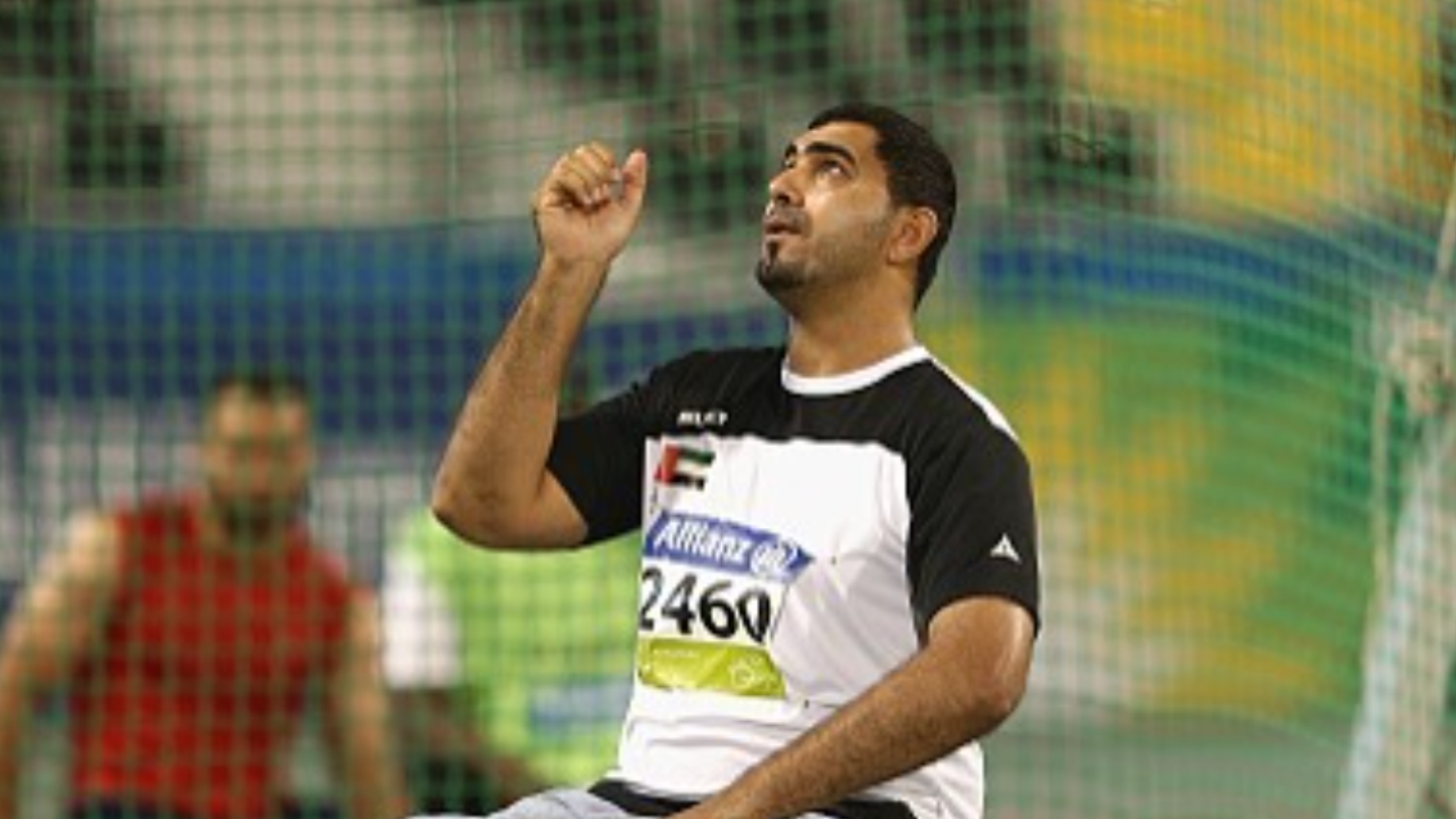
The death of Paralympian Abdullah Hayayei has led to charges of manslaughter against UK Athletics.
Hayayei died aged 36 after a metal cage fell on him while he was training at the Newham Leisure Centre in London in July 2017.
Consequently, the Crown Prosecution Service (CPS) charged UK Athletics with “corporate manslaughter and a health and safety at work act offence”.
Moreover, Keith Davies, the head of sport for the 2017 World Para-athletics Championships, has also been charged with “gross negligence manslaughter and a health and safety at work act offence”.
Davis, 77, and UK Athletics are scheduled to appear at the Westminster Magistrates’ Court on January 31.
Remembering Abdullah Hayayei
At the World Championship’s opening ceremony at the London Stadium, Hayayei was honoured with a moment of silence.
Hayayei was preparing for the World Championships in London when the tragedy occurred. The athlete from the United Arab Emirates was scheduled to compete in the F34 javelin, discus, and shot put competitions.
A father of five children, Hayayei finished sixth in the javelin and seventh in the shot put competition when he made his Paralympic debut at Rio 2016. He was fifth in the discus and eighth in the shot put at the 2015 event in Doha, Qatar. London 2017 was supposed to be his second appearance at the World Championships.
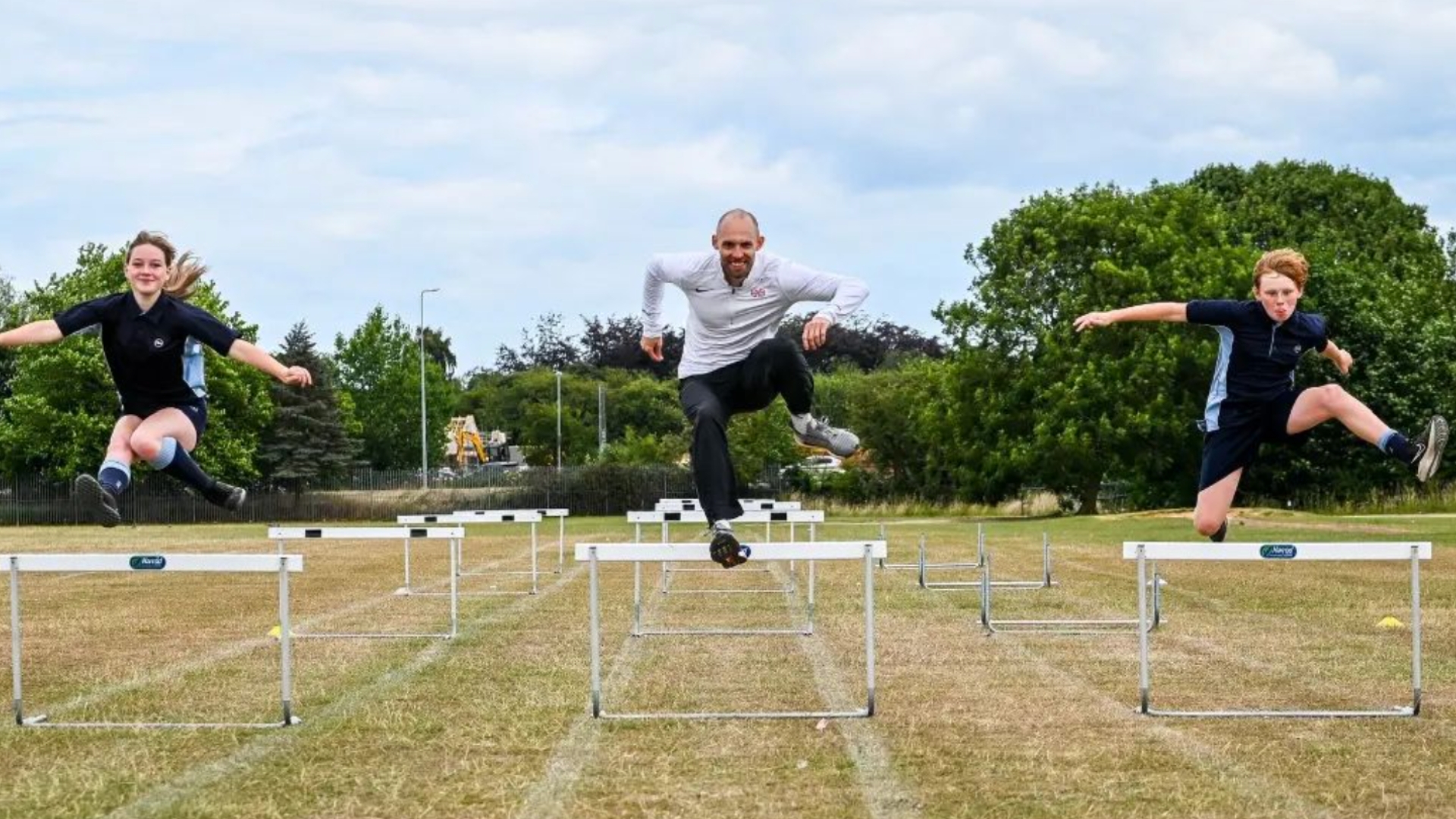
Dai Greene, a former 400-metre hurdles world champion who also won the European and Commonwealth titles, has retired from competitive athletics at the age of 38. The Welshman says coaching is his next goal and he has already assisted in mentoring other athletes.
Greene had tremendous success in the 400-metre hurdles as well as the 400-metre run; the only thing missing from his outstanding track career was an Olympic medal. The peak of his success was winning the 400-metre hurdles gold medal at the 2011 World Championships in Daegu after helping Great Britain win the silver medal in the 4×400-metre relay two years earlier in Berlin.
Greene won the 2010 European and Commonwealth titles, first capturing gold in Barcelona for Great Britain and then in Delhi for Wales.
On battling injuries
However, Greene was never able to reach such heights of achievement again due to a series of injury issues. In 2018, he claimed that difficulties with a hernia mesh had caused him to lose five years of his career. He was left bitter and frustrated after his surgery to fix a small hernia.
Greene said on social media: “Despite my best efforts over the past few years, I have been unable to participate in one more competitive season in the sport… The arrival of my daughter in December prompted my decision to stop trying to return to competition.”
He added: “My career can be seen as having two halves. By the age of 25 I had won everything in the sport except for the Olympics, yet I feel I never truly fulfilled my potential…. The years between 2013 and 2016 should have been dedicated to honing my skills and maximizing my talent, but a routine surgery gone wrong derailed those dreams… Subsequent corrective surgeries meant I was never able to return to my peak performance, though I occasionally caught glimpses of the athlete I once was.”
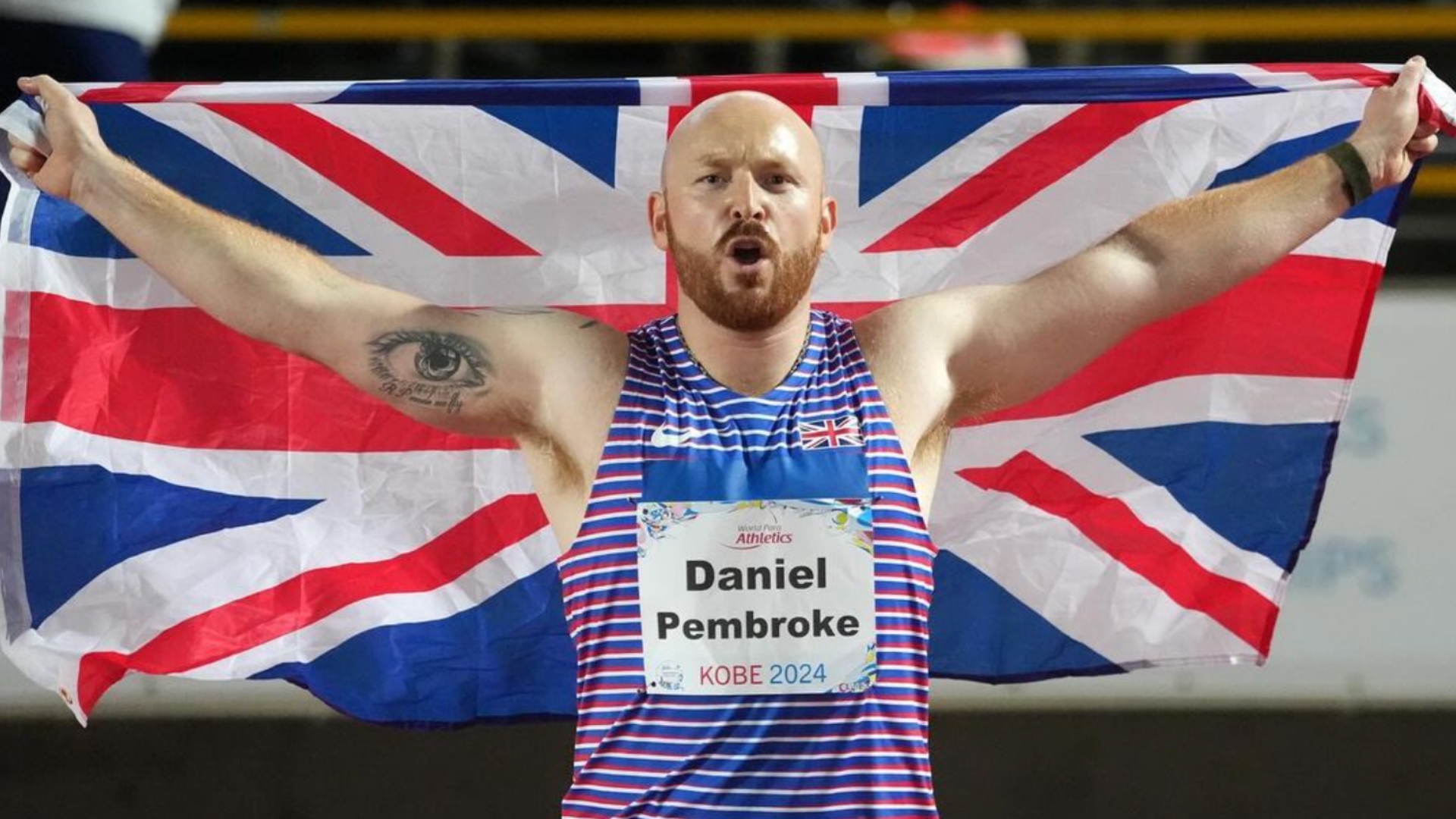
At the World Para Athletics Championships in Kobe, Japan, Daniel Pembroke of Britain held onto his F13 javelin championship title. When he threw 66.96 meters in the last round, the 32-year-old was already assured of attaining a gold medal. He gave out a scream of joy as the javelin flew beyond his previous best of 64.79 meters from the third round.
Later this year in the 2024 Paris Olympics, Pembroke intends to defend his Paralympic crown.
With his victory, the athlete shared his journey after being away for some time from the sports limelight.
Pembroke – Long winter
“When you’ve had a long winter of training, you aren’t sure what you are capable of in your first competition, never mind when it is a world final…So, the pressure can get to you, but I felt like I relaxed into it towards the last attempt, so it just proves what is to come,” Pembroke admitted.
He added: “A lot of my throws were going up and up about a meter each time, so by the time Paris comes around and I’ve got a few more competitions under my belt, we’ll be breaching that 70-meter mark again.”
An elbow injury ended Pembroke’s goals of qualifying for the Olympics in London back in 2012.
He was already managing the degenerative eye disease retinitis pigmentosa, which results in progressive blindness. In 2019, he returned to the sport after taking a break to travel. He was then categorized as a Para athlete, and started a new sporting career.
Last May, there were allegations of discrimination by Iranian authorities against female athletes. This was in response to the success of the Iran women’s national soccer team in their April match against Myanmar, which was described as “phenomenal”.
Despite this, the female players were still not remunerated in the same manner as their male counterparts. According to Al-Monitor, the women’s soccer players were only paid around $18,000 a season, while the men were paid around $200,000 to $300,000, excluding bonuses for each win.
The report highlighted a number of accomplished female athletes who had achieved success in the international arena, representing Iran in their respective sports competitions, yet were ultimately sidelined and did not receive the recognition they deserved.
Despite the exposé, it seems Iran has remained adamant in how they treat their women athletes, as another issue recently surfaced. Former boxing champ, Mahyar Monshipour who was born in Iran before moving to France, revealed that the nation’s female boxers cannot train out in the open, and that they only do so within close quarters such as ‘flats or basements’.
IOC Discrimination?
According to insidethegames, a group of dissidents has submitted a request to the IOC to prohibit Iran from participating in the Olympic Games, or at the very least to exclude them from participating in games such as Boxing, Beach Volleyball, Gymnastics, Swimming, and Wrestling, all of which are prohibited for Iranian women to compete in under the Islamic regime.
A French lawyer, Frederic Thiriez, asserted that Iran has breached the rules of the Olympic Charter, which state that:
“The practice of sport is human right.”
“There must be no discrimination of any kind, in particular on the grounds of race, colour, sex, sexual orientation, language, religion, political or other option, national or social origin, property, birth, or other status.”
Thiriez who’s determined to punish Iraq over human rights violations, states in a Francs Jeux report that: “The law has its limits, that is why we’re counting on pressure from public opinion,”
This sentiment, however, was countered by Nina David, Amnesty International’s UK advocacy lead who says banning the Iranians would only punish the athletes. Will the IOC now discriminate against them?
“The IOC must of course ensure the Olympics aren’t in any way complicit in human rights violations, in line with their own human rights guidelines and international business standards, but banning Iranian athletes from competing at Paris 2024 would amount to punishing the athletes themselves, not the Iranian authorities,” she told City A.M.
The IOC has also released a statement regarding the controversy and said that they are monitoring the situation very closely.
“The IOC reserves the right to take any action relating to the participation of the Iranian athletes”.
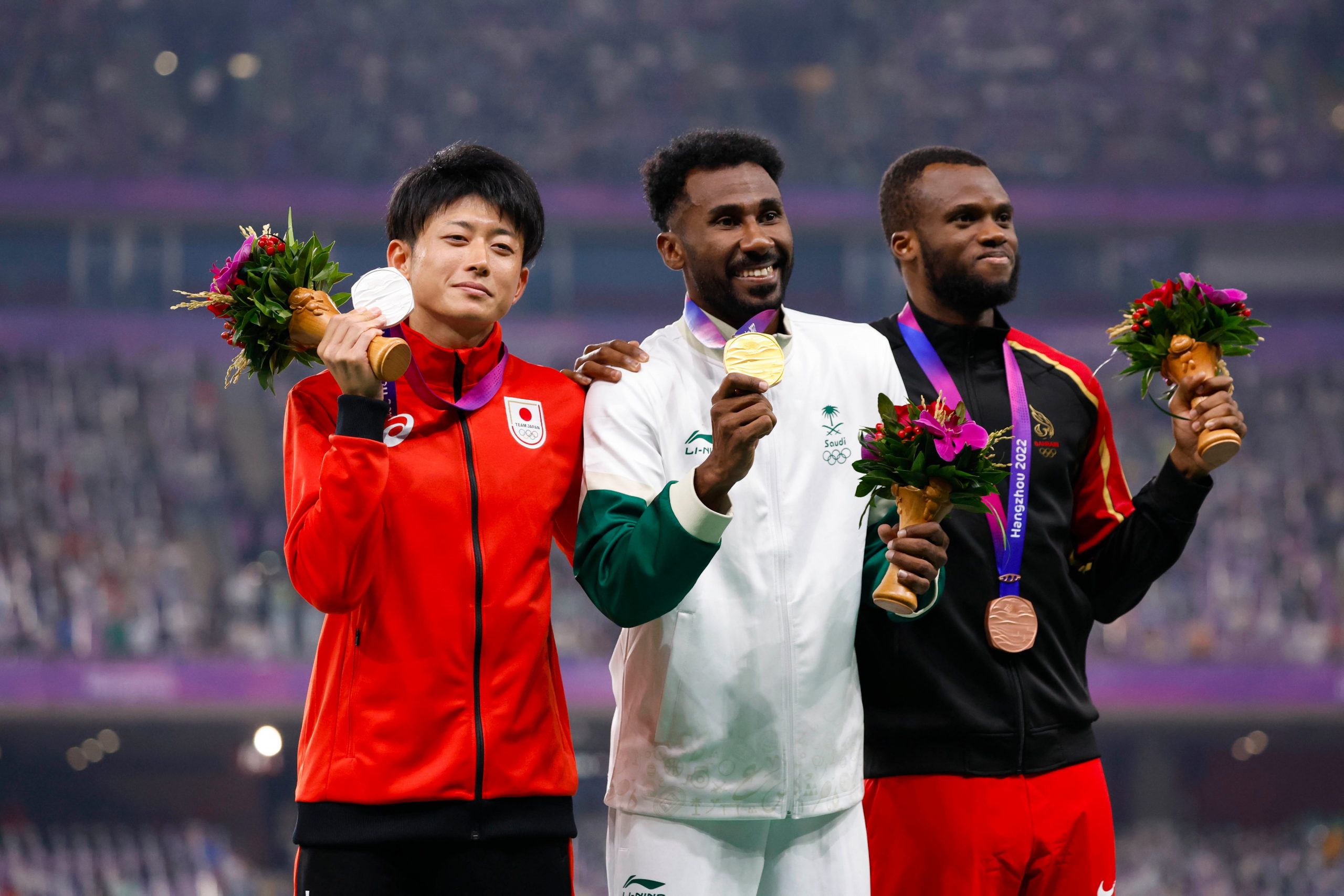
In a heart-stopping moment, Yousef Ahmed M Masrahi triumphed over a formidable field of competitors in the 400m final at the Hangzhou Olympic Sports Stadium on September 30, successfully clinching Saudi Arabia’s maiden gold medal at the Asian Games.
The Masrahi Effect
Masrahi initially appeared to be in a disadvantageous position in the first 100 meters of the race; however, he persevered, quickened his pace, and soon found himself in the lead alongside Japanese competitors Kentaro Sato, Fuga Sato, and Bahraini Abbas Yusuf Abbas Ali.
It was a nail-biting battle between the top four sprinters, all of whom wanted to bring home the gold for their country, but perhaps even more so for Masrahi, whose country has yet to win an Asiad gold medal.
With only a few meters to run, Masrahi put up a good fight and unleashed his finishing kick to win the race in a time of 45.55 seconds. Kentaro Sato also pushed through and finished second in the race with a time of 45.57 seconds, while Abbas Yusuf Abbas Ali came in third with a time of 45.65.
Upon placing first in the competition and bagging his country’s first gold medal, Masrahi wept in celebration at the stadium. Congratulations also started pouring in for the Arab sprinter on X, including the official account of the 19th Asian Games Hangzhou 2022 who said, “ Congratulations to Masrahi Yousef Ahmed M for winning the first gold medal of Team Saudi Arabia at Hangzhou Asian Games. Masrahi Yousef Ahmed M took the lead in Athletics, Men’s 400m event with a result of 45.55.”
Congratulations to Masrahi Yousef Ahmed M for winning the first gold medal of Team Saudi Arabia at Hangzhou Asian Games.
— The 19th Asian Games Hangzhou Official (@19thAGofficial) September 30, 2023
As of October 2, Saudi Arabia is now in the 23rd spot on the Asiad medal table, with 1 gold medal, 1 silver medal, and 1 bronze medal.
Results:
1. MASRAHI Yousef Ahmed M (Saudi Arabia)- 45.55
2. SATO Kentaro (Japan)- 45.57
3. ALI Abbas Yusuf Abbas (Bahrain)- 45.65
4. SATO Fuga (Japan)- 45.70
5. VARIYATHODI Muhammed Ajmal (India)- 45.97
6. SINGHAPURAGE Aruna Dharshana (Sri Lanka)- 46.09
7. HEWA KUMARAGE Kalinga Kumarage (Sri Lanka)- 46.22
8. ABAKAR Ismail (Qatar)- 46.48
Masrahi is the current Asian record holder for the 400-meter sprint. He set the record of 43.93 seconds at the 400-m qualifying heats of the 2015 Beijing World Championships. Unfortunately, he was provisionally banned from competing for four years in 2016 after testing positive for drugs.
And after nine years of being out of the spotlight, Masrahi finally claimed another gold medal for his country. According to CGTN, he engaged with his Chinese admirers in the stands and took a selfie with their phones while yelling, “I love China!“.
“I really, really wanna say that from the middle of my heart, I love China,” Masrahi said.
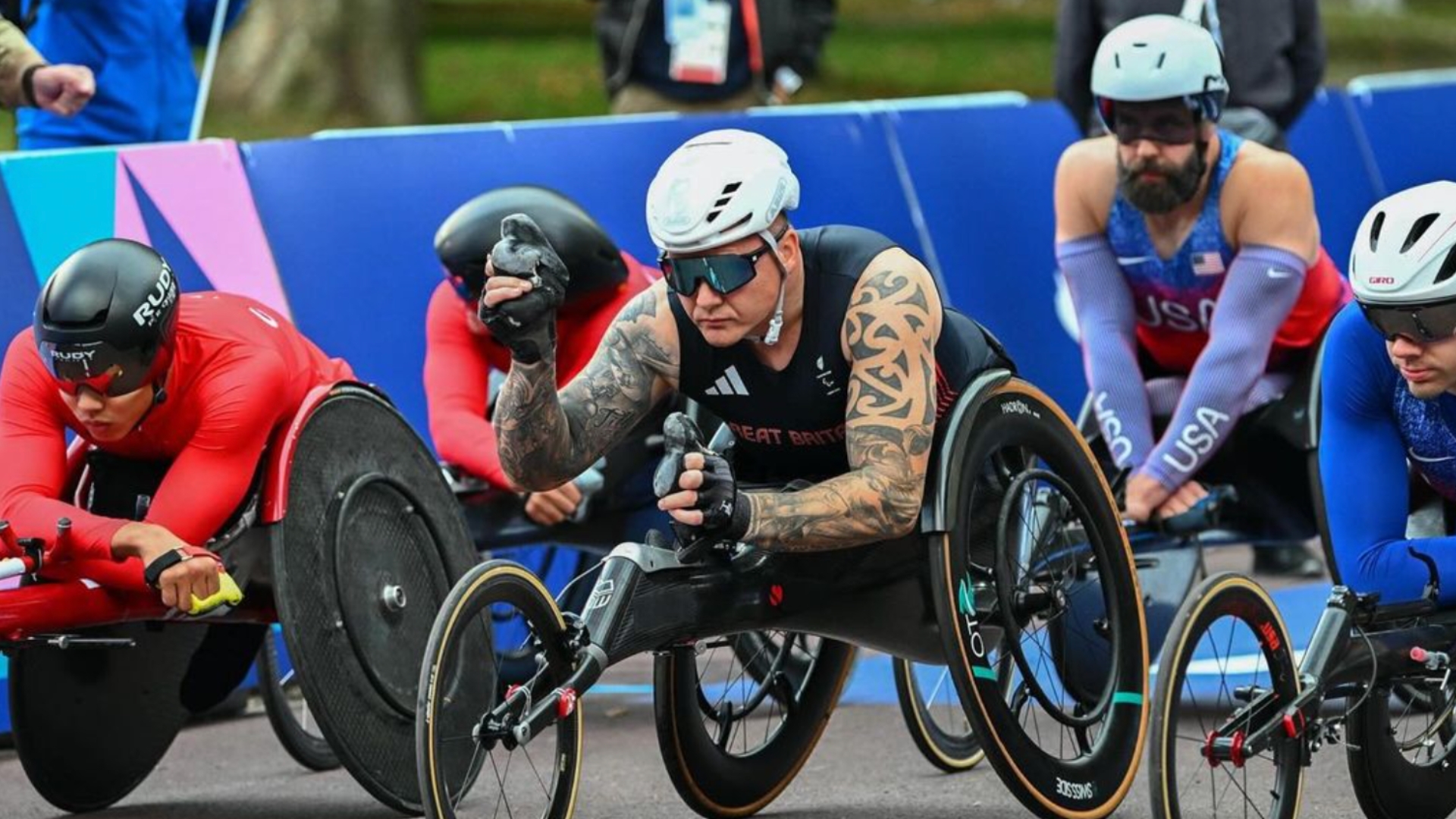
David Weir, a six-time Paralympic champion, has announced his retirement from competing for Great Britain after placing fifth in the men’s T54 marathon on the last day of this year’s Paris Games.
The athlete admitted: “I’m quite emotional as I know it’s my last race for GB, this will be my last international… I knew before I came to Paris and I’ve been thinking about it all week. It’s the decision I want to do. It’s the right decision.”
The 45-year-old will still compete in the main international marathons, including London. In his athletic career, he won two golds in Beijing in 2008 before taking home four medals in London in 2012.
“I’ll still do the major marathons as I really enjoy them and I’ve got Berlin in two weeks,” Weir added.
Weir’s athletic journey
After making his debut in Atlanta as a young athlete in 1996, Weir competed in his seventh Games. Earlier in the programme, he placed eighth in the 5,000-metre final but was unable to get past the heats in the 1500-metre race.
After Rio 2016, he withdrew from international competition, claiming he had been accused of race-fixing and failing to earn a medal. However, he joined the team again and participated in the Tokyo marathon, finishing in fifth place. He then decided to race in Paris on the track and road.
Weir said: “My body just couldn’t cope with it today, to be honest… I was the oldest in that field today but still highly competitive. Daniel [Romanchuk, who finished fourth] is 20 years younger than me – I could be his dad – so I’m doing alright. I gave it my all today and that’s all I can give.”
He further remarked: “I’ll look back on my GB career with pride. I don’t really pat myself on the back. I should really. I should be proud of what I’ve done… “I’ve had a great career. I’m trying not to get emotional but it’s time. I think it’s time.”