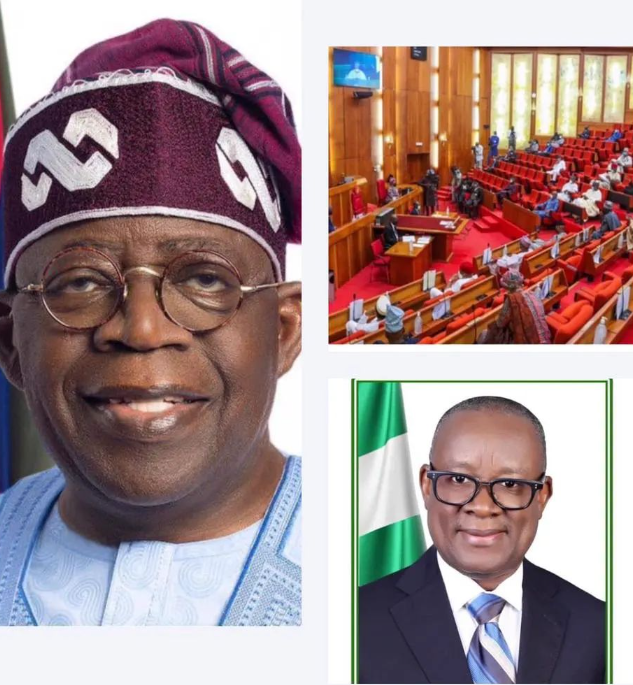
Nigeria did not win a single medal in the last Olympics in Paris, which was disappointing. Sports Minister John Owan Enoh called this an unexpected and unfortunate reality.
Enoh acknowledged the general outcry and grief in a Channels TV interview, highlighting how very personal this defeat is for him considering his drive for achievement and competitive spirit—especially since he is well-known for winning in his hometown of Cross River. He worked very hard, but the result was not what he or the nation had expected.
Here’s what he said in the interview:
Even though I worked hard and had a tremendous desire to win, I could not do it this time. It was unexpected, and it wasn’t the result of insufficient effort.
Though some analysts could contend that the indicators were present—indicating the difficulties encountered by our elite athletes, such as Ofili, Amusan, and our wrestlers and weightlifters who previously astounded the world—they did not emerge from the greatest athletic event as the colossi that they once were, but rather as smaller figures.
What did you anticipate? In your estimation, how many medals were we going to receive?
In my capacity as Minister of Sports Development, my job is to supervise the larger structure of sports administration in our nation rather than to directly instruct or oversee athletes.
In contrast to other ministers who oversee agencies directly, I collaborate with about 40 elected sporting federations, each of which is in charge of its own sport. These federations are autonomously governing their own affairs, having been elected by their congresses.
Because of this arrangement, I can shape the direction of the sector but still depend on these federations to manage and carry out their activities efficiently. This strategy guarantees particular attention to every sport, but it also restricts my ability to implement changes directly.
There is nothing I say here that would seem to justify Nigeria’s lack of a medal. I do, however, owe Nigerians an explanation. I acknowledge my accountability. I wrote a message. I didn’t wait for an excuse to lay blame on myself. I apologized in public with a statement.
While acknowledging that the results were average, Malaysia’s Youth and Sports Minister Hannah Yeoh has expressed regret to her fellow citizens for the country’s athletes’ inability to bring home a gold medal from the Olympic Games in Paris.
The minister admitted: “I apologize because we have yet to succeed. I am not using the word ‘fail’ because the Road to Gold (RTG) programme was set up not just for the Paris Games but the 2028 Los Angeles Olympics as well.”
Road to Gold programme
Ms Yeoh’s ministry introduced the Road to Gold programme in March 2023 with the intention of providing the necessary backing for Malaysia’s top athletes to secure the nation’s first-ever Olympic gold medal. According to her, their ministry would keep helping Malaysian coaches and athletes.
She also mentioned that the Road to Gold programme committee would convene to review technical reports from all Olympic teams competing in Paris in order to evaluate their performance and to compile a report on programme expenses.
Meanwhile, Khairy Jamaluddin, the former Minister of Youth and Sports, has justified Malaysia’s athletes’ performance at the Olympics in Paris, claiming that it was comparable to their previous results from the 1996 Games in Atlanta and the 2012 Games in London. However, he stated that the two bronzes earned in Paris were insufficient to make up for the five medals the nation had won at Rio 2016.
He admitted: “I don’t see this as a failure, but we need to acknowledge that our results were average.”
Prime Minister Anwar Ibrahim announced that new initiatives are being developed by the government to enhance Malaysia’s sporting performance in the aftermath of the Olympic Games in Paris, where its athletes won two bronze medals.
Malaysia is the most successful nation without an Olympic gold medal, having won 15 medals in silver and bronze over the years.
In the course of his athletic career, EJ Obiena had hoped to make himself known by being the first Filipino to have medals in both the World Athletics indoor and outdoor competitions.
However, the dream was taken away as the Filipino athlete barely cleared 5.65 meters to finish in ninth place at the World Indoor Championships in Glasgow.
Aware that what happened did not go according to what he initially planned, Obiena declared in an online news conference that he would take full responsibility for his performance and that there are no excuses for it.
Obiena and the setback
He clarified that aside from hoping to win a medal in the Glasgow match, he was confident to be able to perform in his best self due to his consistency in training. However, his experience with the World Indoors became a setback for him instead.
“I’ve been pretty consistent with 5.80m, that’s why I took the risk when it comes to World Indoors. It just didn’t pan out. The marks that I was hitting, I’m hitting it pretty consistently and with excellence, but it is a setback, this World Indoors,” EJ admitted.
Admitting that the competition results affected his mental health, Obiena remained resilient and optimistic. Despite this experience, EJ revealed that he is moving on and is concentrating to be ready for the bigger picture– the Olympic Games in Paris this 2024.
“That was not the goal this year, the goal is Paris 2024,” said Obiena, who is now a qualifier in the Summer Games.
“I’m moving on, and I’ll look forward to the outdoor season. I will prepare and focus on the main goal,” Ej said.
Government largesse made China an athletic powerhouse while collegiate sports keeps America a sporting superpower. The two countries, two systems, clashed at the 2024 Paris Olympics, and while both landed the same quantity of gold, the Americans were awash with more silver and bronze.
Yes, the Americans went home with a bigger haul in a virtual repeat of the Tokyo Olympics, where they won one more gold than the Chinese (39-38) and racked up a bigger medal tally (113-89).
Medal tally
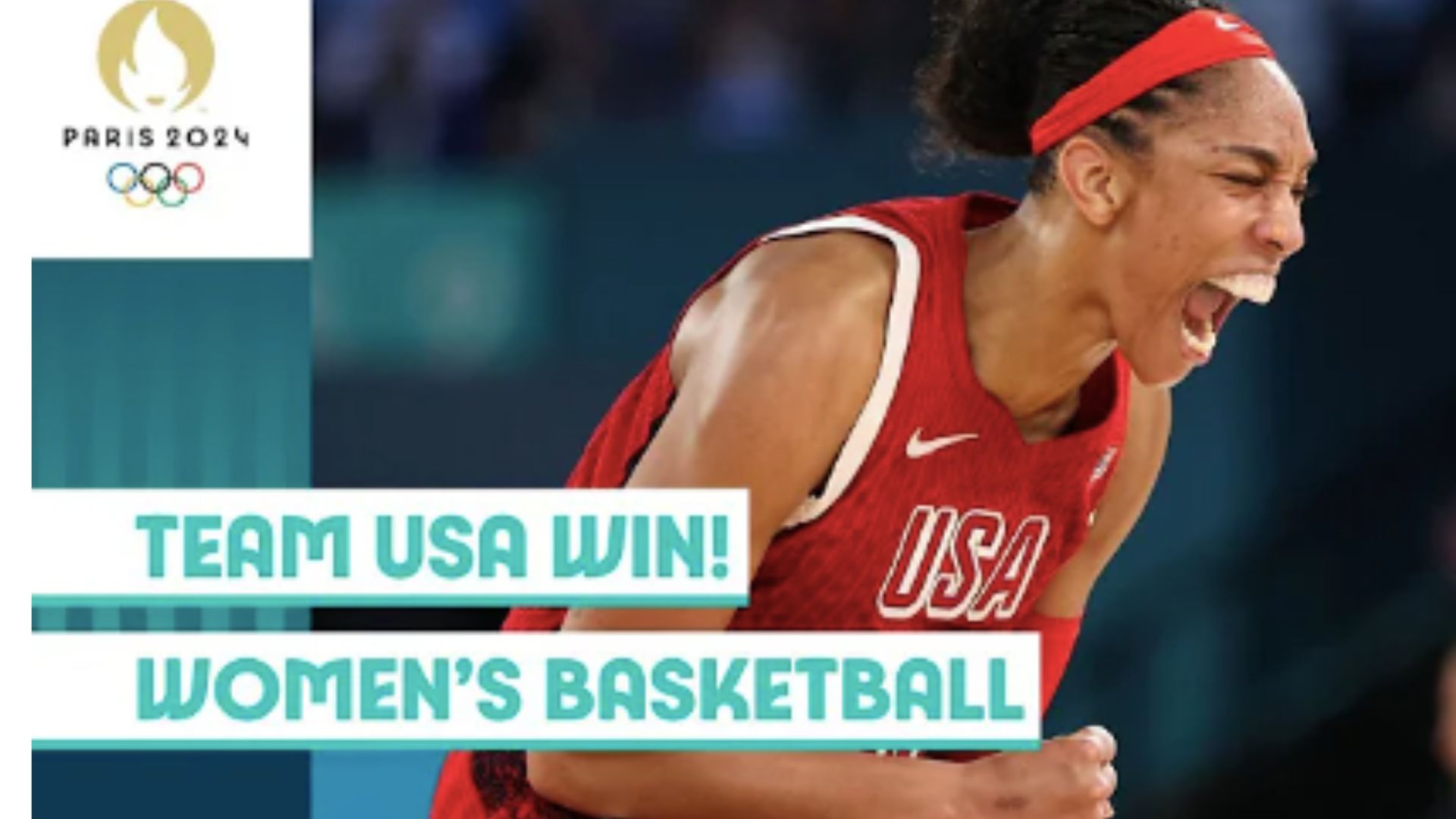
China was leading in the gold haul in Paris until the final day when weightlifter Li Wenwen won the 40th gold medal for China with her victory in the women’s +81 kg. But the Americans caught up to China with two last-day golds — with Jennifer Valente’s victory in women’s cycling and a one-point win over France (67-66) in the women’s basketball final.
So, though China and the USA won 40 gold medals each, the Americans topped the standings for their superior medal tally—44 silver, 42 bronze, 126 medals in all—compared to the Chinese—27 silver, 24 bronze, 91 in all.
“China’s Olympic delegation at Paris 2024 achieved its best overseas performance since it comprehensively participated in a Summer Olympics abroad in 1984, said Zhou Jinqiang, deputy head of the delegation at a press conference held on Sunday,” reported China Daily.
“China’s sports delegation, consisting of 404 athletes competing in 232 events across 30 sports, clinched 40 gold, 27 silver and 24 bronze medals. The haul of gold medals surpassed the 39 golds won at the London Olympics, and a total of 60 athletes claimed golds, marking a new record for overseas Olympic participation, Zhou said.”
At Beijing 2008, China won 48 gold medals and 100 overall.
“You have won glory for our country and people, and we extend warm congratulations and heartfelt compliments to you,” read a message jointly sent by the Central Committee of the Communist Party of China (CPC) and the State Council, China’s cabinet.
“Your outstanding achievements and performances have further ignited the patriotism of Chinese people both at home and abroad, uplifted the national spirit, and united the people towards progress,” added the message.
As the message shows, the Olympics are not just a sporting event but a means to boost Chinese morale and burnish the Chinese image abroad.
China’s billion-dollar sports budget
Karishma Vaswani wrote on Bloomberg: “China has long invested heavily to push its athletes to triumph against the West, as a way of highlighting the merits of the Communist Party. These Olympic Games are no different, but for one key aspect: Citizens are openly questioning why Beijing is spending so much money on a sporting event when many at home are facing bleak economic prospects.”
“China’s budget for sports this year stands at more than $1 billion,” she added. “Compare that to Australia, which also does pretty well in Olympic competitions, but last year only had around a quarter of that at its disposal. American athletes don’t get money from the government, instead they rely on a mix of private sponsorships, philanthropy, broadcast revenue and endorsements.”
The American way delivers great results, too, as the Paris Olympics showed.
How many Americans won medals?
The Washington Post noted: “The Americans won 126 medals, and because of team sports and relays, more than 40 per cent of the team’s delegation of nearly 600 athletes received at least one. Forty-four American athletes won multiple medals and 110 won at least one gold, with that large number stemming from the country’s success in team events.”
The Americans won team events like basketball, women’s gymnastics, men’s 4x400m relay, women’s 4x100m relay, women’s 4x400m relay, women’s 4x100m medley relay, men’s 4x100m freestyle relay, and mixed 4x100m medley relay.
The Chinese won team events such as the men’s 4x100m medley relay, group all-around rhythmic gymnastics, women’s synchronized diving, men’s synchronized diving, men’s artistic gymnastics, men’s and women’s canoe double, men’s doubles, women’s doubles and mixed doubles in badminton. As China Daily noted, 27 of the 40 gold medals won by China came from its six traditionally strong sports — diving, table tennis, badminton, gymnastics, shooting and weightlifting.
The US sporting world is very different. Athletes like sprinter Noah Lyles and basketballer Stephen Curry are celebrities. Their fame and fortune are hard-earned, honed by intensive training and the toughest competition.
US college sports system
As Britain’s two-time Olympic champion and World Athletics president Sebastian Coe, a legendary middle-distance runner, said, “U.S. track and field has a lot to owe to the college system.”
The New York Times says American Olympic officials “know that the American college sports system, which every year sustains and trains thousands of students in Olympic sports — both Americans and international students — is their golden goose.”
Indeed, American colleges and universities train not only American athletes. Top international athletes, too, like the swimmer Leon Marchand of France and the sprinter Julien Alfred of Saint Lucia, have been trained in America. Marchand was a member of the Arizona State University swim team, Alfred trained at the University of Texas.
The overwhelming majority of Olympic medals come from sports that have a presence on college campuses, says the Times.
No amount of government largesse, like the billions reportedly spent by China, has yet reduced the US college-trained athletes to also-rans. In fact, as the Paris Olympics showed, the latter still have an edge.
For any aspiring athlete, securing a berth at the Olympics is a dream come true. So, when Nonoka Ozaki missed out on this opportunity at the 2023 World Wrestling Championships, she immediately fell into despair.
On September 20th, spectators at the World Wrestling Championships 2023 saw some of the world’s best athletes compete, including Japanese wrestlers Nonoko Ozaki and compatriots Yui Susaki, Sakurai Tsugumi, and Kagami Yuka. The four of them concluded their respective bouts with gold medals, demonstrating Japan’s dominant performance on Day 5 of the event.
However, one athlete went home with a heavy heart.
Ozaki disheartened on missing out at Olympics
Ozaki, the twenty year-old female Japanese wrestler, took to the mat of the Štark Arena to show off her undeniable prowess as a grappler. Having won the gold medal last year at the 2022 World Wrestling Championships, she replicated her victory in Belgrade when she won against her competitors and defeated American Macey Kilty without conceding a point. She won with a dominant 10-0 victory.
Ozaki initially rejoiced over her victory in the 65 kg division. But her joy was swiftly eclipsed by disappointment when she learned that the weight class in which she had competed was not contested at the 2024 Paris Olympics.
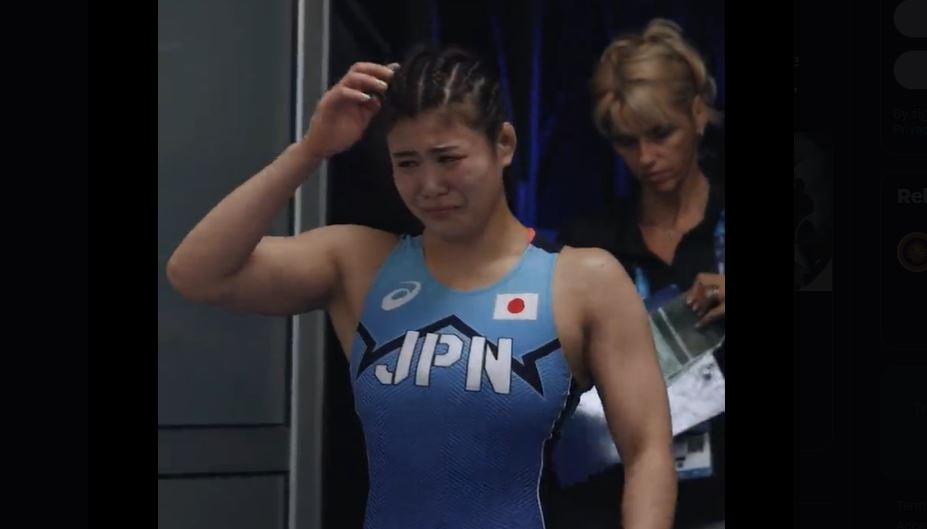
Following the realization that she had failed to qualify for the Olympic Games, Ozaki was observed to be in a state of emotional distress, crying and emitting a sigh of exasperation backstage.
“When I won the title, it hit me that it wasn’t an Olympic weight,” Ozaki said after the match.
In her place, Sakura Motoki secured a berth for Japan at the Paris Olympics by advancing to the 62 kg final of the same event.
“It was tough to see someone else clinch the team spot in my weight class. It was my own fault. Sports is like that. I have to accept it.”
Nonoka OZAKI 🇯🇵 won her second second consecutive world title, but will miss out on the Paris Olympic Games.
Once her teammate Sakura MOTOKI 🇯🇵 reached the 62kg finals, she earned an automatic bid to represent Japan as next year’s Olympics, leaving Ozaki on the sidelines. pic.twitter.com/0Kti866BdN
Currently, the Olympics only contest the following weight divisions for women’s wrestling: 50 kg, 53 kg, 57 kg, 62 kg, 68 kg, and 76 kg. Seeing Ozaki’s talents in the Stark Arena, Japan lost out on an incredibly talented wrestler that could contribute to their nation’s success in next year’s Olympics.
In the previous Summer Olympics, Japan hosted the event at the Makuhari Messe Hall and dominated the women’s wrestling category just as they did on the Serbian ground. Out of the six gold medals, they snared four gold medals.
Next year, fans are anticipating whether Japan will once again reign supreme at the wrestling competition at the 2024 Paris Olympics, which will be held from July 26, 2024, to August 11, 2024.
China has made a spectacular ascent in Olympic history, having won its first medals at the 1984 Los Angeles Games not long after it was allowed to rejoin the IOC in 1979.
China has dominated the Olympic Games in the new millennium finishing in the top three every time since the 2000 Sydney Games. It has superstars like the swimmer Zhang Yufei (see picture), who won gold in the 200-metre butterfly in the Tokyo Olympics and bronze in the 100-metre and 200-metre butterfly at the Paris Olympics besides helping China finish third in the 4×100-metre freestyle and 4×100-metre medley in Paris.
No other Global South country can match China’s Olympic achievements since the Soviet Union’s heyday of domination.
The Soviet Union dominated nine games since their Olympic debut in 1952, winning six and placing second in the others. Even after the dissolution of the Soviet Union, twelve former republics competed as the Unified Team in 1992, winning in Barcelona.
China’s sporting achievements are no accident, as their national system (不国体制 [jŐguó tŐzhì]) was originally based on Soviet tactics.
The athletic schools
The General Administration of Sports oversees 2,196 schools in 2022, all of which are committed to developing the next wave of athletes.
These provincial and municipal establishments offer specialist sports instruction in addition to general education. They provide about 4,000 exceptional players annually to elite sports teams, and they have a significant impact on how sports excellence will develop in the future.
The director of Tsinghua University’s Sports Industry Development Center, Wang Xueli, stated; “As the children grow up, they start participating in competitions of different ages, and if they manage to be among the best, they move on to the next level of competition”
The priorities of Chinese sports policy
The three main objectives of the nation’s sports programmes are increasing sports’ economic impact, integrating sports training into the larger educational system, and strengthening sports’ role in social development.
Wang Xueli draws attention to the State Council’s July 2021 Nationwide Physical Fitness Plan, which outlines some inclusive sports regulations. About 38.5% of the population is expected to regularly exercise as part of this plan, which is a 1.3 percentage point increase over the previous five-year plan. This is a significant milestone.